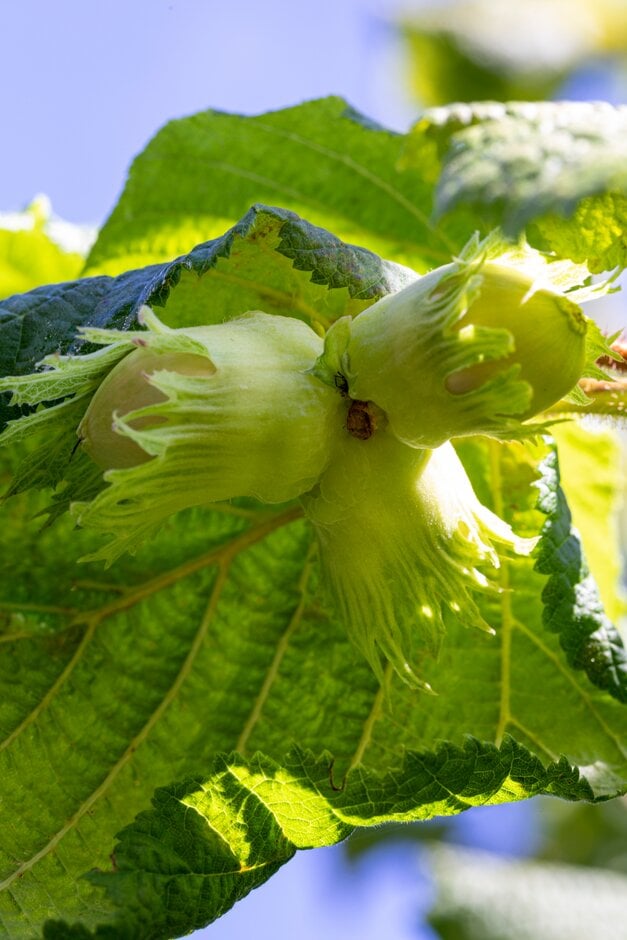
Corylus avellana 'Webb's Prize Cob' (F)

RHS Plant Profile
hazel 'Webb's Prize Cob'
hazel 'Webb's Prize Cob' RHS

Synonyms

Corylus maxima 'Webb's Prize Cobnut'

Fruit Edible Shrubs

A large, deciduous shrub with broad, rough, mid-green leaves, hanging, brown and yellow catkins in late winter to early spring, and clusters of large, rounded, edible nuts in autumn. Strong growing and reliable, it is partially self-fertile but crops much better if pollinated by a different cultivar

Position

Full sun, Partial shade

Soil Types

Chalk, Loam, Sand

Max Height

2.5-4 metres

Max Spread

2.5-4 metres

Size

Time to Maturity
5–10 years
Max Spread
2.5-4 metres
Max Height
2.5-4 metres

Growing Conditions

Chalk Loam Sand
Moisture
Moist but well–drained or Well–drained
pH
Alkaline or Neutral

Position

Full sun Partial shade
Aspect
East–facing or South–facing or West–facing
Exposure
Sheltered
Hardiness
H6

Colour & Scent

Season Stem Flower Foliage Fruit
Spring
Summer
Autumn
Winter

Botanical Details

Family
Betulaceae
Native to GB/Ireland
No
Foliage
Deciduous
Habit
Bushy
Genus
Corylus are deciduous trees and large shrubs with broad leaves, and showy male catkins in early spring, followed by edible nuts
Name Status
Accepted
Horticultural Group
This genus produces fruit, but not necessarily edible fruit

How to Grow

Cultivation

Does best on light, sandy, well-drained soil. For nut production, grow as a goblet-shaped bush, keeping clear soil in a 60cm radius around the trunk. See cobnuts and filberts

Propagation

Propagate by layering or stooling or removing rooted suckers

Suggested planting locations and garden types

  • Cottage and informal garden
  • Wildlife gardens
  • Hedging and screens
  • Edible fruit

Pruning

Prune in August, by brutting or breaking sideshoots half way along their length, followed by shortening the brutted shoots to three to four buds when the catkins are shedding pollen in late winter. When necessary, remove up to one third of old, overcrowded shoots back to the main branches

Pests

May be susceptible to caterpillars, gall mites, aphids and sawflies. Squirrels like to feed on the nuts

Diseases

May be susceptible to honey fungus, silver leaf and powdery mildews