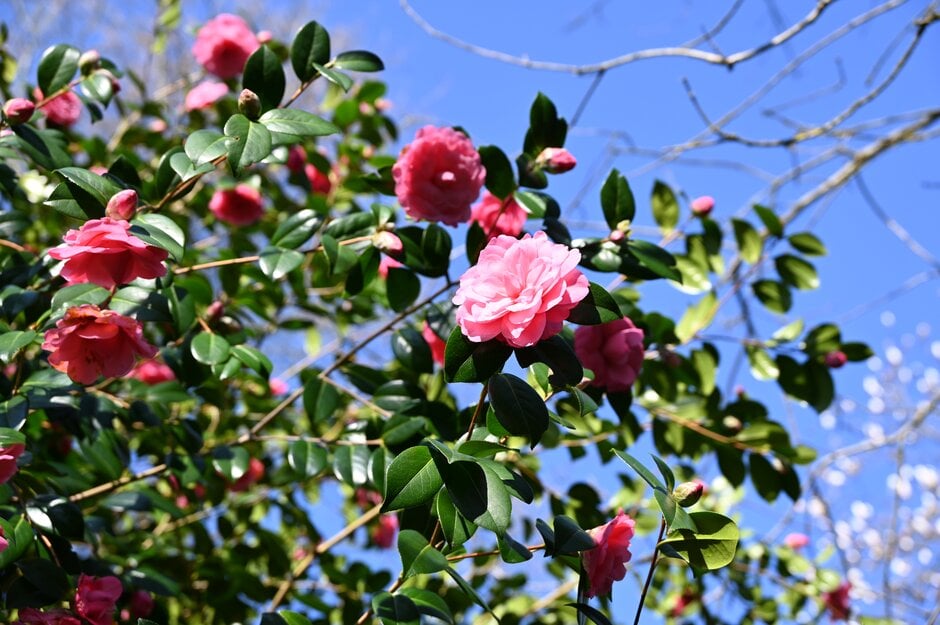
Camellia 'Valentine Day' (_japonica_ × _reticulata_)

RHS Plant Profile
camellia 'Valentine Day'
camellia 'Valentine Day' RHS

Synonyms

Camellia × williamsii 'Valentine Day'

Shrubs

A vigorous, upright, medium to large evergreen shrub up to 3m in height, with a columnar habit and with glossy, dark green leaves with finely serrated edges. Fully double, layered salmon pink to pale orange-red flowers appear in February

Position

Partial shade

Soil Types

Clay, Loam, Sand

Max Height

2.5-4 metres

Max Spread

1.5-2.5 metres

Size

Time to Maturity
10–20 years
Max Spread
1.5-2.5 metres
Max Height
2.5-4 metres

Growing Conditions

Clay Loam Sand
Moisture
Moist but well–drained or Well–drained
pH
Acid

Position

Partial shade
Aspect
East–facing or North–facing
Exposure
Sheltered
Hardiness
H4

Colour & Scent

Season Stem Flower Foliage Fruit
Spring
Summer
Autumn
Winter

Botanical Details

Family
Theaceae
Native to GB/Ireland
No
Foliage
Evergreen
Habit
Columnar upright
Genus
Camellia are evergreen shrubs with simple, ovate, glossy, leathery leaves and showy flowers with solitary or clustered flowers early in the year
Name Status
Accepted

How to Grow

Cultivation

Suitable for woodland and acidic soils. Position in a site sheltered from cold, dry winds and early morning sun as buds and flowers may be damaged by cold winds and late frosts. See camellia cultivation for further advice

Propagation

Propagate by semi-ripe cuttings of the current years growth from late summer to late winter

Suggested planting locations and garden types

  • City and courtyard gardens
  • Cottage and informal garden
  • Flower borders and beds
  • Wall side borders

Pruning

pruning group 8

Pests

May be susceptible to aphids, scale insects and vine weevil

Diseases

May be susceptible to honey fungus, Phytophthora root rot, Camellia gall, camellia leaf blight, and camellia yellow mottle virus. Flowers may be infected by camellia petal blight