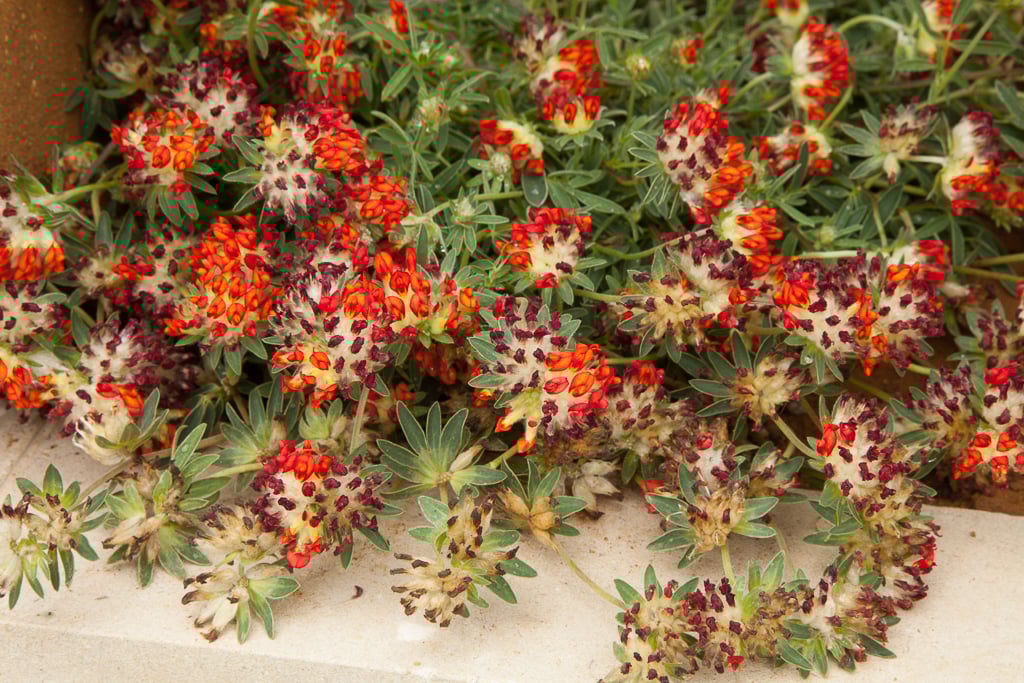
Anthyllis vulneraria var. coccinea

<em>Anthyllis</em> <em>vulneraria</em> var. <em>coccinea</em> John Fielding
Plants for pollinators
Herbaceous Perennial

A low-growing annual or shor-lived perennial to 60cm tall, producing a neat mound of downy, silvery-green, ferny foliage, with clusters of scarlet pea-like flowers from late spring throughout summer; it will gently self-seed

Position

Full sun

Soil Types

Sand, Clay, Chalk, Loam

Max Height

0.1-0.5 metres

Max Spread

0.5-1 metres

Size

Time to Maturity
1–2 years
Max Spread
0.5-1 metres
Max Height
0.1-0.5 metres

Growing Conditions

Sand Clay Chalk Loam
Moisture
Well–drained
pH
Acid or Alkaline or Neutral

Position

Full sun
Aspect
South–facing
Exposure
Exposed or Sheltered
Hardiness
H6

Colour & Scent

Season Stem Flower Foliage Fruit
Spring
Summer
Autumn
Winter

Botanical Details

Family
Fabaceae
Native to GB/Ireland
Yes
Foliage
Evergreen
Habit
Bushy
Genus
Anthyllis can be annuals, herbaceous perennials or shrubs, with pinnate or palmate leaves and short, dense racemes of small pea-like flowers
Name Status
Correct

How to Grow

Cultivation

Grow in well-drained, poor to moderately fertile soil in full sun

Propagation

Propagate by seed sown in the autumn or by semi-ripe cuttings taken in late summer

Suggested planting locations and garden types

  • Gravel garden
  • Rock garden
  • Cottage and informal garden
  • Coastal
  • Wildlife gardens
  • Flower borders and beds

Pruning

Trim untidy plants after flowering

Pests

Generally pest-free

Diseases

Generally disease-free