Quercus agrifolia

RHS Plant Profile
California live oak
California live oak visionspictures.com

Other common names

coast live oak, encina

Trees

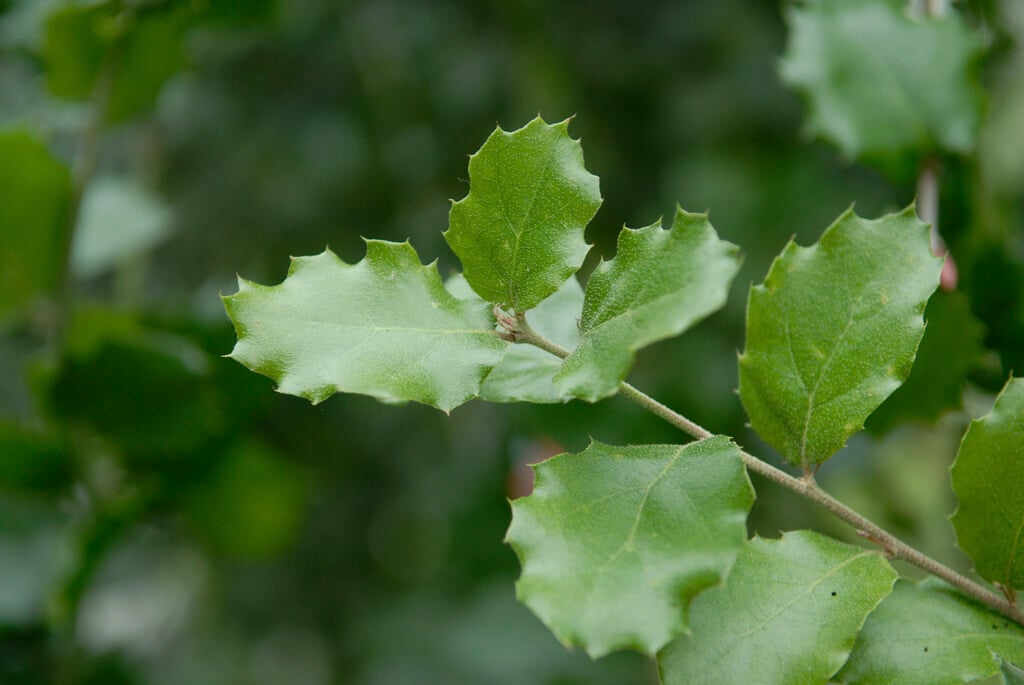
An evergreen, small tree eventually reaching up to 12m high with a broadly rounded crown of spreading branches and a stout trunk of smooth black bark that becomes rougher with age. Rigid, dark green, shiny leaves are oval to rounded, up to 5cm long with spine-tipped teeth and short stalks. Cone-shaped acorns to 2.5cm long ripen in the first year

Position

Full sun

Soil Types

Chalk, Clay, Loam, Sand

Max Height

8-12 metres

Max Spread

wider than 8 metres

Size

Time to Maturity
20–50 years
Max Spread
wider than 8 metres
Max Height
8-12 metres

Growing Conditions

Chalk Clay Loam Sand
Moisture
Moist but well–drained
pH
Acid or Alkaline or Neutral

Position

Full sun
Aspect
South–facing or West–facing or East–facing
Exposure
Exposed or Sheltered
Hardiness
H4

Colour & Scent

Season Stem Flower Foliage Fruit
Spring
Summer
Autumn
Winter

Botanical Details

Family
Fagaceae
Native to GB/Ireland
No
Foliage
Evergreen
Habit
Bushy, Spreading branched
Potentially harmful
Pets (dogs): Harmful if eaten - for further information and contact numbers regarding pets, see the HTA guide to potentially harmful plants
Genus
Quercus can be deciduous or evergreen trees or shrubs, with entire, lobed or toothed leaves; flowers inconspicuous, followed by characteristic acorns; sometimes good autumn colour
Name Status
Correct
Plant Range
Mexico and USA (California)

How to Grow

Cultivation

Grow in deep, fertile, well-drained soil. See tree cultivation for further advice

Propagation

Propagate by grafting

Suggested planting locations and garden types

  • Architectural
  • Coastal
  • Low Maintenance

Pruning

Pruning group 1

Pests

May be susceptible to oak processionary moth, aphids, caterpillars, leaf-mining moths and oak gall wasps

Diseases

May be susceptible to powdery mildews and honey fungus