Parietaria judaica
pellitory-of-the-wall
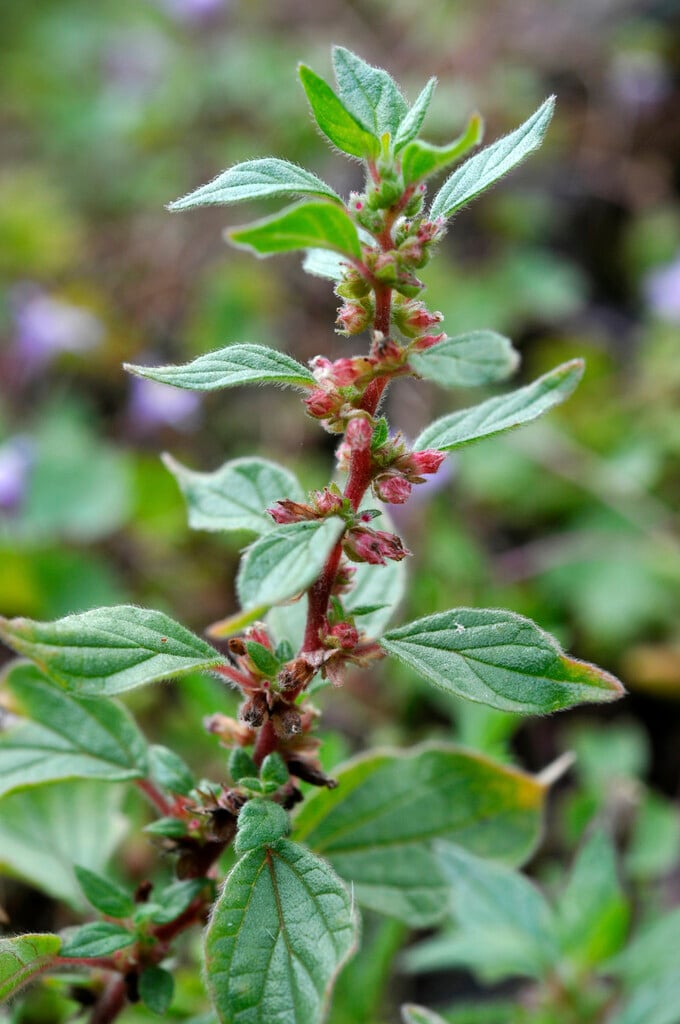
Common throughout the British Isles, a rather sprawly plant with stems up to 40cm long, narrowly oval, dark green leaves with prominent veins, and whorls of tiny red flowers circling the stems from mid-summer into autumn. All parts of the plant have a fine covering of short, soft, white hairs. Related to stinging nettles, it is a food plant for red admiral caterpillars
Size
Ultimate height
0.1–0.5 metresTime to ultimate height
2–5 yearsUltimate spread
0.1–0.5 metresGrowing conditions
Moisture
Well–drainedpH
Acid, Alkaline, NeutralColour & scent
| Stem | Flower | Foliage | Fruit | |
| Spring | Green | |||
|---|---|---|---|---|
| Summer | Red | Green | ||
| Autumn | Red | Green | ||
| Winter |
Position
- Full sun
- Partial shade
Aspect
East–facing or South–facing or West–facing
Exposure
Exposed or ShelteredDrought resistance
Yes Hardiness
H4Botanical details
- Family
- Urticaceae
- Native to GB / Ireland
- Yes
- Foliage
- Deciduous
- Habit
- Bushy
- Name status
Correct
- Plant range
- Europe
How to grow
Cultivation
Naturally found on rocks, cliffs and steep banks but also on old walls, rubble and pavements. Not too fussy about conditions, but soil must be well-drained
Propagation
Propagate by seed or by division
Suggested planting locations and garden types
- Cottage and informal garden
- Gravel garden
- Rock garden
- Banks and slopes
- Wall side borders
Pruning
No pruning required
Pests
Generally pest-free
Diseases
Generally disease-free
Get involved
The Royal Horticultural Society is the UK’s leading gardening charity. We aim to enrich everyone’s life through plants, and make the UK a greener and more beautiful place.