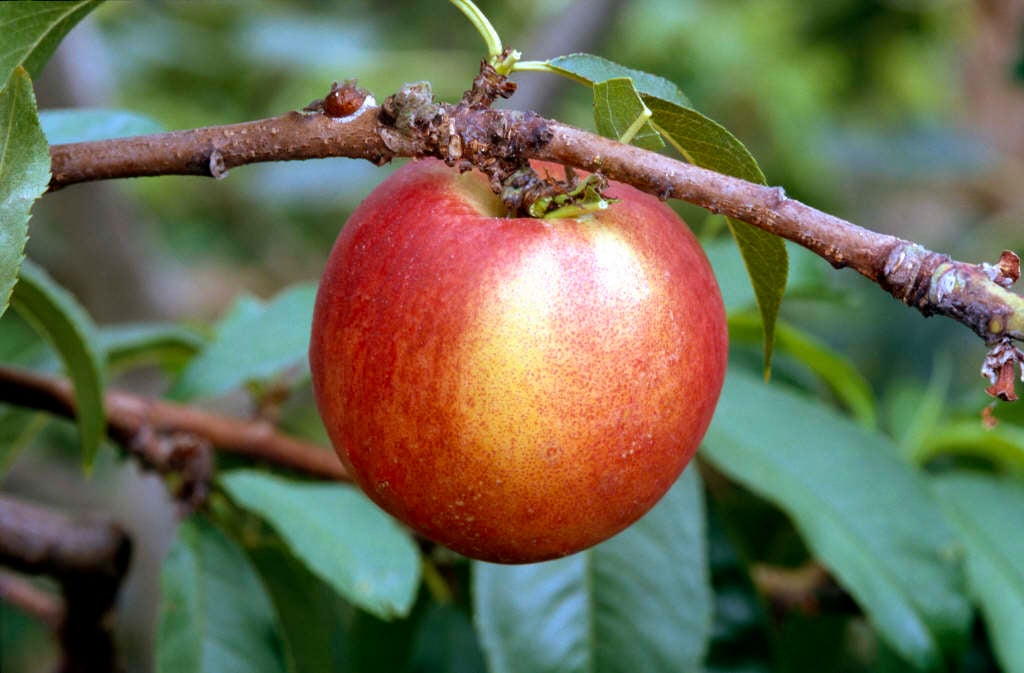
Prunus persica var. nectarina 'Lord Napier' (F)

RHS Plant Profile
nectarine 'Lord Napier'
nectarine 'Lord Napier' RHS

Synonyms

Prunus persica 'Lord Napier'

Plants for pollinators
Fruit Edible

Nectarine 'Lord Napier' has pale yellow and crimson fruits that are juicy and have a good flavour. Cropping is in early August

Position

Full sun

Soil Types

Chalk, Loam, Sand

Max Height

2.5-4 metres

Max Spread

2.5-4 metres

Size

Time to Maturity
5–10 years
Max Spread
2.5-4 metres
Max Height
2.5-4 metres

Growing Conditions

Chalk Loam Sand
Moisture
Moist but well–drained
pH
Acid or Alkaline or Neutral

Position

Full sun
Aspect
South–facing or West–facing
Exposure
Sheltered
Hardiness
H4

Colour & Scent

Season Stem Flower Foliage Fruit
Spring
Summer
Autumn
Winter

Botanical Details

Family
Rosaceae
Native to GB/Ireland
No
Foliage
Deciduous
Habit
Bushy
Genus
Prunus can be deciduous or evergreen trees or shrubs with showy flowers in spring, and often good autumn foliage colour. Some have edible fruit in autumn, and a few species have ornamental bark
Name Status
Unresolved
Horticultural Group
This genus produces fruit, but not necessarily edible fruit

How to Grow

Cultivation

Grow in a moist but well-drained soil in full sun and in a sheltered position. Compact forms such as 'Nectarella' can be grown in a container in a peat-free, John Innes No 2 compost. Nectarines are self-fertile, so a pollination partner is not needed

Propagation

Propagate by seed, but the resulting fruit is rarely as good a quality as the parent. They are usually propagated by grafting

Suggested planting locations and garden types

  • Cottage and informal garden
  • Wildlife gardens
  • Wall side borders
  • Edible fruit

Pruning

Train fan-trained and Prune established fans. Alternatively, grow as a free-standing tree; pruning is the same as that for pruning acid cherries

Pests

Aphids, glasshouse red spider mite and brown scale can be problematic, especially on wall-trained or glasshouse-grown nectarines

Diseases

Protect nectarines from peach leaf curl which is the main problem. Silver leaf, brown rot and replant disease can also occur