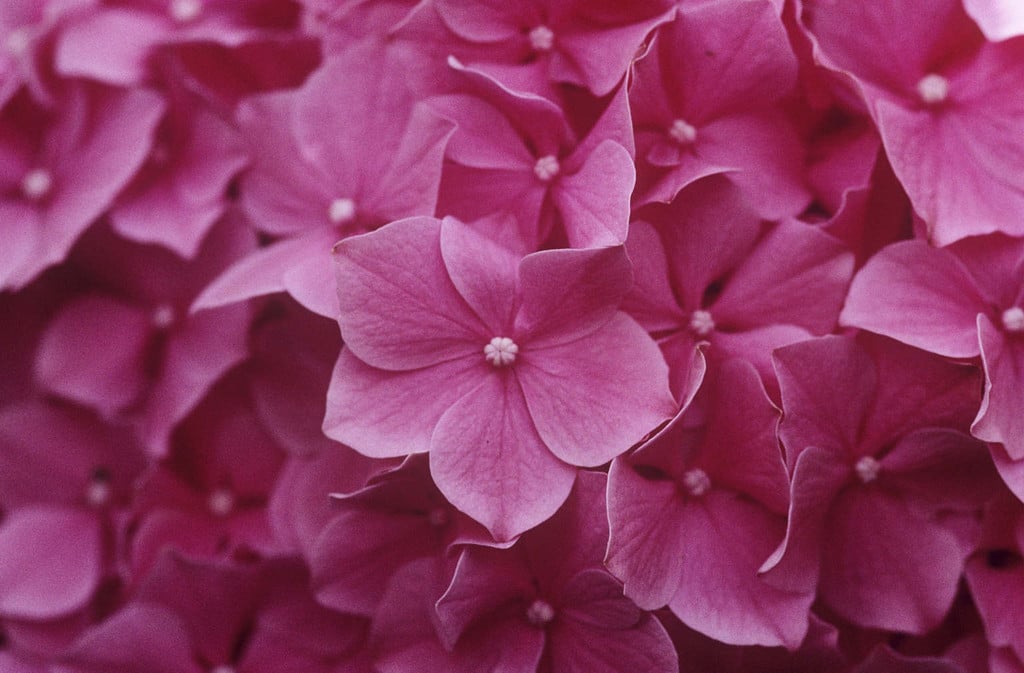
Hydrangea macrophylla 'King George' (H)

RHS Plant Profile
hydrangea 'King George'
hydrangea 'King George' RHS
Shrubs

A bushy, deciduous shrub growing to about 1.5m height and spread with elliptic, slightly serrated mid-green leaves, tinted red in autumn. Large flowerheads are bright red on alkaline soil and mauve-red on acidic soil, borne over a long period from early to late summer

Position

Partial shade

Soil Types

Clay, Loam

Max Height

1.5-2.5 metres

Max Spread

1.5-2.5 metres

Size

Time to Maturity
5–10 years
Max Spread
1.5-2.5 metres
Max Height
1.5-2.5 metres

Growing Conditions

Clay Loam
Moisture
Moist but well–drained
pH
Acid or Alkaline or Neutral

Position

Partial shade
Aspect
East–facing or North–facing or West–facing
Exposure
Sheltered
Hardiness
H5

Colour & Scent

Season Stem Flower Foliage Fruit
Spring
Summer
Autumn
Winter

Botanical Details

Family
Hydrangeaceae
Native to GB/Ireland
No
Foliage
Deciduous
Habit
Bushy
Potentially harmful
Skin allergen. Wear gloves and other protective equipment when handling. Pets (dogs, cats): Harmful if eaten. For further information and contact numbers regarding pets, see the HTA guide to potentially harmful plants
Genus
Hydrangea can be deciduous or evergreen shrubs, or self-clinging climbers, with flowers in clusters usually comprising both small fertile and more showy sterile flowers; often good autumn colour
Name Status
Accepted
Horticultural Group
Hortensia hydrangeas (also known as mopheads) are compact bushy deciduous shrubs with broadly ovate leaves and rounded flower clusters composed almost entirely of showy sterile flowers

How to Grow

Cultivation

Grow in any moist but well-drained soil in partial shade or grow in sun if soil remains reliably moist. Improve chalky soils with organic matter to support good growth. See shrubby hydrangea cultivation for further advice

Propagation

Propagate by softwood cuttings in early summer or hardwood cuttings in winter

Suggested planting locations and garden types

  • City and courtyard gardens
  • Coastal
  • Patio and container plants
  • Cottage and informal garden
  • Flower borders and beds

Pruning

See pruning group 4 for further advice and video guide

Pests

May be susceptible to aphids, scale insects, vine weevils and capsid bug

Diseases

May be susceptible to a leaf spot, powdery mildews, grey moulds (Botrytis) and honey fungus (rarely)