Festuca ovina
sheep's fescue
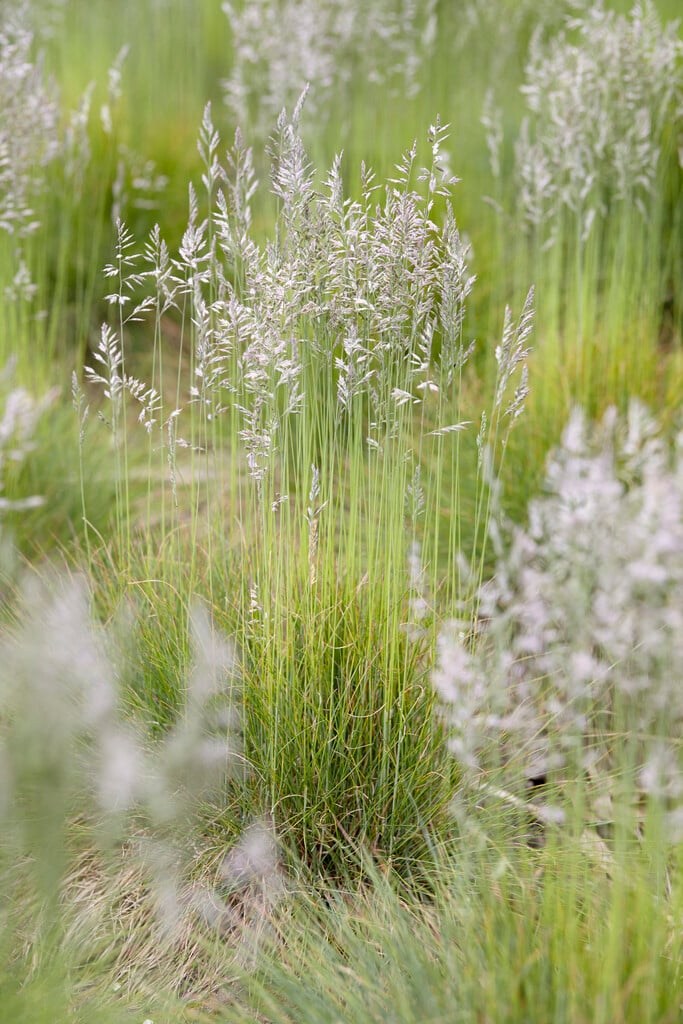
A native grass, common throughout the British Isles, and important fodder for upland sheep. Short, fine, tightly rolled leaves create neat tussocks, topped in late spring to early summer with compact sprays of purple-tinged green flowers. Plants can turn blue-green in very cold weather
Size
Ultimate height
0.1–0.5 metresTime to ultimate height
2–5 yearsUltimate spread
0.1–0.5 metresGrowing conditions
Moisture
Moist but well–drained, Well–drainedpH
Acid, NeutralColour & scent
| Stem | Flower | Foliage | Fruit | |
| Spring | Green | Green | ||
|---|---|---|---|---|
| Summer | Green | Green | ||
| Autumn | Green | |||
| Winter | Blue Green |
Position
- Full sun
Aspect
East–facing or South–facing or West–facing
Exposure
Exposed or ShelteredDrought resistance
Yes Hardiness
H5Botanical details
- Family
- Poaceae
- Native to GB / Ireland
- Yes
- Foliage
- Evergreen
- Habit
- Tufted
- Genus
Festuca can be herbaceous or evergreen, rhizomatous grasses with linear, often strikingly coloured, leaves, and dense or lax panicles of brownish flowers in summer
- Name status
Correct
How to grow
Cultivation
An important component of acid grassland on heaths, moors and mountains. Prefers well-drained, acid to neutral soil in full sun
Propagation
Propagate by seed or by division
Suggested planting locations and garden types
- Gravel garden
- Rock garden
- Wildlife gardens
- Low Maintenance
- Banks and slopes
- Garden edging
Pruning
Comb out dead foliage in spring and trim off damaged parts on older foliage
Pests
Generally pest-free
Diseases
May be susceptible to a rust
Get involved
The Royal Horticultural Society is the UK’s leading gardening charity. We aim to enrich everyone’s life through plants, and make the UK a greener and more beautiful place.