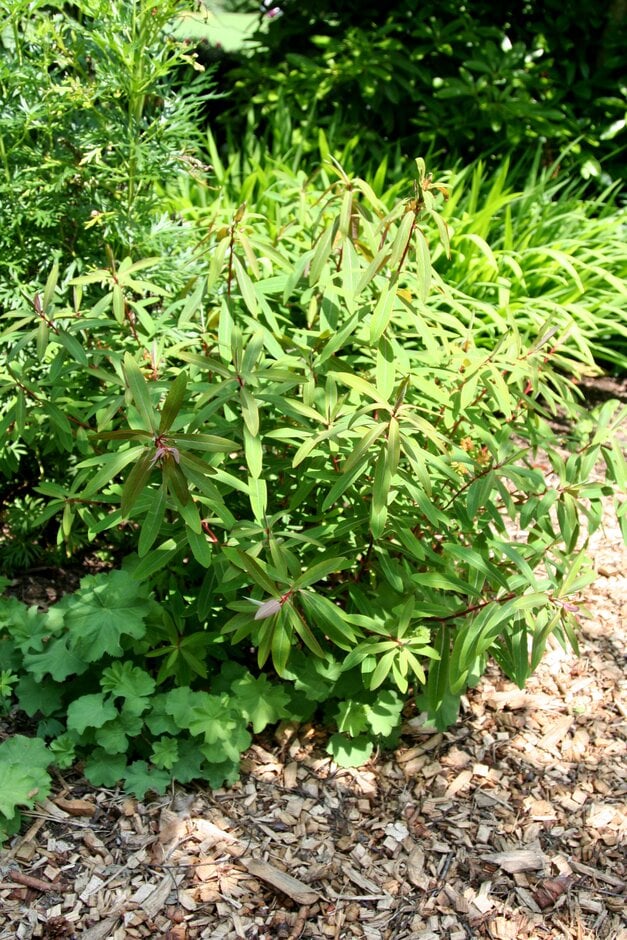
Euphorbia griffithii 'Fern Cottage'

<em>Euphorbia</em> <em>griffithii</em> 'Fern Cottage' RHS
Plants for pollinators
Herbaceous Perennial

A vigorous, suckering perennial with narrow strap-like leaves which emerge as bronzey-red coloured in the spring, turn to green in the summer then yellow and orange in the autumn. Upright stems produce orange flowers in the summer

Position

Partial shade

Soil Types

Clay, Loam

Max Height

0.5-1 metres

Max Spread

0.5-1 metres

Size

Time to Maturity
2–5 years
Max Spread
0.5-1 metres
Max Height
0.5-1 metres

Growing Conditions

Clay Loam
Moisture
Moist but well–drained
pH
Acid or Alkaline or Neutral

Position

Partial shade
Aspect
North–facing or South–facing or East–facing or West–facing
Exposure
Exposed or Sheltered
Hardiness
H7
Drought Resistance
Yes

Colour & Scent

Season Stem Flower Foliage Fruit
Spring
Summer
Autumn
Winter

Botanical Details

Family
Euphorbiaceae
Native to GB/Ireland
No
Foliage
Deciduous
Habit
Suckering
Potentially harmful
Humans/Pets: IRRITANT to skin/eyeharmful if eaten. Wear gloves and other protective equipment when handling. For further information and contact numbers regarding pets, see the HTA guide to potentially harmful plants
Genus
Euphorbia can be annuals, perennials, shrubs or succulents, with milky sap and small flowers held within cupped, often colourful bracts
Name Status
Accepted

How to Grow

Cultivation

Grow in moist, humus-rich soil in light dappled shade; can be invasive on light soils. See Euphorbia for further advice

Propagation

Propagate by division in early spring or take basal cuttings in spring or early summer; dip cut surfaces in charcoal or lukewarm water to prevent bleeding

Suggested planting locations and garden types

  • Cottage and informal garden
  • Coastal
  • Wildlife gardens
  • Flower borders and beds

Pruning

Cut back flowering shoots to ground level in late summer or autumn

Pests

Generally pest-free

Diseases

May be susceptible to rust, and to root and stem rots in wet conditions