Quick Facts
Generally easy to grow
1
Herbaceous or shrubby in habit
2
Many are hardy, others need lighter soils with good drainage or a milder location
3
Flowers in spring or summer
4
Ideally plant in spring
5
Maintain by either deadheading, thinning spent flowering stalks or cutting down in autumn
6
A few can be invasive where space is limited
7
Propagate by division or cuttings
8


Before you get started
What are euphorbias?
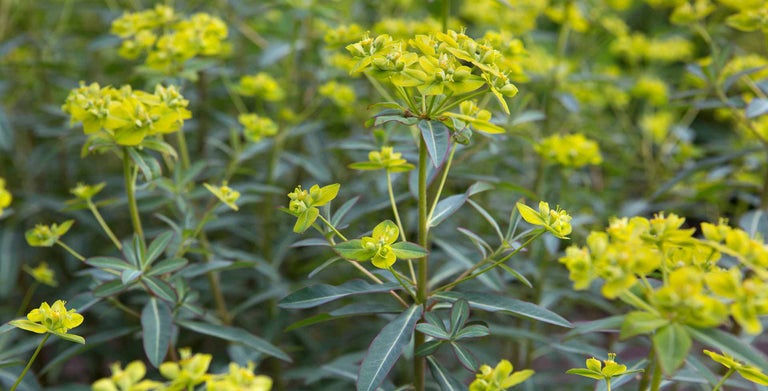
Euphorbia is a very large genus which includes houseplants, but the ones featured here all make great garden plants. They provide vibrant acid-yellow or orange flowerheads, and bold green or greyish-blue leaves. There are plants for sun and shade, wet or dry conditions, so these euphorbia are worth exploring as you’ll often find that there is one that we grow happily in most positions in a UK garden. However, not all are hardy, so if you live in a cold area, it’s worth checking the description first and assessing the microclimate your garden offers.
Choosing the right euphorbias
The main criteria for selecting euphorbias are growing conditions and plant size. In relation to colour, most euphorbias are green with lime or acid yellow flowers from early spring or in early to mid summer, but there are a few choices you could make with burgundy foliage (Euphorbia amygdaloides 'Purpurea' ), blue foliage (E. rigidaandE. charcias subsp. wulfenii) or even foliage (including E. characias 'Tasmanian Tiger').
Eventual size
Habits and size vary, so check the plant label before you buy. They range from plants about 10cm (4in) tall suitable for the front of borders to those more than 1.8m (6ft) tall to go at the back.
Growing conditions
Think about whether you can offer a sunny or shady spot, as well as how well the soil drains, when you’re choosing what euphorbia to plant where. There’s a euphorbia for most positions in the garden, and here are some examples:
- For a sunny border and suitable for most garden soils that aren't : Euphorbia schillingii, E. cornigeraand E. donii 'Amjillasa'
- For sandy, free draining soils and sunny conditions: Euphorbia. 'Abbey Dore', E. characias subsp wulfenii 'Jimmy Platt' and E. rigida. These are often the blue and silvery leaved
- For moist or shady conditions: E. amygdaloides var. robbiae for dry shade or E. palustrisand E. grifithii 'Dixter' for damp soils
- In need of shelter from cold in winter (such as in a sunny city garden) and good drainage: E. mellifera
To browse photos and descriptions of euphorbias, go to RHS Find a Plant. You can search by flower colour, height, growing conditions, RHS Award of Garden Merit and more, to help narrow down your choices.
Buying euphorbias
Euphorbias are widely available in garden centres and nurseries, and from online suppliers, with a larger choice available by mail order from specialist plant nurseries.
They are mainly sold as plants in spring or larger plants in flower in summer and early autumn. Most are in 1 litre or 2 litre pots, but occasionally you will see smaller plants in 9cm (3½in).
Planting
Where to plant
Check the plant label for growing conditions and for eventual size to indicate spacing, as this varies greatly, depending on what you choose to plant. You can also browse photos and descriptions of euphorbias in the RHS Find a Plant.
When to plant
In most areas of the UK, it is best to plant in spring as the moist soil and warmer weather helps plants establish quickly. This is epecailly true of the blue and silvery leaved types, which struggle through winter on moist soils, so are best not planted in autumn and winter.
How to plant
In the ground
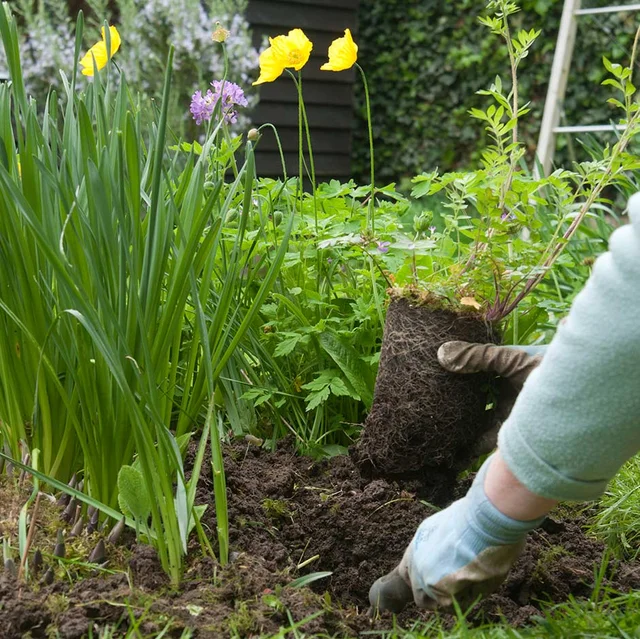
Plant euphorbias as you would any border . This is simple and usually involved digging a hole wider than the of the new plant, placing it in the hole, and backfilling with soil that has been improved with organic matter such as well-rotted garden or manure. In the case of plants that like dry conditions, such as E. myrsinites, the organic matter isn’t required. All require watering in well, and keeping moist until they establish.
In containers
Most euphorbias prefer growing in the ground, but some such as E. myrsinites, can do well in containers. This is mainly because they like free draining soil, and it’s very easy to mix up a potting compost that provides these conditions exactly. Mix 3 parts peat-free John Innes No. 3 compost with one part grit.
Ongoing Care
Watering
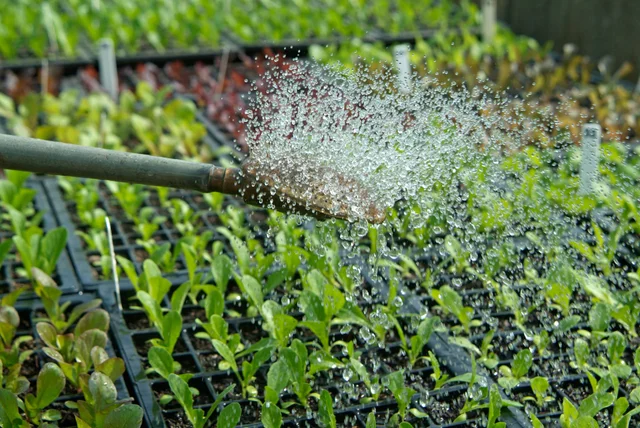
Water well during dry spells, to establish plants in the ground in their first two growing seasons. Plants in containers need watering from spring to autumn to prevent the drying out completely; the aim is to keep the compost just damp.
Feeding
Euphorbias rarely need feeding. They often become lush and leggy if the soil is rich or they are fed too much.
Deadheading
You’ll find some euphorbias with a permanent framework of branches will need after flowering or, if the entire flowered stems starts to die back, selectively cut these out at the base. You’ll be left with a good dome of short unflowered stems/shoots, which which will develop flowers the following year. Examples include E. characias subsp wulfenii and E. myrsinites.
The evergreen groundcover of E. amygdaloides var. robbiae can be deadheaded by shearing off spend flower stalks in summer to tidy up clumps.
Mulching
It’s always a good idea to mulch borders to keep down weeds and stop water evaporating. This may be with organic matter, preferably homemade compost, for normal garden growing conditions, or with gravel if growing the silvery and grey species in a Mediterranean-style planting scheme.
Pruning and Training
Pruning is usually carried out when you deadhead, so see our section on in Ongoing Care above. However, herbaceous plants will die back for winter, so old, brown and dead-looking stems can be cut off to tidy up the plant.
Propagating
Clump-forming (herbaceous) euphorbias
These are propagated by division. This will in late spring for the earliest flowering, as you will carry this out straight after flowering. For anything that blooms later in summer, the best time to divide is in spring as plants come into growth.
Shrubby euphorbias
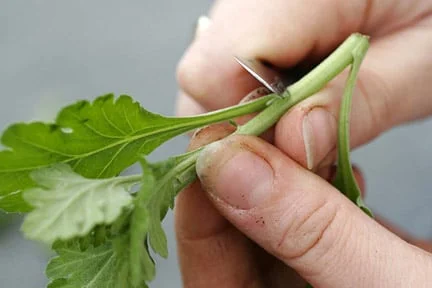
Shrubby euphorbias, including those that produce stems one year that flower in the next year, are propagated by softwood cuttings. Use the short shoots at the base in early spring. Ideal candidates include: E. characias and its relatives,E. myrsinitesand E. mellifera.
Growing from seed
Species can be grown from seed, but cultivars will not come true and the will be slightly different habits and colours. Collect seed when capsules turn brown.
like E. marginata can be sown in spring.
Problems
Euphorbias are generally trouble-free but can suffer from:
- Powdery mildews on the leaves and flowers
- Aphids causing distortion to leaves and stems
- Root rots if grown in wet soils
- Rust diseases can occasionally be a problem
Some species such as E. amygdaloides var. robbiae (wood spurge) and E. cyparissias (Cypress spurge) spread widely by and may become . Dig out the excess each spring to prevent them spreading too much.
If you’re a member of the RHS, you can use our online Gardening Advice Service, via MyRHS, for any gardening queries and problems or subscribe to the RHS Grow app.
Toxicity
All parts of euphorbia plants may cause severe discomfort if ingested, and the contact with the may irritate the skin or eyes. Wear gloves and other protective equipment when handling, especially when pruning