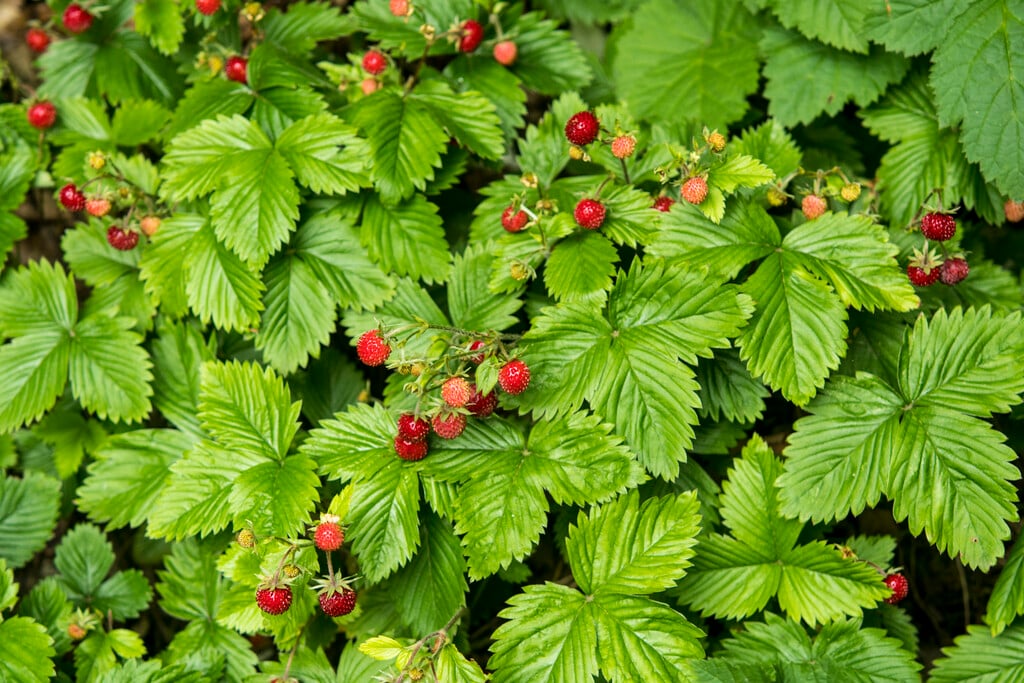
Fragaria vesca (F)

RHS Plant Profile
alpine strawberry

Other common names

wild strawberry, mefus gwyllt

Synonyms

Fragaria × ananassa Fraise des Bois

Plants for pollinators
Herbaceous Perennial Fruit Edible

A stoloniferous, spreading perennial forming rosettes of 3-palmate leaves, bright green leaves with toothed leaflets. In late spring it bears cymes of white flowers that are followed by red fruit 1cm long

Position

Full sun

Soil Types

Clay, Loam, Sand

Max Height

0.1-0.5 metres

Max Spread

0.5-1 metres

Size

Time to Maturity
1–2 years
Max Spread
0.5-1 metres
Max Height
0.1-0.5 metres

Growing Conditions

Clay Loam Sand
Moisture
Moist but well–drained
pH
Acid or Alkaline or Neutral

Position

Full sun
Aspect
North–facing or East–facing or South–facing or West–facing
Exposure
Sheltered
Hardiness
H6

Colour & Scent

Season Stem Flower Foliage Fruit
Spring
Summer
Autumn
Winter

Botanical Details

Family
Rosaceae
Native to GB/Ireland
Yes
Foliage
Semi evergreen
Habit
Trailing
Genus
Fragaria are stoloniferous perennials with leaves composed of three leaflets, and rounded white or pink flowers followed by edible red fruits
Name Status
Correct
Horticultural Group
This genus produces fruit, but not necessarily edible fruit
Plant Range
Europe

How to Grow

Cultivation

Grow in fertile, moist but well-drained soil. Can be grown in a wide range of soils, but thrives in alkaline soils. Tolerant of partial shade; for best fruiting grow full sun. Good for the edge of informal borders or as a ground cover; can spread. Suitable for container cultivation

Propagation

Remove and transplant runners. Propagate by seed sow at 13-18°C in spring

Suggested planting locations and garden types

  • Cottage and informal garden
  • Patio and container plants
  • Wildflower meadow
  • Wildlife gardens
  • Ground cover
  • Edible fruit

Pruning

Remove excess runners

Pests

May be susceptible to aphids, slugs, glasshouse red spider mite and vine weevil

Diseases

May be susceptible to strawberry viruses and root rot. Fruit may be susceptible to grey moulds