Eriophorum latifolium
broad-leaved cotton grass
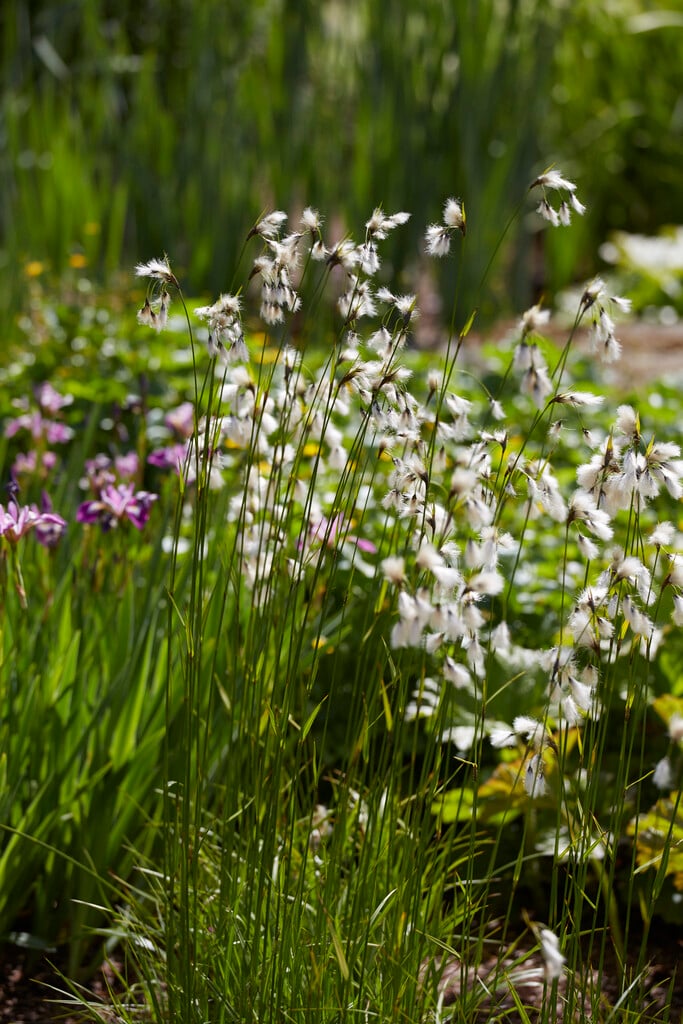
A native sedge, found in scattered sites across the British Isles. Spreads through rhizomes producing loose tufts of relatively broad leaves on triangular stems. Clusters of yellowish flowerheads are followed by tassel-like, cottonwool seedheads
Buy this plant
Size
Ultimate height
0.1–0.5 metresTime to ultimate height
2–5 yearsUltimate spread
1–1.5 metresGrowing conditions
Moisture
Poorly–drainedpH
Alkaline, NeutralColour & scent
| Stem | Flower | Foliage | Fruit | |
| Spring | Brown Yellow | Green | White | |
|---|---|---|---|---|
| Summer | Brown Yellow | Green | White | |
| Autumn | Green | |||
| Winter | Green |
Position
- Full sun
Aspect
East–facing or South–facing or West–facing
Exposure
Exposed or Sheltered Hardiness
H7Botanical details
- Family
- Cyperaceae
- Native to GB / Ireland
- Yes
- Foliage
- Evergreen
- Habit
- Tufted
- Genus
Eriophorum are evergreen rhizomatous perennials forming spreading clumps of tufted, linear leaves, with solitary or clustered, ovoid black-scaled, silky-haired flower-heads, followed by conspicuous cottony white fruiting heads
- Name status
Correct
How to grow
Cultivation
Occurs in wet, alkaline soils such as lowland fens and marshes. Suitable for pond edges, bog gardens and other neutral to alkaline soils that are permanently wet
Propagation
Propagate by seed or by division of rhizomes
Suggested planting locations and garden types
- Wildflower meadow
Pruning
No pruning required, but deadheading can prolong flowering
Pests
Generally pest-free
Diseases
Generally disease-free
Get involved
The Royal Horticultural Society is the UK’s leading gardening charity. We aim to enrich everyone’s life through plants, and make the UK a greener and more beautiful place.