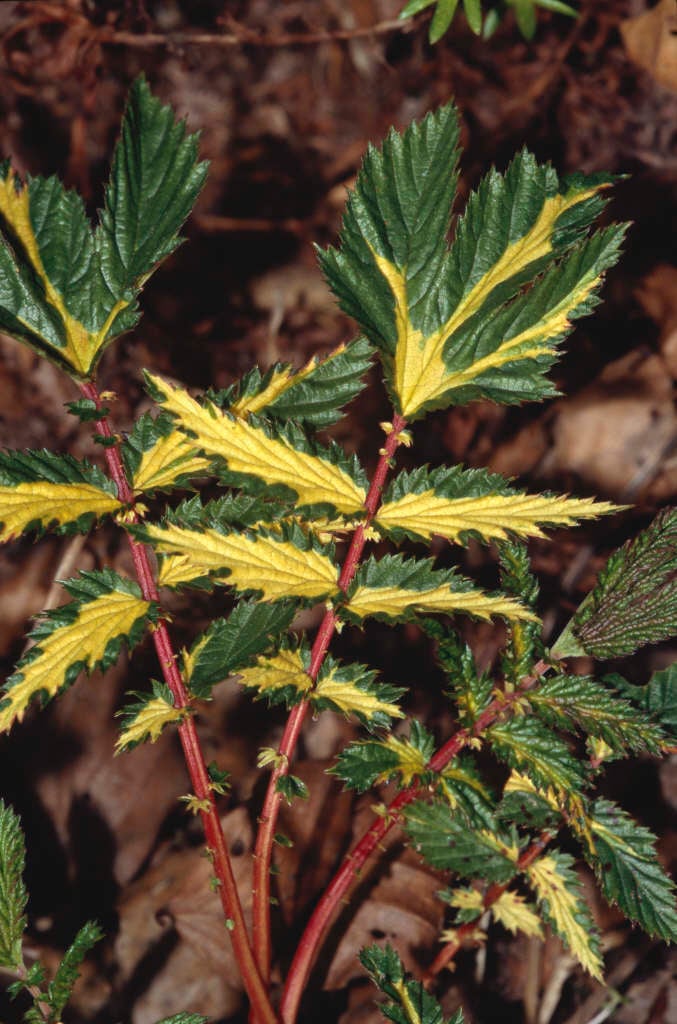
Filipendula ulmaria 'Variegata' (v)

RHS Plant Profile
variegated meadowsweet
variegated meadowsweet RHS

Synonyms

Filipendula alnifolia 'Variegata'

Plants for pollinators
Herbaceous Perennial

A clump-forming perennial to around 90cm high, with upright stems bearing irregularly divided green leaves, splashed with creamy-yellow, and coated with fine white hairs on the undersides. Broad, feathery clusters of tiny, fragrant cream flowers are produced on branching stems in summer

Position

Full sun, Partial shade

Soil Types

Clay, Loam

Max Height

0.5-1 metres

Max Spread

0.1-0.5 metres

Size

Time to Maturity
2–5 years
Max Spread
0.1-0.5 metres
Max Height
0.5-1 metres

Growing Conditions

Clay Loam
Moisture
Moist but well–drained or Poorly–drained
pH
Acid or Alkaline or Neutral

Position

Full sun Partial shade
Aspect
East–facing or South–facing or North–facing or West–facing
Exposure
Exposed or Sheltered
Hardiness
H6

Colour & Scent

Fragrance Flower
Season Stem Flower Foliage Fruit
Spring
Summer
Autumn
Winter

Botanical Details

Family
Rosaceae
Native to GB/Ireland
No
Foliage
Deciduous
Habit
Bushy
Genus
Filipendula are rhizomatous herbaceous perennials with pinnately divided leaves and large sprays of small rosy-pink or white flowers borne on leafy stems well above the foliage
Name Status
Accepted

How to Grow

Cultivation

Grow in full sun in moisture-retentive soil, tolerates part shade if soil is not too dry

Propagation

Propagate by division. Will seed freely but may not come true to type

Suggested planting locations and garden types

  • Wildflower meadow
  • Cottage and informal garden
  • Wildlife gardens
  • Flower borders and beds

Pruning

Deadhead flowers if seed is not required; remove flowered stems to prolong the flowering season

Pests

Generally pest free

Diseases

May be susceptible to powdery mildews in dry soil or fungal leaf spot