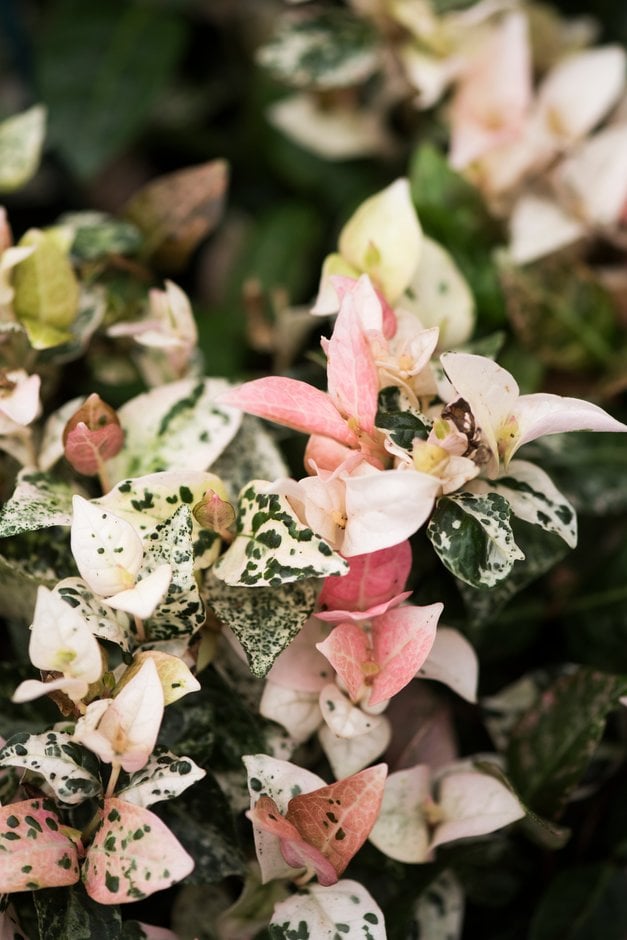
Trachelospermum jasminoides 'Tricolor' (v)

RHS Plant Profile
star jasmine 'Tricolor'
star jasmine 'Tricolor' RHS / Joanna Kossak
Climber Wall Shrub Conservatory Greenhouse

A slow-growing, woody climber with twining stems, evergreen, variegated leaves which are soft pink and cream when young, mature to dark green mottled with white, and turn reddish in winter, and very fragrant white flowers in late summer

Position

Full sun, Partial shade

Soil Types

Chalk, Loam, Sand

Max Height

2.5-4 metres

Max Spread

1.5-2.5 metres

Size

Time to Maturity
5–10 years
Max Spread
1.5-2.5 metres
Max Height
2.5-4 metres

Growing Conditions

Chalk Loam Sand
Moisture
Moist but well–drained or Well–drained
pH
Acid or Alkaline or Neutral

Position

Full sun Partial shade
Aspect
South–facing or West–facing
Exposure
Sheltered
Hardiness
H4

Colour & Scent

Fragrance Flower
Season Stem Flower Foliage Fruit
Spring
Summer
Autumn
Winter

Botanical Details

Family
Apocynaceae
Native to GB/Ireland
No
Foliage
Evergreen
Habit
Climbing
Genus
Trachelospermum are self-twining evergreen climbing shrubs with glossy ovate leaves and jasmine-like, highly fragrant flowers, sometimes followed by bean-like seed-pods
Name Status
Accepted

How to Grow

Cultivation

Outdoors, grow in fertile, well-drained soil in full sun or partial shade, and provide shelter from cold, drying winds, for example by growing against a warm, sunny wall; in areas prone to severe frosts, grow in a cool greenhouse or conservatory in peat-free, loam-based potting compost in full light with shade from hot sun and with good ventilation, water freely and apply a monthly balanced liquid fertilizer during the growing season, and water sparingly in winter

Propagation

Propagate by semi-ripe cuttings with bottom heat in summer, or by layering in autumn

Suggested planting locations and garden types

  • City and courtyard gardens
  • Cottage and informal garden
  • Patio and container plants
  • Hedging and screens
  • Wall side borders

Pruning

Pruning group 11 in early spring

Pests

May be susceptible to cushion scale, mealybugs and glasshouse red spider mite

Diseases

May be susceptible to honey fungus