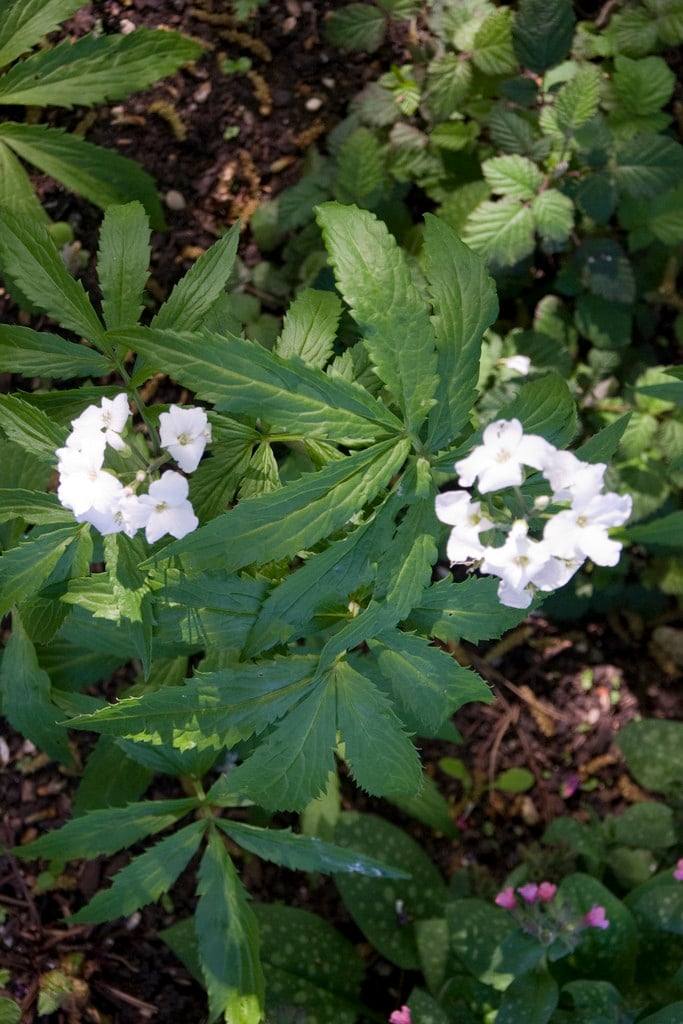
Dentaria pinnata

RHS Plant Profile
pinnate coral root
pinnate coral root RHS

Other common names

seven-leaved toothwort

Synonyms

Cardamine pinnata, Dentaria pinnata

Herbaceous Perennial

A herbaceous perennial to about 45cm forming spreading clumps from succulent rhizomes. The divided, tooth-edged leaves are topped by clusters of chalk-white, four-petalled flowers in mid- to late spring

Position

Full shade, Partial shade

Soil Types

Loam

Max Height

0.1-0.5 metres

Max Spread

0.1-0.5 metres

Size

Time to Maturity
2–5 years
Max Spread
0.1-0.5 metres
Max Height
0.1-0.5 metres

Growing Conditions

Loam
Moisture
Moist but well–drained
pH
Acid or Alkaline or Neutral

Position

Full shade Partial shade
Aspect
East–facing or North–facing or West–facing
Exposure
Sheltered
Hardiness
H7

RHS Recommended: for People & Planet

Growing conditions for maximum benefit

This plant will provide the maximum benefits if it is healthy and allowed to grow to maturity

For Bio-Diversity

  • Plants for Pollinators

Colour & Scent

Season StemFlowerFoliageFruit
Spring White Green
Summer Green
Autumn
Winter

Botanical Details

Family
Brassicaceae
Native to GB/Ireland
No
Foliage
Deciduous
Habit
Bushy
Genus
Cardamine are herbaceous perennials with simple, palmately or pinnately divided leaves and short racemes of 4-petalled white, yellow, pink or purplish flowers in spring or summer
Name Status
Synonym
Plant Range
W & C Europe

How to Grow

Cultivation

Grow in moist, humus-rich soil in full or partial shade

Propagation

Propagate by seed or division

Suggested planting locations and garden types

  • Cottage and informal garden
  • Flower borders and beds

Pruning

No pruning required

Pests

May be susceptible to aphids and flea beetles

Diseases

Generally disease-free