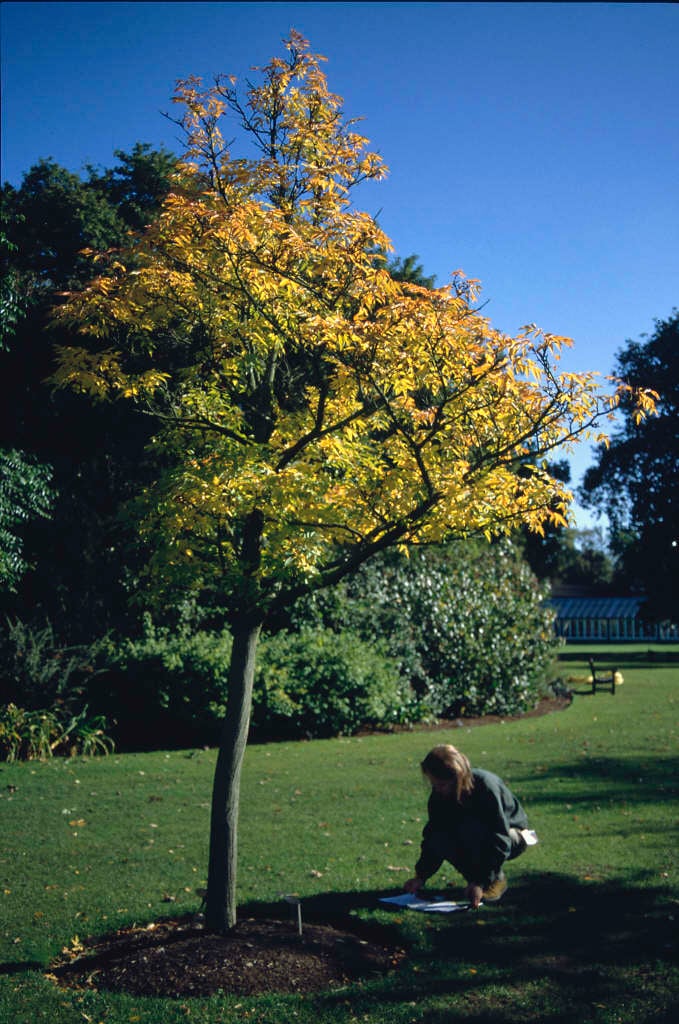
Picrasma quassioides

RHS Plant Profile
quassia
quassia RHS 1999

Synonyms

Picrasma ailanthoides

Trees

A slender deciduous tree to 8m tall, with pinnate leaves to 40cm long, colouring well in autumn, and sprays of tiny green flowers in early summer, followed by red berries

Position

Full sun, Partial shade

Soil Types

Loam

Max Height

4-8 metres

Max Spread

2.5-4 metres

Size

Time to Maturity
20–50 years
Max Spread
2.5-4 metres
Max Height
4-8 metres

Growing Conditions

Loam
Moisture
Moist but well–drained or Well–drained
pH
Acid or Alkaline or Neutral

Position

Full sun Partial shade
Aspect
South–facing or East–facing or West–facing
Exposure
Sheltered
Hardiness
H7

Colour & Scent

Season Stem Flower Foliage Fruit
Spring
Summer
Autumn
Winter

Botanical Details

Family
Simaroubaceae
Native to GB/Ireland
No
Foliage
Deciduous
Habit
Bushy
Genus
Picrasma are deciduous trees with rather large, pinnate leaves composed of several pairs of ovate leaflets, with loose clusters of tiny flowers in the leaf axils, followed by small berries
Name Status
Correct
Plant Range
Temperate Asia

How to Grow

Cultivation

Grow in fertile, well-drained soil in full sun or partial shade. Shelter from cold drying winds

Propagation

Propagate by seed sown in containers in a cold frame in autumn

Suggested planting locations and garden types

  • Cottage and informal garden
  • City and courtyard gardens
  • Flower borders and beds

Pruning

Pruning group 1

Pests

Generally pest-free

Diseases

Generally disease-free