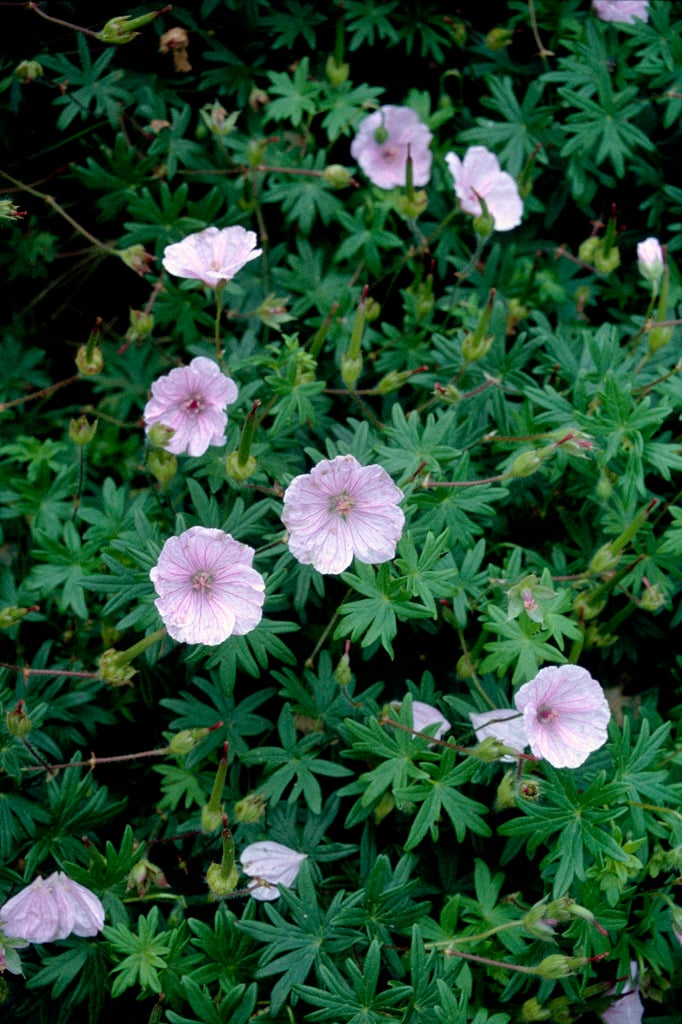
Geranium sanguineum var. striatum 'Splendens'

RHS Plant Profile
bloody cranesbill 'Splendens'
bloody cranesbill 'Splendens' RHS

Synonyms

Geranium sanguineum 'Splendens'

Award of Garden MeritPlants for pollinators
Alpine Rockery Herbaceous Perennial

Forms substantial mounds to 30cm tall, spread to 70cm. Flowers are very pale shell pink with darker veins, freely produced from late spring into early summer

Position

Full shade, Full sun, Partial shade

Soil Types

Chalk, Loam, Sand

Max Height

0.1-0.5 metres

Max Spread

0.1-0.5 metres

Size

Time to Maturity
2–5 years
Max Spread
0.1-0.5 metres
Max Height
0.1-0.5 metres

Growing Conditions

Chalk Loam Sand
Moisture
Moist but well–drained or Well–drained
pH
Acid or Alkaline or Neutral

Position

Full shade Full sun Partial shade
Aspect
South–facing or North–facing or West–facing or East–facing
Exposure
Exposed or Sheltered
Hardiness
H7

Colour & Scent

Season Stem Flower Foliage Fruit
Spring
Summer
Autumn
Winter

Botanical Details

Family
Geraniaceae
Native to GB/Ireland
No
Foliage
Deciduous
Habit
Matforming
Genus
Geranium can be annuals, biennials and perennials, herbaceous or evergreen, with rounded, usually palmately lobed or divided leaves, and lax inflorescences of rounded, 5-petalled flowers
Name Status
Accepted

How to Grow

Cultivation

Grow in any, moderately fertile soil apart from waterlogged soils. Full sun or partial shade is best but shade is tolerated

Propagation

Propagate by division in spring or propagate by basal cuttings in early to mid spring and root with bottom heat

Suggested planting locations and garden types

  • Rock garden
  • Cottage and informal garden
  • Wildlife gardens
  • Wildflower meadow
  • Low Maintenance
  • Flower borders and beds
  • Ground cover

Pruning

Remove flowered stems and old leaves to encourage the production of fresh leaves and flowers

Pests

May be susceptble to vine weevil, capsid bug and sawflies

Diseases

May be susceptible to downy mildews and powdery mildews