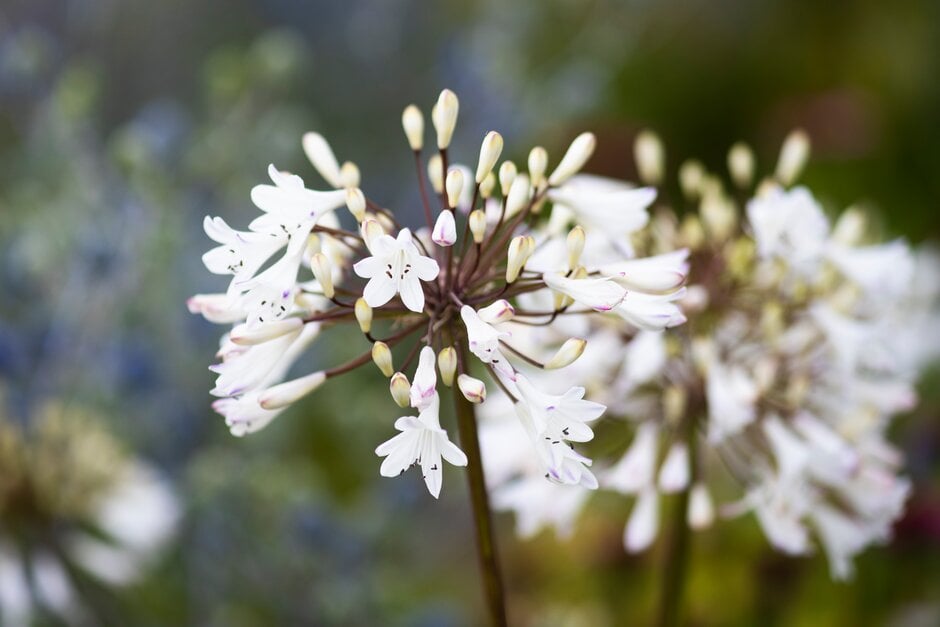
Agapanthus 'White Giant'
African lily 'White Giant'
An evergreen, clump-forming perennial with strap-like dark green leaves. Upright stems from between 1-1.5m in height produce large, rounded clumps of star-shaped white flowers throughout the summer. Works well as part of a mediterranean or mixed planting scheme.

Buy this plant
Size
Ultimate height
1–1.5 metresTime to ultimate height
1–2 yearsUltimate spread
0.5–1 metresGrowing conditions
Moisture
Moist but well–drained, Well–drainedpH
Acid, Alkaline, NeutralColour & scent
| Stem | Flower | Foliage | Fruit | |
| Spring | Green | |||
|---|---|---|---|---|
| Summer | White | Green | ||
| Autumn | Green | |||
| Winter |
Position
- Full sun
Aspect
East–facing or South–facing or West–facing
Exposure
Sheltered Hardiness
H4Botanical details
- Family
- Amaryllidaceae
- Native to GB / Ireland
- No
- Foliage
- Evergreen
- Habit
- Clump forming
- Potentially harmful
- Humans/Pets (dogs, cats): harmful if eaten. Wear gloves and other protective equipment when handling. For further information and contact numbers regarding pets, see the HTA guide to potentially harmful plants
- Genus
Agapanthus are clump-forming perennials with narrowly strap-shaped leaves, evergreen in some species, and erect stems bearing umbels of funnel-shaped blue or white flowers
- Name status
Accepted
How to grow
Cultivation
In mild areas, grow in well-drained soil in a sunny, sheltered position. Otherwise grow in a container and position in full sun. Water during the growing season and liquid feed monthly from spring to flowering. Overwinter the whole container in a cold greenhouse. See agapanthus cultivation
Propagation
Propagate by division every three to four years, in spring
Suggested planting locations and garden types
- Cottage and informal garden
- Patio and container plants
- Coastal
- Architectural
- Gravel garden
- Mediterranean climate plants
- Cut flowers
- Flower borders and beds
- Edible fruit
Pruning
No need to cut down in the autumn as the seedheads look attractive over winter
Pests
May be susceptible to slugs and snails and agapanthus gall midge
Diseases
May be susceptible to a virus
Get involved
The Royal Horticultural Society is the UK’s leading gardening charity. We aim to enrich everyone’s life through plants, and make the UK a greener and more beautiful place.