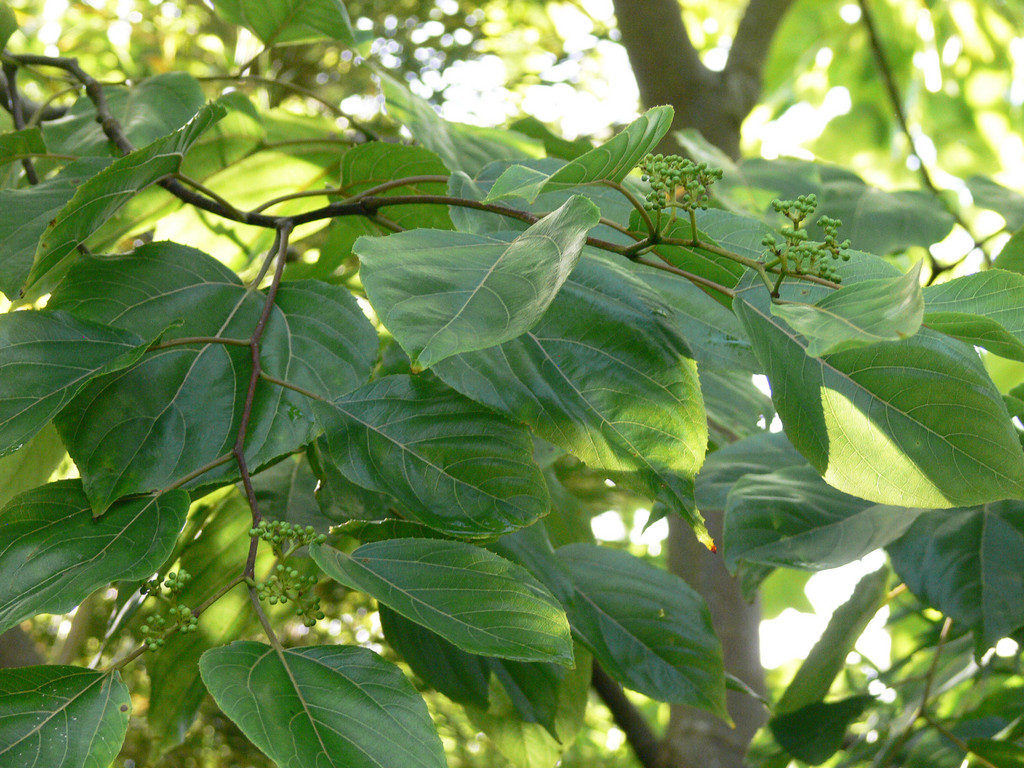
Hovenia dulcis

RHS Plant Profile
Chinese raisin tree
Chinese raisin tree RHS

Other common names

Japanese raisin tree, raisin tree

Trees

An upright, then spreading, tree with glossy, dark green, heart-shaped leaves, 10-20cm long, and downy beneath. Sprays of tiny, cream, fragrant flowers appear in summer and, as they fade, the flower stems swell, turning red, sweet and edible. They later produce small, black fruit

Position

Full sun

Soil Types

Chalk, Clay, Loam, Sand

Max Height

8-12 metres

Max Spread

wider than 8 metres

Size

Time to Maturity
10–20 years
Max Spread
wider than 8 metres
Max Height
8-12 metres

Growing Conditions

Chalk Clay Loam Sand
Moisture
Moist but well–drained or Well–drained
pH
Alkaline or Neutral

Position

Full sun
Aspect
West–facing or South–facing
Exposure
Sheltered
Hardiness
H5

Colour & Scent

Fragrance Flower
Season Stem Flower Foliage Fruit
Spring
Summer
Autumn
Winter

Botanical Details

Family
Rhamnaceae
Native to GB/Ireland
No
Foliage
Deciduous
Habit
Bushy
Genus
Hovenia are deciduous trees with alternate, heart-shaped or oval leaves, fragrant flowers and small, spherical fruit. The flowers are small, greenish-yellow, and carried in loose, branched clusters at or near the ends of the branches
Name Status
Correct
Plant Range
India to Japan

How to Grow

Cultivation

Needs humus-rich, neutral to slightly alkaline soil, in full sun with shelter from cold wind. Best in areas with a long, hot summer to ripen the wood. Unripened wood is liable to frost damage, and produces fewer flowers

Propagation

Propagate by seed, or take greenwood cuttings in early summer, or hardwood cuttings in late autumn

Suggested planting locations and garden types

  • City and courtyard gardens
  • Low Maintenance

Pruning

Pruning group 1

Pests

Generally problem free

Diseases

May be susceptible to coral spot on unripe shoots