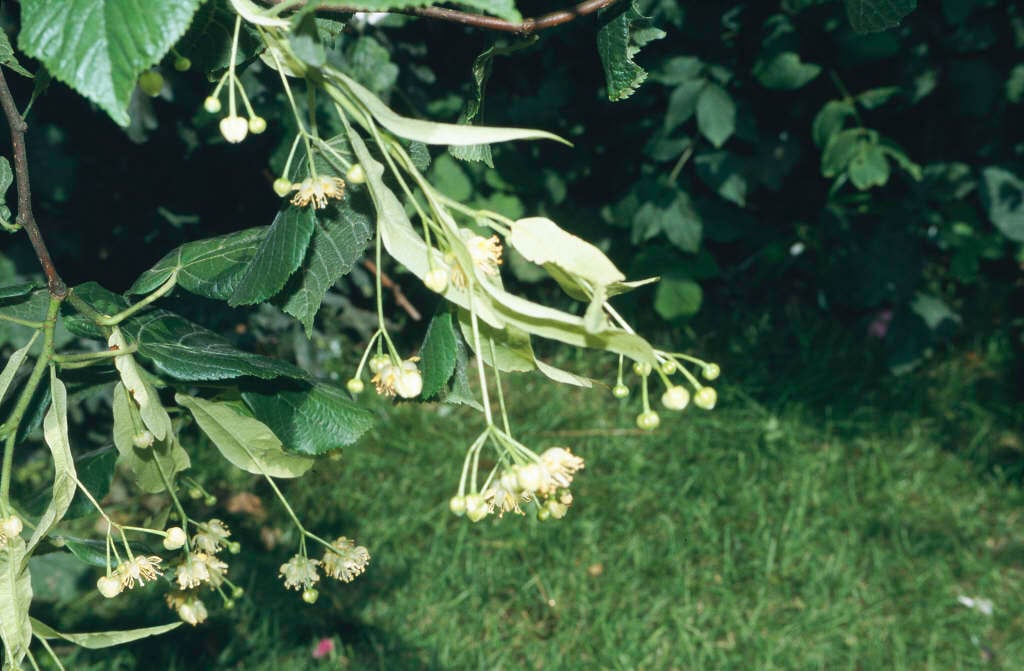
Tilia platyphyllos 'Rubra'

RHS Plant Profile
red-twigged lime
red-twigged lime RHS 2002

Other common names

large-leaved lime 'Rubra'

Synonyms

Tilia platyphyllos 'Corallina'

Award of Garden MeritPlants for pollinators
Trees

A large vigorous deciduous tree to 30m tall, with a uniformly semi-upright habit, the twigs reddish in winter. Heart-shaped dark green leaves to 12cm in length, turn yellow in autumn. The pendent clusters of 3-5 pale yellow flowers are sweetly fragrant, and produced in midsummer; pollarding highlights the young red shoots for winter colour

Position

Full sun, Partial shade

Soil Types

Chalk, Clay, Loam, Sand

Max Height

Higher than 12 metres

Max Spread

wider than 8 metres

Size

Time to Maturity
20–50 years
Max Spread
wider than 8 metres
Max Height
Higher than 12 metres

Growing Conditions

Chalk Clay Loam Sand
Moisture
Moist but well–drained
pH
Alkaline or Neutral

Position

Full sun Partial shade
Aspect
West–facing or South–facing or East–facing
Exposure
Sheltered
Hardiness
H6

Colour & Scent

Fragrance Flower
Season Stem Flower Foliage Fruit
Spring
Summer
Autumn
Winter

Botanical Details

Family
Malvaceae
Native to GB/Ireland
No
Foliage
Deciduous
Habit
Columnar upright
Genus
Tilia are deciduous trees with broadly ovate or heart-shaped leaves and pendulous clusters of fragrant yellow-green flowers, followed by conspicuous winged fruits
Name Status
Accepted

How to Grow

Cultivation

Suitable for parks and very large gardens. Grow in moist but well-drained soil in full sun or part shade, with shelter from cold winds. May produce thickets of stems (suckers) at the base of the trunk. For more advice see tree cultivation

Propagation

Propagate by chip budding although care must be taken with the choice of rootstock or propagate by suckers in winter

Suggested planting locations and garden types

  • Architectural
  • Wildlife gardens
  • Hedging and screens

Pruning

Pruning group 1; a suitable tree for coppicing, pleaching and pollarding; remove suckers at the base of the trunk in spring

Pests

May be susceptible to aphids, horse chestnut scale, caterpillars, sawflies and gall mites

Diseases

May be susceptible to sooty mould, phytophthora root rot and honey fungus