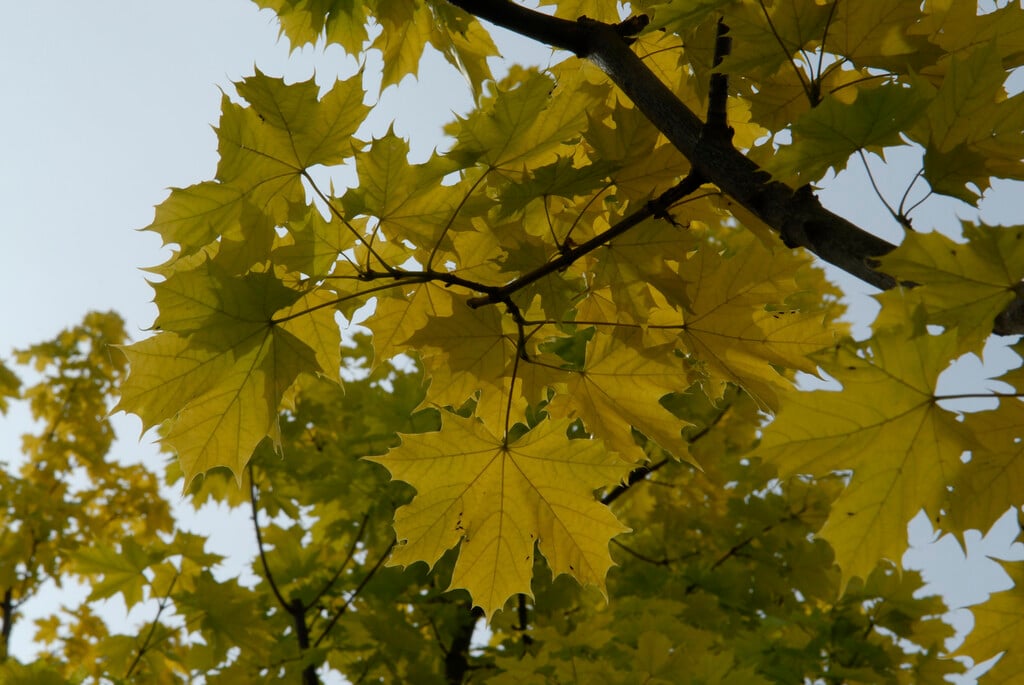
Acer pseudoplatanus 'Worley'

RHS Plant Profile
golden sycamore
golden sycamore visionspictures.com

Synonyms

Acer pseudoplatanus 'Worleei'
Acer pseudoplatanus var. worleei

Plants for pollinators
Trees

A deciduous tree, to around 15m high, with large, five-lobed leaves that emerge pale yellow and mature to green. Leaves are held on contrasting red stalks, and turn yellow again before falling in autumn. Small yellow-green flowers are produced in spring, followed later by typical winged seeds

Position

Full sun, Partial shade

Soil Types

Chalk, Clay, Loam, Sand

Max Height

Higher than 12 metres

Max Spread

wider than 8 metres

Size

Time to Maturity
20–50 years
Max Spread
wider than 8 metres
Max Height
Higher than 12 metres

Growing Conditions

Chalk Clay Loam Sand
Moisture
Moist but well–drained or Well–drained
pH
Acid or Alkaline or Neutral

Position

Full sun Partial shade
Aspect
East–facing or North–facing or South–facing or West–facing
Exposure
Exposed or Sheltered
Hardiness
H7

Colour & Scent

Season Stem Flower Foliage Fruit
Spring
Summer
Autumn
Winter

Botanical Details

Family
Sapindaceae
Native to GB/Ireland
No
Foliage
Deciduous
Habit
Columnar upright, Spreading branched
Genus
Acer can be deciduous trees or large shrubs with paired, often palmately-lobed leaves and small flowers followed by characteristic winged fruits. Many have fine autumn colour, and some have ornamental stems
Name Status
Accepted

How to Grow

Cultivation

Tolerates most soils and positions, though may need protection from strong sun to prevent leaf scorch. See tree cultivation for further advice

Propagation

Propagate by grafting

Suggested planting locations and garden types

  • Architectural
  • Cottage and informal garden
  • Coastal
  • Wildlife gardens
  • Low Maintenance

Pruning

Minimal pruning required; see pruning group 1

Pests

May be susceptible to gall mites, aphids, caterpillars and scale insects, including horse chestnut scale

Diseases

May be susceptible to tar spot, verticillium wilt and honey fungus