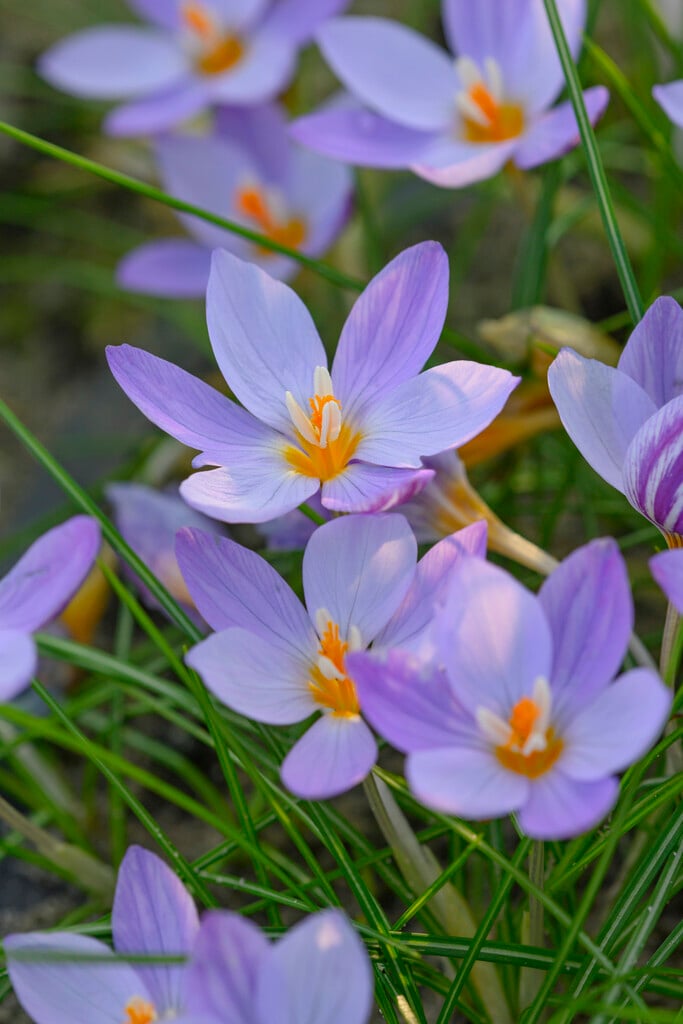
Crocus laevigatus 'Fontenayi'
A small, perennial corm growing to around 5cm high, with long, narrow green leaves marked with a fine, central white stripe. Scented, goblet-shaped, pale lavender flowers, with buff-coloured outer petals streaked with purple, are produced from the end of autumn to mid winter
Size
Ultimate height
Up to 10cmTime to ultimate height
2–5 yearsUltimate spread
0–0.1 metreGrowing conditions
Moisture
Well–drainedpH
Acid, Alkaline, NeutralColour & scent
| Stem | Flower | Foliage | Fruit | |
| Spring | ||||
|---|---|---|---|---|
| Summer | ||||
| Autumn | Purple | Green White | ||
| Winter | Purple | Green White |
Position
- Full sun
Aspect
South–facing or West–facing
Exposure
Exposed or Sheltered Hardiness
H4Botanical details
- Family
- Iridaceae
- Native to GB / Ireland
- No
- Foliage
- Deciduous
- Habit
- Tufted
- Potentially harmful
- Ornamental bulbs - not to be eaten. Wear gloves and other protective equipment when handling. Pets: Ornamental bulbs - not to be eaten - see the HTA guide to potentially harmful plants for further information and useful contact numbers
- Genus
Crocus are dwarf, deciduous perennials growing from a corm, with linear leaves usually with a silvery central stripe, and goblet-shaped, sometimes fragrant flowers in autumn or early spring
- Name status
Unresolved
How to grow
Cultivation
Grow in gritty, well-drained, poor to moderately fertile soil in full sun. If planted outdoors, protect from excess winter wet, or grow in pots that can be brought indoors to enjoy when flowering. Prefers to be on the dry side during dormancy. See crocus cultivation for more advice
Propagation
Propagate by division of established clumps, or by separating cormlets when dormant
Suggested planting locations and garden types
- City and courtyard gardens
- Cottage and informal garden
- Gravel garden
- Patio and container plants
- Rock garden
- Wildlife gardens
- Flower borders and beds
- Conservatory and greenhouse
Pruning
No pruning required
Pests
May be susceptible to rodents and birds
Diseases
Generally disease-free, corms may rot in storage
Get involved
The Royal Horticultural Society is the UK’s leading gardening charity. We aim to enrich everyone’s life through plants, and make the UK a greener and more beautiful place.
