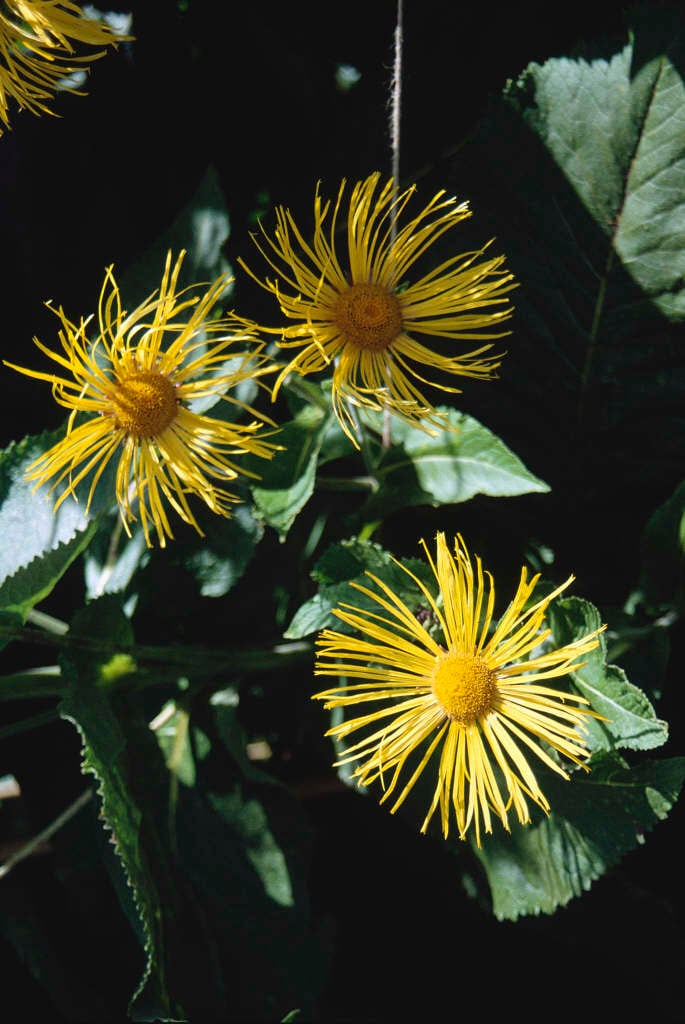
Inula magnifica

RHS Plant Profile
giant inula
giant inula RHS 1999
Plants for pollinators
Herbaceous Perennial

An upright perennial to 2m tall, with branching purplish stems bearing hairy ovate leaves to 25cm long, and several deep yellow flower heads to 15cm wide in early summer

Position

Full sun

Soil Types

Loam

Max Height

1.5-2.5 metres

Max Spread

0.5-1 metres

Size

Time to Maturity
2–5 years
Max Spread
0.5-1 metres
Max Height
1.5-2.5 metres

Growing Conditions

Loam
Moisture
Moist but well–drained or Poorly–drained
pH
Acid or Alkaline or Neutral

Position

Full sun
Aspect
West–facing or South–facing
Exposure
Sheltered
Hardiness
H6

Colour & Scent

Season Stem Flower Foliage Fruit
Spring
Summer
Autumn
Winter

Botanical Details

Family
Asteraceae
Native to GB/Ireland
No
Foliage
Deciduous
Habit
Bushy
Genus
Inula may be annuals, herbaceous perennials or sub-shrubs, moslty with large basal leaves and daisy-like yellow flower-heads, often with narrow ray-florets
Name Status
Correct
Plant Range
Caucasus

How to Grow

Cultivation

Grow in a deep, fertile, moist but well-drained soil in full sun. Will also tolerate boggy conditions

Propagation

Propagate by seed in spring, or as soon as ripe in autumn, and sow into containers in a cold frame. Propagate by division in spring or autumn

Suggested planting locations and garden types

  • Wildlife gardens
  • Wildflower meadow
  • Cottage and informal garden
  • Flower borders and beds

Pruning

Cut back old stems and foliage as the plant dies back for the winter

Pests

Generally pest-free

Diseases

Powdery mildews may be a problem in conditions that are too dry