Nymphaea 'Newton' (H)
waterlily 'Newton'
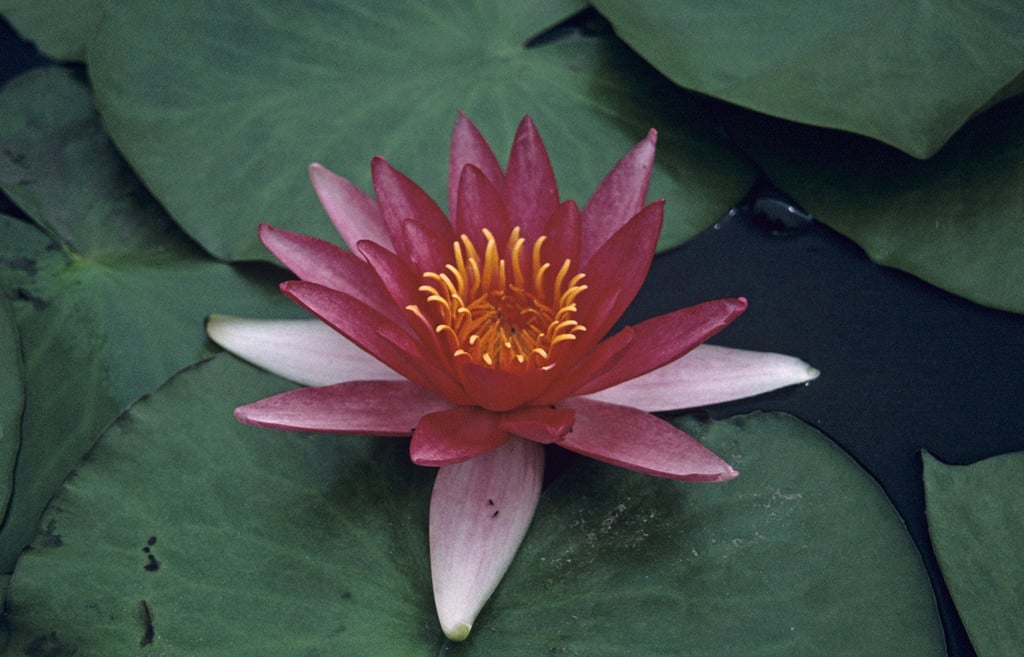
An aquatic perennial with rounded, mid-green leaves with purple blotches, to 20cm across. The star-shaped, slightly-scented, rose-red flowers, to 14cm across, are held above the water surface Dwarf/small cultivars reach 30–60cm (1–2ft) wide, and need water 30–45cm (12–18in) deep Medium cultivars reach 60–120cm (2–4ft) wide, and need water 45–75cm (18–30in) deep Large cultivars reach up to 2.4m (8ft) wide, and need water 75–120cm (30in–4ft) deep For a suitable planting depth in your pond, please follow the plant label guidelines
Size
Ultimate height
Time to ultimate height
2–5 yearsUltimate spread
1–1.5 metresGrowing conditions
Moisture
Poorly–drainedpH
Acid, Alkaline, NeutralColour & scent
| Stem | Flower | Foliage | Fruit | |
| Spring | Green Purple | |||
|---|---|---|---|---|
| Summer | Red Yellow | Green Purple | ||
| Autumn | Green Purple | |||
| Winter |
Position
- Full sun
Aspect
South–facing or West–facing
Exposure
Exposed or Sheltered Hardiness
H5Botanical details
- Family
- Nymphaeaceae
- Native to GB / Ireland
- No
- Foliage
- Deciduous
- Habit
- Submerged, Floating
- Genus
Nymphaea are rhizomatous, submerged aquatic perennials with floating, rounded leaves and showy, sometimes fragrant, cup- or bowl-shaped flowers in a wide range of colours, held on or above the water and followed by submerged, berry-like fruits
- Name status
Unresolved
- Horticultural Group
- Hardy Nymphaea are aquatic perennials with rounded floating leaves and showy flowers on or just above the water, with numerous narrow petals and conspicuous stamens, in white and shades of yellow, pink and red
How to grow
Cultivation
Grow in undisturbed water in full sun. Plant in baskets in loamy soil with crowns just below soil surface and covered with pea shingle. Position basket so that it is covered by 15-25cm of water; as the plants establish lower the plants to twice the initial planting depth. Feed during the growing season with aquatic fertiliser at the manufacturer's recommended rate. See waterlily cultivation
Propagation
Propagate by division of rhizomes or offsets in summer, place pots in shallow water until established
Suggested planting locations and garden types
Pruning
Deadhead and remove yellow leaves regularly
Pests
May be susceptible to susceptible to waterlily beetle, waterlily aphid, brown china-mark moth and leaf-mining midge
Diseases
May be susceptible to crown rot, brown spot and waterlily leaf spot
Get involved
The Royal Horticultural Society is the UK’s leading gardening charity. We aim to enrich everyone’s life through plants, and make the UK a greener and more beautiful place.