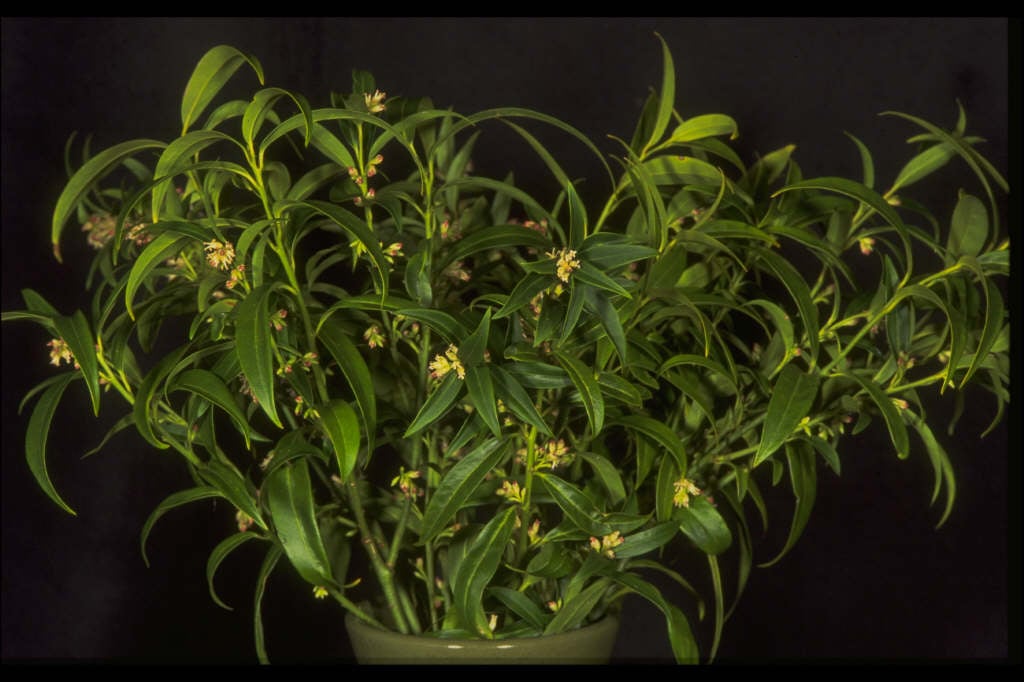
Sarcococca hookeriana var. hookeriana

RHS Plant Profile
sweet box
sweet box RHS 1999
Plants for pollinators
Shrubs

A suckering evergreen shrub forming a compact thicket of upright stems bearing leathery, lance-shaped or elliptic leaves and tiny, but very fragrant white flowers in late winter, followed by black berries

Position

Full shade, Partial shade

Soil Types

Chalk, Clay, Loam, Sand

Max Height

1-1.5 metres

Max Spread

1.5-2.5 metres

Size

Time to Maturity
10–20 years
Max Spread
1.5-2.5 metres
Max Height
1-1.5 metres

Growing Conditions

Chalk Clay Loam Sand
Moisture
Moist but well–drained
pH
Acid or Alkaline or Neutral

Position

Full shade Partial shade
Aspect
East–facing or South–facing or North–facing or West–facing
Exposure
Sheltered
Hardiness
H5

Colour & Scent

Fragrance Flower
Season Stem Flower Foliage Fruit
Spring
Summer
Autumn
Winter

Botanical Details

Family
Buxaceae
Native to GB/Ireland
No
Foliage
Evergreen
Habit
Suckering
Potentially harmful
Fruit are ornamental - not to be eaten. Wear gloves and other protective equipment when handling Pets: Fruit are ornamental - not to be eaten - see the HTA guide to potentially harmful plants for further information and useful contact numbers
Genus
Sarcococca are compact, sometimes suckering evergreen shrubs with simple, leathery leaves and tiny, fragrant creamy-white flowers in winter or spring, followed by red, purple or black berries which may persist into the following winter
Name Status
Correct
Plant Range
Himalaya

How to Grow

Cultivation

Grow in moderately fertile, moist but well-drained humus-rich soil in shade. Full sun may be tolerated when planted in damp soil. Also tolerant of atmospheric pollution, dry shade and neglect

Propagation

Propagate by semi-hardwood cuttings in late summer or propagate by seed sown in containers outdoors in autumn or spring

Suggested planting locations and garden types

  • Coastal
  • Cottage and informal garden
  • City and courtyard gardens
  • Wildlife gardens
  • Flower borders and beds

Pruning

Pruning group 8

Pests

Generally pest-free

Diseases

May be susceptible to honey fungus