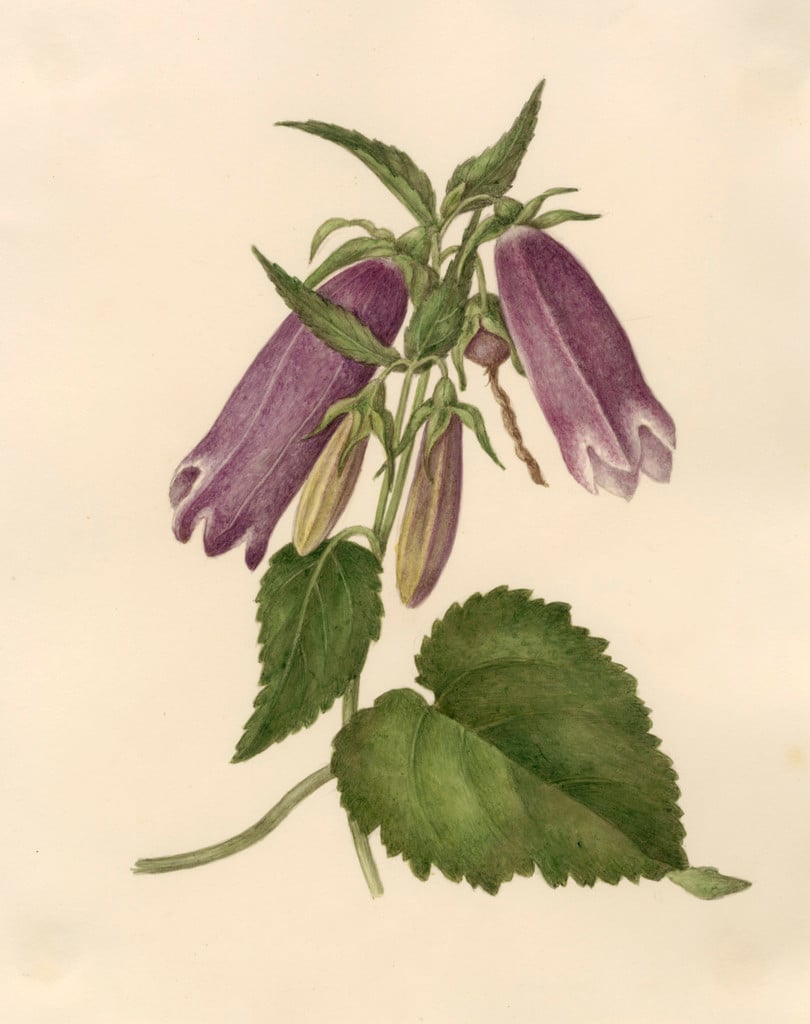
Campanula punctata

RHS Plant Profile
long-flowered harebell
long-flowered harebell RHS

Other common names

spotted bellflower

Synonyms

Campanula nobilis

Plants for pollinators
Herbaceous Perennial

A variable species in both flower colouring and growing vigour. The large flower bells on arching stems vary from white to quite strong purplish-red, and are red-spotted inside. Heart-shaped finely-toothed green leaves. Spreads by underground rhizomes

Position

Full sun, Partial shade

Soil Types

Chalk, Sand

Max Height

0.1-0.5 metres

Max Spread

0.5-1 metres

Size

Time to Maturity
2–5 years
Max Spread
0.5-1 metres
Max Height
0.1-0.5 metres

Growing Conditions

Chalk Sand
Moisture
Moist but well–drained
pH
Alkaline or Neutral

Position

Full sun Partial shade
Aspect
East–facing or South–facing or North–facing or West–facing
Exposure
Exposed or Sheltered
Hardiness
H7

Colour & Scent

Season Stem Flower Foliage Fruit
Spring
Summer
Autumn
Winter

Botanical Details

Family
Campanulaceae
Native to GB/Ireland
No
Foliage
Semi evergreen
Habit
Bushy, Suckering
Genus
Campanula may be annuals, herbaceous or evergreen perennials, with bell or star-shaped, often blue, flowers in late spring or summer
Name Status
Correct
Plant Range
E Asia

How to Grow

Cultivation

Flower colours are best preserved in the shade. Suitable for naturalizing in woodland and wildflower gardens

Propagation

Propagate by seed, division or take basal cuttings

Suggested planting locations and garden types

  • Cottage and informal garden
  • Wildflower meadow
  • Wildlife gardens
  • Gravel garden
  • Flower borders and beds

Pruning

Cut back after flowering to prevent self-seeding and to encourage a second flush of flowers

Pests

May be damaged by slugs and snails

Diseases

May be susceptible to a rust, powdery mildews and a leaf spot