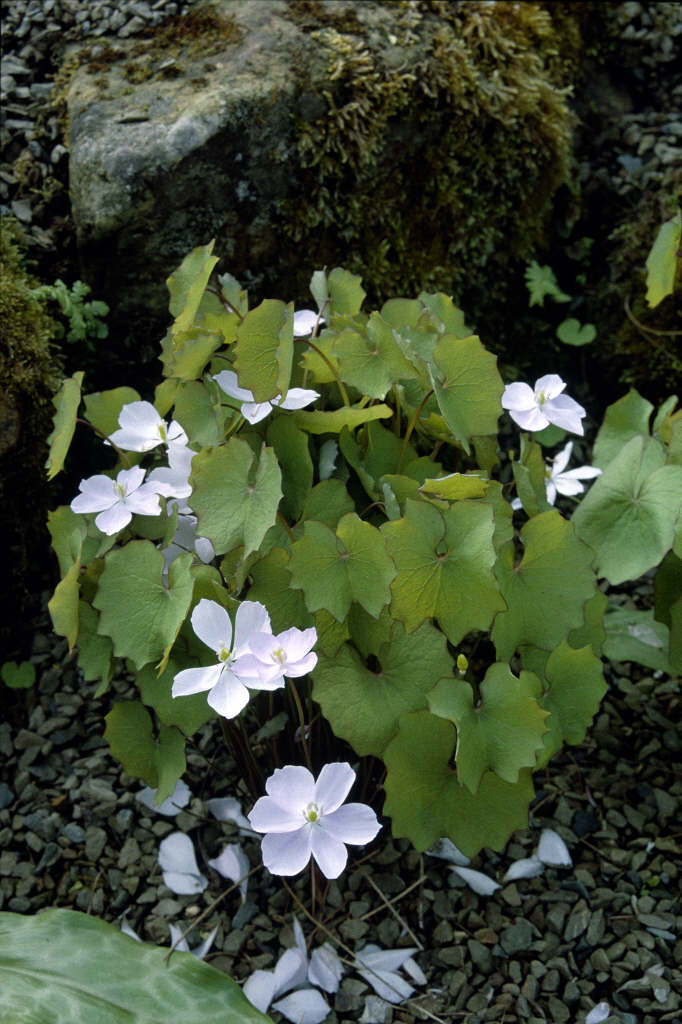
Jeffersonia dubia

RHS Plant Profile
twin leaf
twin leaf RHS
Award of Garden Merit
Herbaceous Perennial

A deciduous perennial to 20cm tall, forming a compact clump of kidney-shaped, shallowly 2-lobed leaves, with pale violet-blue flowers 2.5cm across opening with the new leaves in early spring

Position

Full shade, Partial shade

Soil Types

Loam

Max Height

0.1-0.5 metres

Max Spread

0-0.1 metre

Size

Time to Maturity
1–2 years
Max Spread
0-0.1 metre
Max Height
0.1-0.5 metres

Growing Conditions

Loam
Moisture
Moist but well–drained
pH
Acid or Alkaline or Neutral

Position

Full shade Partial shade
Aspect
North–facing or East–facing
Exposure
Sheltered
Hardiness
H6

Colour & Scent

Season Stem Flower Foliage Fruit
Spring
Summer
Autumn
Winter

Botanical Details

Family
Berberidaceae
Native to GB/Ireland
No
Foliage
Deciduous
Habit
Bushy
Genus
Jeffersonia are small, clump-forming perennials with2-lobed, kidney-shaped leaves and bowl-shaped white or pale violet flowers in spring
Name Status
Correct
Plant Range
NE Asia

How to Grow

Cultivation

Grow in moist, humus-rich, preferably neutral to acid soil in partial or full shade; top dress with leaf mould or other humus-rich material in autumn. Dislikes disturbance and may take a year or two to settle after transplanting; established plants tolerate drought

Propagation

Propagate by seed in containers in an open frame as soon as ripe or divide established plants in spring

Suggested planting locations and garden types

  • Rock garden
  • Flower borders and beds

Pruning

No pruning required

Pests

May be susceptible to slugs and snails

Diseases

Generally disease-free