Agapanthus 'Blue Giant'
African lily 'Blue Giant'
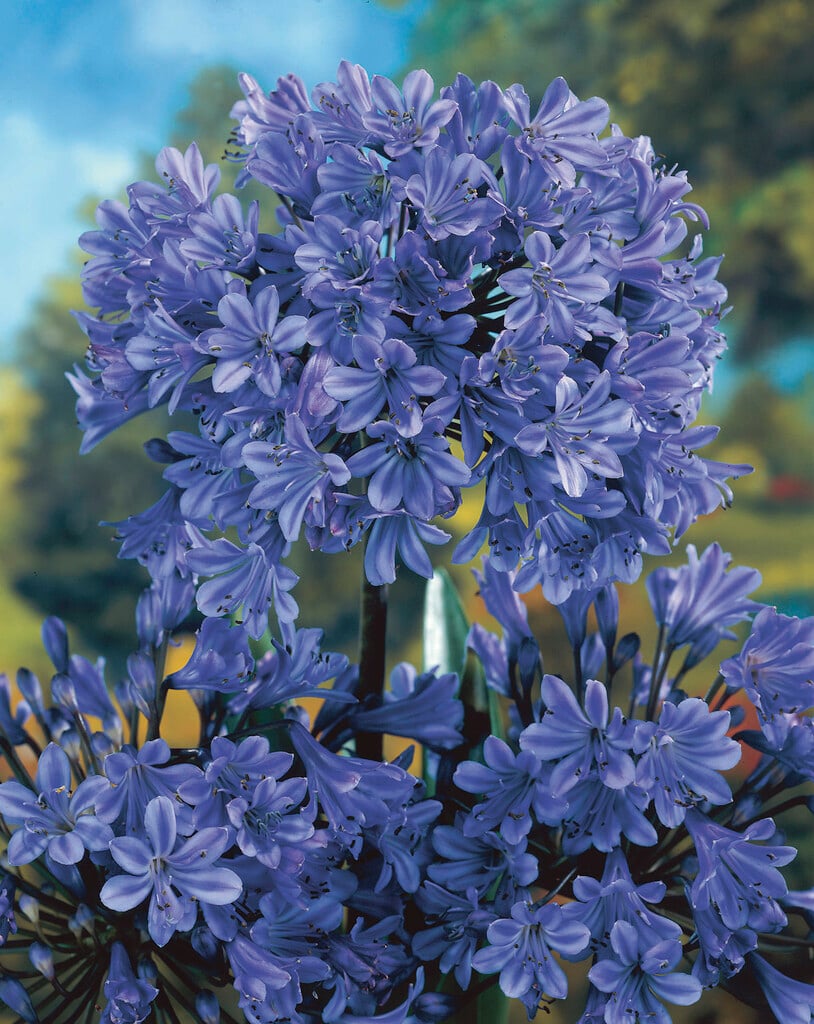
A herbaceous perennial that has large, rounded heads of tubular, rich blue flowers on tall, purple stained stems that emerge from a clump of dark green strap-like leaves.
Buy this plant
Size
Ultimate height
1–1.5 metresTime to ultimate height
2–5 yearsUltimate spread
0.5–1 metresGrowing conditions
Moisture
Moist but well–drainedpH
Acid, Alkaline, NeutralColour & scent
| Stem | Flower | Foliage | Fruit | |
| Spring | Green | |||
|---|---|---|---|---|
| Summer | Blue | Green | ||
| Autumn | Green | |||
| Winter |
Position
- Full sun
Aspect
South–facing or West–facing
Exposure
ShelteredDrought resistance
Yes Hardiness
H4Botanical details
- Family
- Amaryllidaceae
- Native to GB / Ireland
- No
- Foliage
- Semi evergreen or Deciduous
- Habit
- Clump forming
- Potentially harmful
- Humans/Pets (dogs, cats): harmful if eaten. Wear gloves and other protective equipment when handling. For further information and contact numbers regarding pets, see the HTA guide to potentially harmful plants
- Genus
Agapanthus are clump-forming perennials with narrowly strap-shaped leaves, evergreen in some species, and erect stems bearing umbels of funnel-shaped blue or white flowers
- Name status
Accepted
How to grow
Cultivation
Grow in fertile, moist but well-drained soil in full sun or grow in a container. In cold areas, mulch well overwinter and take containers under cover. See agapanthus cultivation
Propagation
Propagate by division every three to four years in spring
Suggested planting locations and garden types
- City and courtyard gardens
- Cottage and informal garden
Pruning
In late autumn remove any remaining leaves; seedheads can be left as they look attractive over winter
Pests
May be susceptible to slugs and snails and agapanthus gall midge
Diseases
May be susceptible to a virus
Get involved
The Royal Horticultural Society is the UK’s leading gardening charity. We aim to enrich everyone’s life through plants, and make the UK a greener and more beautiful place.