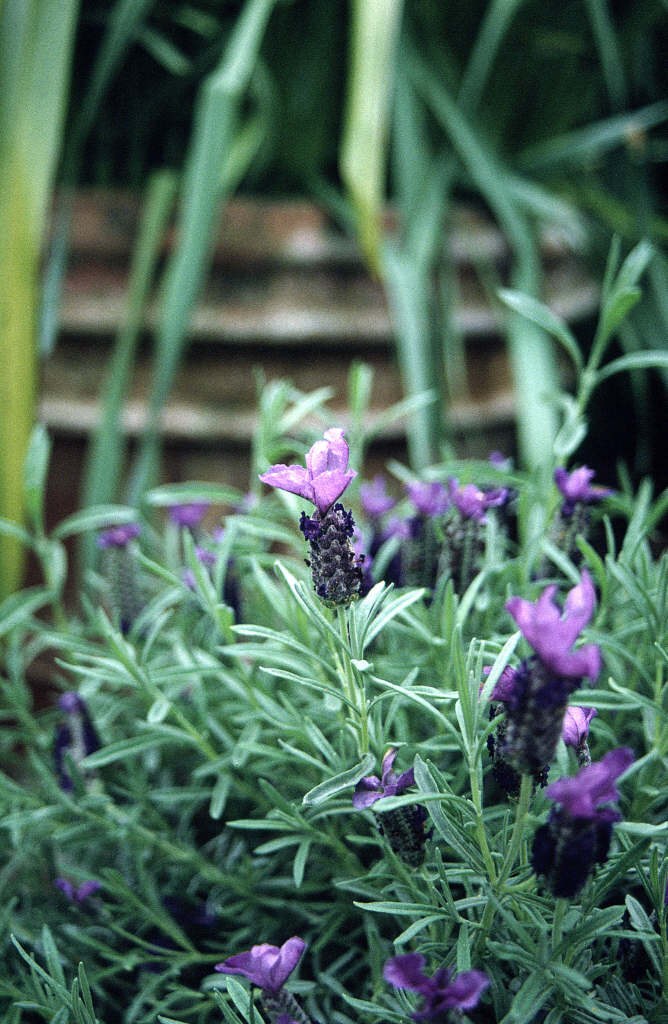
Lavandula stoechas subsp. stoechas

RHS Plant Profile
French lavender
French lavender RHS
Plants for pollinators
Shrubs

An aromatic dwarf shrub to 60cm tall, with narrow, grey-green leaves and short-stalked, dense, ovoid heads of tiny blackish-purple flowers surmounted by a tuft of purple bracts

Position

Full sun

Soil Types

Chalk, Loam, Sand

Max Height

0.5-1 metres

Max Spread

0.5-1 metres

Size

Time to Maturity
2–5 years
Max Spread
0.5-1 metres
Max Height
0.5-1 metres

Growing Conditions

Chalk Loam Sand
Moisture
Well–drained
pH
Acid or Alkaline or Neutral

Position

Full sun
Aspect
South–facing or West–facing
Exposure
Sheltered
Hardiness
H4
Drought Resistance
Yes

Colour & Scent

Fragrance Flower Foliage
Season Stem Flower Foliage Fruit
Spring
Summer
Autumn
Winter

Botanical Details

Family
Lamiaceae
Native to GB/Ireland
No
Foliage
Evergreen
Habit
Bushy
Genus
Lavandula are small aromatic evergreen shrubs with usually narrow, simple, entire, toothed or lobed leaves and small tubular flowers in dense spikes in summer
Name Status
Correct
Plant Range
W Mediterranean

How to Grow

Cultivation

Grow in well-drained soil in a sheltered, sunny position. See lavender cultivation for further advice

Propagation

Propagate by seed or semi-hardwood cuttings. See our video How to take lavender cuttings for more advice

Suggested planting locations and garden types

  • Coastal
  • Patio and container plants
  • Rock garden
  • City and courtyard gardens
  • Cottage and informal garden
  • Flower borders and beds
  • Garden edging

Pruning

Pruning group 10; deadhead after flowering. Trimming in late summer prevents plants from becoming straggly, but you can leave plants for a season to benefit wildlife with seeds or as shelter if you prefer. Avoid pruning in autumn in wet or cold regions as this may leave plants vulnerable to winter damage. Avoid cutting back into old wood

Pests

May be susceptible to rosemary beetle and cuckoo spit (froghoppers)

Diseases

May be susceptible to grey moulds (Botrytis) and honey fungus (rarely)