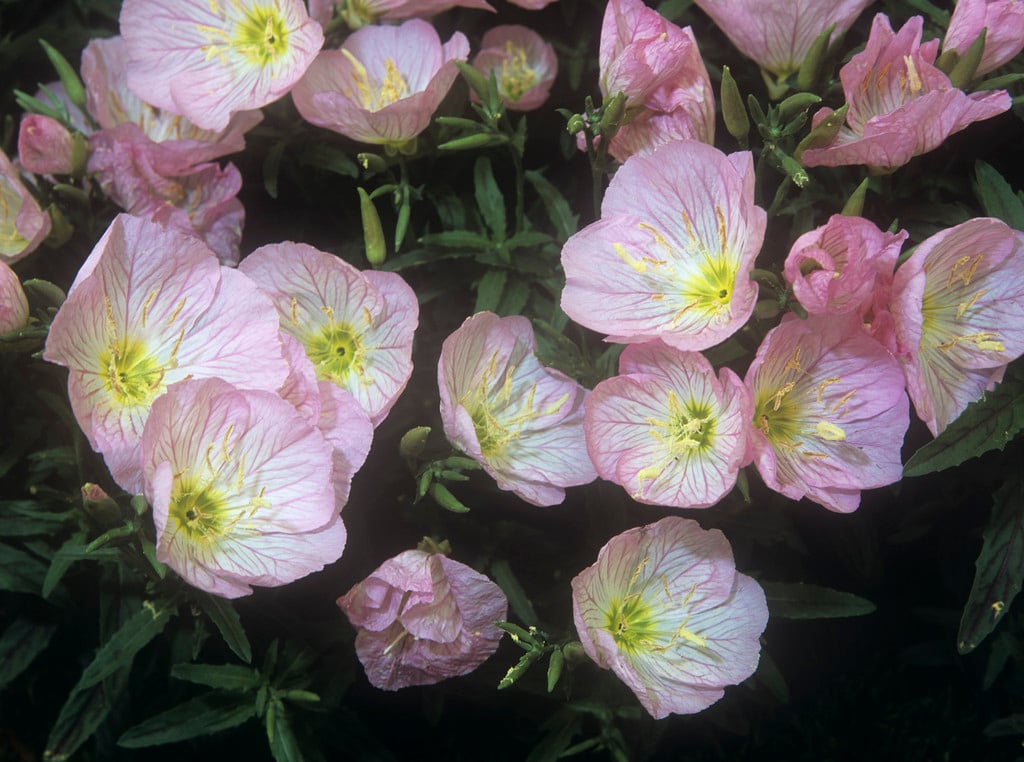
Oenothera speciosa

RHS Plant Profile
white evening primrose
white evening primrose RHS

Other common names

pink ladies, Mexican evening primrose

Synonyms

Oenothera childsii
Oenothera speciosa var. childsii

Plants for pollinators
Herbaceous Perennial

A herbaceous perennial about 30cm high, with creeping rhizomes, basal rosettes of oblong-lance-shaped to lance-shaped mid-green leaves, 2.5-5cm long, which have large triangular teeth or are pinnatifid, arching stems with slightly smaller leaves, and saucer-shaped flowers, up to 8cm across, which open white in the day and become pale pink in the evening, from early summer to early autumn; it is occasionally invasive

Position

Full sun

Soil Types

Chalk, Loam, Sand

Max Height

0.1-0.5 metres

Max Spread

0.1-0.5 metres

Size

Time to Maturity
2–5 years
Max Spread
0.1-0.5 metres
Max Height
0.1-0.5 metres

Growing Conditions

Chalk Loam Sand
Moisture
Well–drained
pH
Acid or Alkaline or Neutral

Position

Full sun
Aspect
South–facing or West–facing or East–facing
Exposure
Exposed or Sheltered
Hardiness
H5
Drought Resistance
Yes

Colour & Scent

Season Stem Flower Foliage Fruit
Spring
Summer
Autumn
Winter

Botanical Details

Family
Onagraceae
Native to GB/Ireland
No
Foliage
Deciduous
Habit
Suckering
Genus
Oenothera can be annuals, biennials or perennials, upright or spreading in habit, with simple or lobed leaves and bowl-shaped, white, yellow or pink flowers over a long period in summer
Name Status
Correct
Plant Range
USA, Mexico

How to Grow

Cultivation

Grow in poor to only moderately fertile, very well-drained soil, even stony soil, in full sun

Propagation

Propagate by seed sown in containers in a cold frame in early spring, or by division in early spring, or by softwood cuttings of unflowered shoots from late spring to midsummer

Suggested planting locations and garden types

  • City and courtyard gardens
  • Coastal
  • Cottage and informal garden
  • Gravel garden
  • Prairie planting
  • Low Maintenance
  • Banks and slopes
  • Flower borders and beds

Pruning

No pruning required

Pests

May be susceptible to slugs and aphids

Diseases

Generally disease-free but may be susceptible to leaf spot, powdery mildews and downy mildews; may be susceptible to root rot in rich, wet, heavy soil