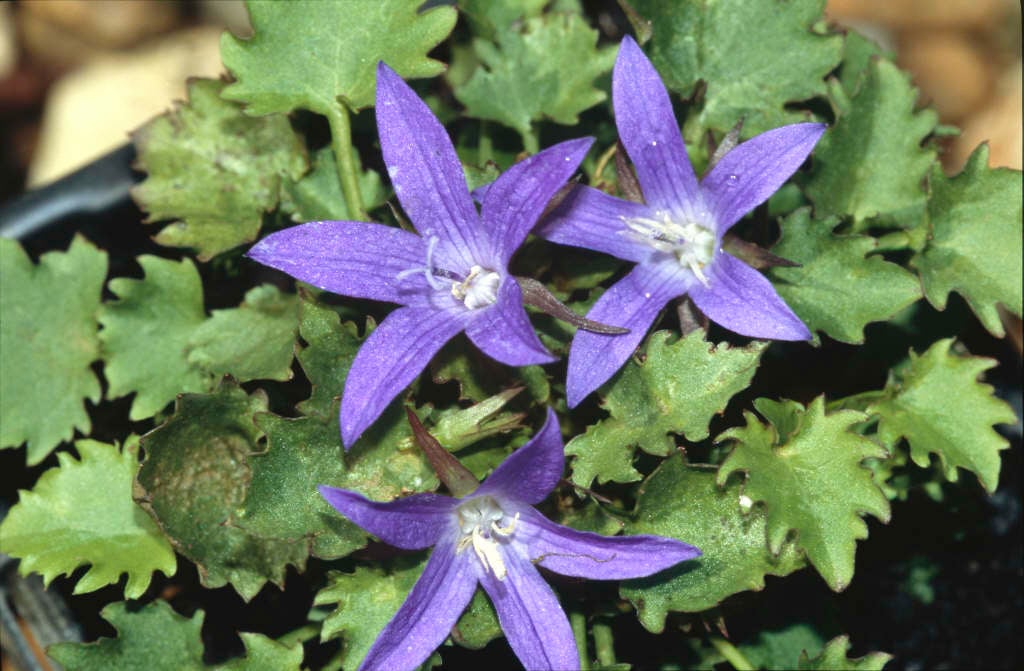
Campanula poscharskyana 'Stella'

RHS Plant Profile
trailing bellflower 'Stella'
trailing bellflower 'Stella' RHS
Award of Garden MeritPlants for pollinators
Alpine Rockery Herbaceous Perennial

'Stella' is a tufted perennial with rounded basal leaves and spreading stems bearing loose racemes of starry, light violet-blue flowers 2.5cm in width

Position

Full sun, Partial shade

Soil Types

Chalk, Clay, Loam, Sand

Max Height

Up to 10 cm

Max Spread

0.1-0.5 metres

Size

Time to Maturity
2–5 years
Max Spread
0.1-0.5 metres
Max Height
Up to 10 cm

Growing Conditions

Chalk Clay Loam Sand
Moisture
Moist but well–drained
pH
Acid or Alkaline or Neutral

Position

Full sun Partial shade
Aspect
South–facing or East–facing
Exposure
Exposed
Hardiness
H5

Colour & Scent

Season Stem Flower Foliage Fruit
Spring
Summer
Autumn
Winter

Botanical Details

Family
Campanulaceae
Native to GB/Ireland
No
Foliage
Semi evergreen
Habit
Clump forming
Genus
Campanula may be annuals, herbaceous or evergreen perennials, with bell or star-shaped, often blue, flowers in late spring or summer
Name Status
Accepted

How to Grow

Cultivation

Grow in moist but well-drained soil in sun or partial shade; can be invasive as spreads by underground runners

Propagation

Propagate by division in spring or autumn

Suggested planting locations and garden types

  • City and courtyard gardens
  • Patio and container plants
  • Rock garden
  • Cottage and informal garden
  • Gravel garden
  • Wildlife gardens
  • Garden edging
  • Banks and slopes
  • Flower borders and beds
  • Ground cover

Pruning

Cut back after flowering to maintain compact shape

Pests

May be susceptible to slugs and snails

Diseases

May be susceptible to powdery mildews