The National Plant Collection of Nerine species cultivars and hybrids
Find out more about these interesting autumn-flowering bulbs that have a National Plant Collection at RHS Garden Rosemoor in Devon
Heather Greig
Associate Editor, The Garden
3-minute read
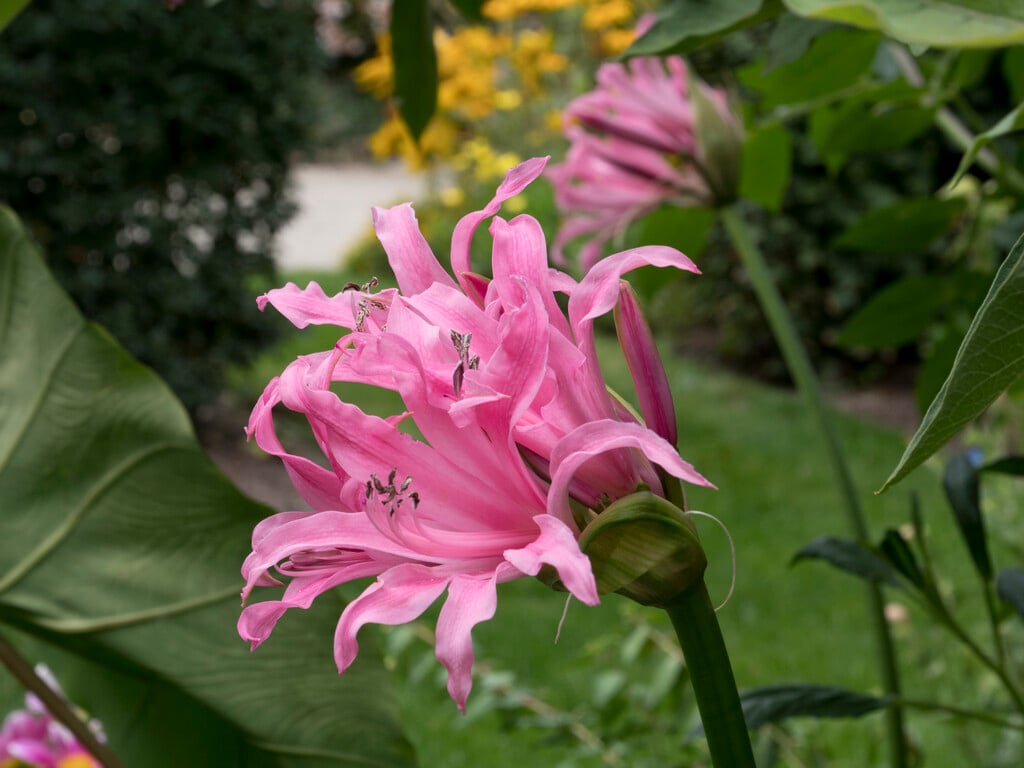
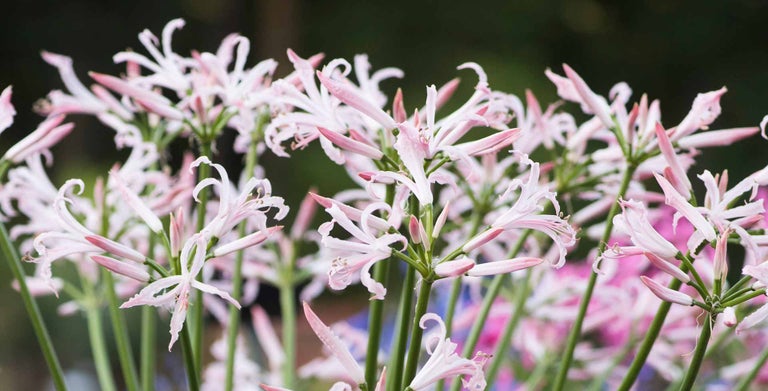
Perfect for sunny borders, nerines are autumn-flowering that provide gorgeous lily-like blooms in shades of pink and white. They bring late colour to the garden just as other flowers are starting to fade. RHS Garden Rosemoor in Devon cares for a Plant Heritage National Plant Collection of more than 120 species and cultivars, the majority of which are hardy Nerine bowdenii .
"To have these beautiful bulbs giving such vibrant displays during the darkening days of autumn is very uplifting. They even manage to shake off the wettest of weather and still stand resplendent."
Jonathan Hutchinson, former RHS Rosemoor Woody Ornamental Team Leader
Nerine bowdenii with Verbena bonariensis
Collection overview
In 2020, former Plant Heritage National Plant Collection holder Steve Eyres gifted the hardy cultivars to RHS Garden Rosemoor, adding to the extensive collection of nerines the garden already grew. Around 400 cultivars of Nerine sarniensis were given to Cotswold Garden Flowers near Evesham, where they grow them under glass and have increased their National Plant Collection to almost 700 cultivars.
As a genus, Nerine are to South Africa and consists of 25 species. Only Nerine bowdenii is regarded as reliably hardy in the British Isles. The majority of RHS Rosemoor’s collection are N. bowdenii cultivars but it also includes some less hardy species: N. gaberonensis, N. humilis, N. sarniensis, N. undulata and N. masoniorum.
Christopher Whitehouse
Nerine humilis
Nerine bowdenii ‘Stefanie’
Nerine bowdenii has some great connections with Devon – plants of it were shipped to the UK from South Africa around 1899 by Devon-born land surveyor Athelstan Cornish-Bowden, who sent them to his mother. It was subsequently named after him in 1904 after she grew them and sent specimens to the Royal Botanic Gardens, Kew. Its ability to adapt to the British climate meant it could be widely grown in the UK. The N. bowdenii ‘N. Zeal Giant’ RHS Recommended: Award of Garden Merit, and other nerine hybrids with the Zeal prefix, were bred by Devon plant breeder Terry Jones who lived in Zeal Monachorum.
"Nerines are a reliable group of bulbs that give brilliant flower displays through the autumn months, looking particularly good as the stems push through the yellow and orange hues of fallen leaves."
Jonathan Hutchinson
When and where to see them
September to October are the best months to see Nerine bowdenii in flower. They’re found throughout the garden at RHS Rosemoor but particularly in the beds below the Visitor Centre, the Croquet Lawn borders, Mediterranean Garden and borders in Lady Anne’s Garden . You can also find them in the Fruit and Vegetable Garden , particularly N. ‘Zeal Giant’, which enjoys its position at the base of the sunny walls.
Some of the less hardy species may successfully overwinter in sheltered border spots but until the RHS Rosemoor team have sufficient material to experiment with, they are grown in pots and put on display when in flower, often on the veranda of Rosemoor House .
"One of my favourites is Nerine bowdenii subsp. wellsii, native to the Drakensberg Mountains, for its bright pink flowers with narrow petals that are curled along their edges."
Jonathan Hutchinson
Nerine bowdenii ‘Isabel’ has deep pink tufted blooms
Garden use and cultivation
Nerine bowdenii adapts well to a range of growing conditions but prefers a well-drained site in our typically cooler and damper UK climate. They love a sunny spot such as the base of a south-facing wall. Do not plant them too deeply but leave their noses showing above soil level. Once planted they prefer to be left alone to increase and form impressive clumps, producing many flowerheads. When growing N. bowdenii cultivars it is important to remove spent flower heads before the pea-sized seeds develop. If left they will fall among the bulbs, germinate and may eventually outgrow the original planted.
“I think they look particularly good with another primarily South African genus Kniphofia, contrasting well against its different flower form and colours of yellows and oranges,” says Jonathan.
"Due to their seasonality, colour range and length of flowering season nerines should be more widely grown. They are a particularly cheering group of plants for autumn and can be depended on to give good displays."