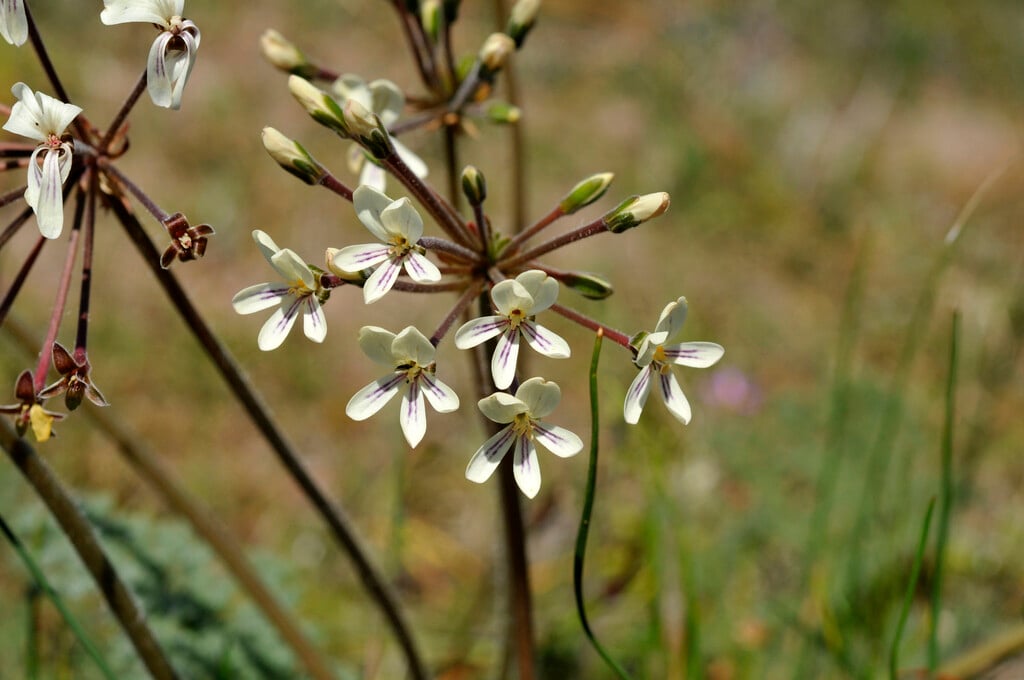
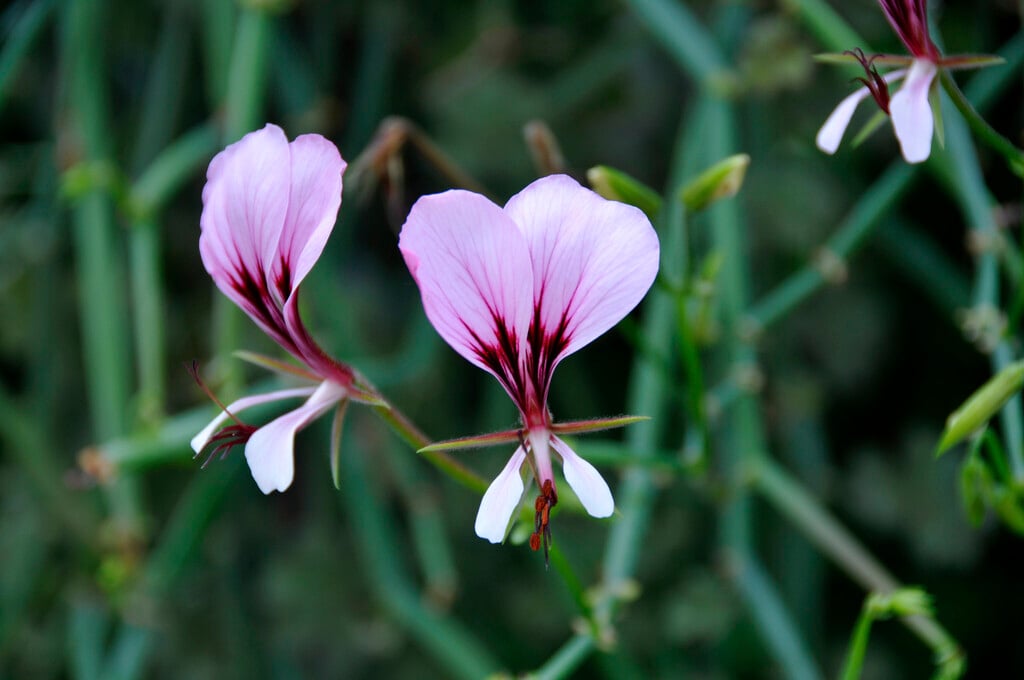
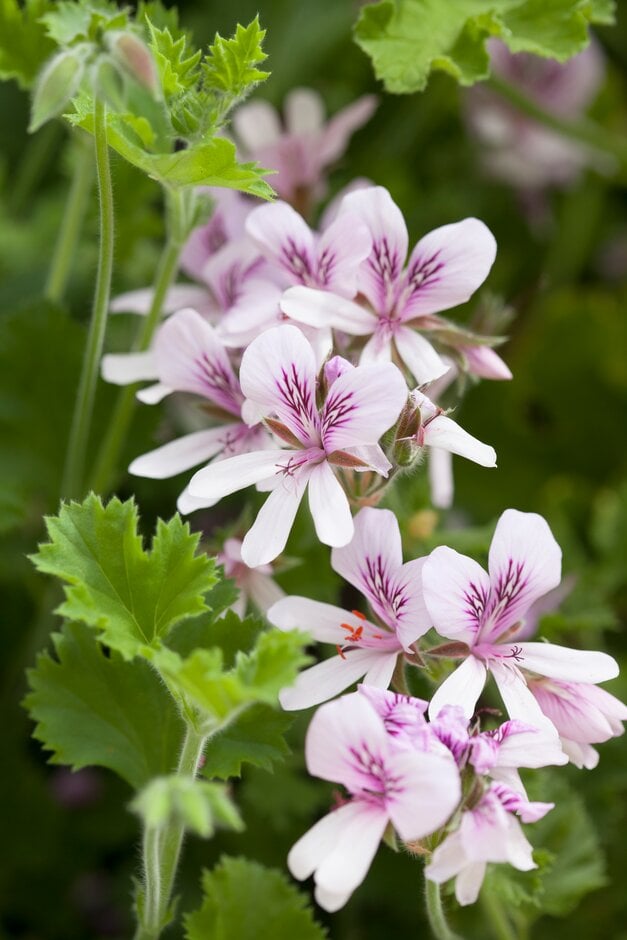
Pelargonium (species and hybrids, Stellar, Miniature Stellar, Dwarf Zonal, Zonartic)
Discover the National Plant Collection of Pelargonium at RHS Wisley – a diverse and historically significant group of plants
The National Plant Collection of pelargoniums at RHS Garden Wisley represents one of the most diverse and carefully curated groups of pelargoniums in the UK. The collection brings together species and cultivars with a wide range of origins, growth habits and horticultural uses. With 423 plants currently held at RHS Wisley, including 383 in the The Glasshouse, the collection offers visitors an opportunity to explore the breadth of this fascinating genus across several specialist growing environments.
When to visit
The collection is at its most impressive from May to June, when many species and cultivars reach their peak flowering period. During these months, visitors can appreciate the full range of colours, scents and leaf forms that make pelargoniums so popular. The whole collection is not on display at all times. Outside the peak season, the collection still offers interest, particularly in the alpine houses where some species follow different seasonal rhythms.
Where to see the collection
The pelargoniums are displayed across several areas at RHS Wisley, each chosen to suit the needs of different species:
- Glasshouse display and service houses: home to the majority of the collection, including tender varieties
- Alpine display houses: these provide cooler, drier conditions ideal for certain species that require a distinct seasonal cycle
- Propagation unit: where young plants, and seed-raised specimens are grown on and assessed
- Temperate Glasshouse: an annual display in May near the waterfall
Together, these spaces allow the collection to showcase the full diversity of the genus, from xerophytic species adapted to arid environments to more lush, leafy types, including species and caudex types.

History of the collection
The modern glasshouse collection was significantly expanded in 2021 with major donations from Fibrex Nurseries (who held the collection until 2021) and Stephen Pollard, both well-known names in pelargonium conservation and horticulture. However, RHS Wisley’s connection with the genus stretches back much further. Several long-held specimens date from the early 2000s, and the alpine section houses three particularly early arrivals from 1988, 1989 and 1997. These older plants provide a living link to decades of horticultural work at RHS Wisley and reflect the RHS’s long-standing commitment to plant conservation.
Quick facts
- Pelargonium citronella is valued as a companion plant because its strong scent can help deter pests
- Pelargoniums are admired for their long flowering season, often extending for months
- The genus displays remarkable diversity in leaf shape, texture and variegation, making it appealing to collectors and gardeners alike
Why they are of interest
Pelargoniums offer a combination of ornamental beauty, botanical diversity and practical uses. Their extended flowering period makes them reliable performers in gardens and glasshouses. Many species have distinctive scents, from citrus to spice, and some have traditional uses in herbal remedies or perfumery. Their varied growth habits – from compact shrubs to sprawling, architectural forms – also make them versatile plants for display and study.
Care and cultivation
Pelargoniums require different levels of water and feed throughout the year:
- Spring: Water every two weeks with a nitrogen-rich feed to support new growth
- Summer: Water weekly. Continue with nitrogen-rich feed until flower buds form, then switch to a potassium rich feed every two weeks to encourage strong flowering
- Autumn: Reduce feeding to once a month as growth slows
- Winter: Stop feeding if plants are entering . Water sparingly and only when the has fully dried out
Certain taxonomic sections, including species in the Cortusina, Hoarea, Isopetalum, Ligularia, Otidia and Polyactium sections should be allowed to dry out completely once their leaves begin to shed.

Propagation
Propagation is typically carried out using taken in late summer. This ensures strong, healthy young plants for the following season. Surplus or woody stock plants are usually removed at the end of the season to maintain the quality of the collection. Seed propagation is also possible, although it carries the risk of producing hybrids. must therefore be monitored carefully to ensure they remain true to type.
Climate resilience
Many pelargoniums, particularly xerophytic species, are naturally adapted to low rainfall and high temperatures. This makes them well suited to the increasingly variable climate conditions seen in the UK. However, some species have specific requirements. Pelargonium triste, for example, needs a period of cold to trigger flowering. When grown in the glasshouse, this requirement may not be fully met, causing it to flower later than the specimen grown in an alpine department.
Notable and endangered cultivars
- Endangered : Pelargonium ‘Chinese Coral’, a rare and valued plant within the collection
- Rare species deserving wider cultivation: P. tetragonum, P. acetosum and P. gibbosum, all of which attract strong interest from visitors
- Missing cultivar: Pelargonium ‘Sussex Delight’, which is rare in cultivation and would be a valuable addition to the collection

Stories and connections
RHS Wisley has played an important role in the history of pelargonium cultivation in the UK. Pelargonium tongaense was first grown in this country at the garden and a pressed specimen is preserved in the RHS Herbarium. Diana Miller, a former Keeper of the Herbarium, produced one of the most comprehensive reference books on the genus, cementing RHS Wisley’s reputation as a centre of expertise. Pelargonium triste also has historical significance as the first species in the genus encountered by western explorers and the first to be sent back to Europe.

Some of the team’s favourites are Pelargonium ‘Ardens’, P. praemosum and P. reniforme, each chosen for its distinctive character and horticultural appeal. The pelargonium genus is full of scent, uses and colour. It is a genus that never has a dull day.