RHS
RHS Appearance
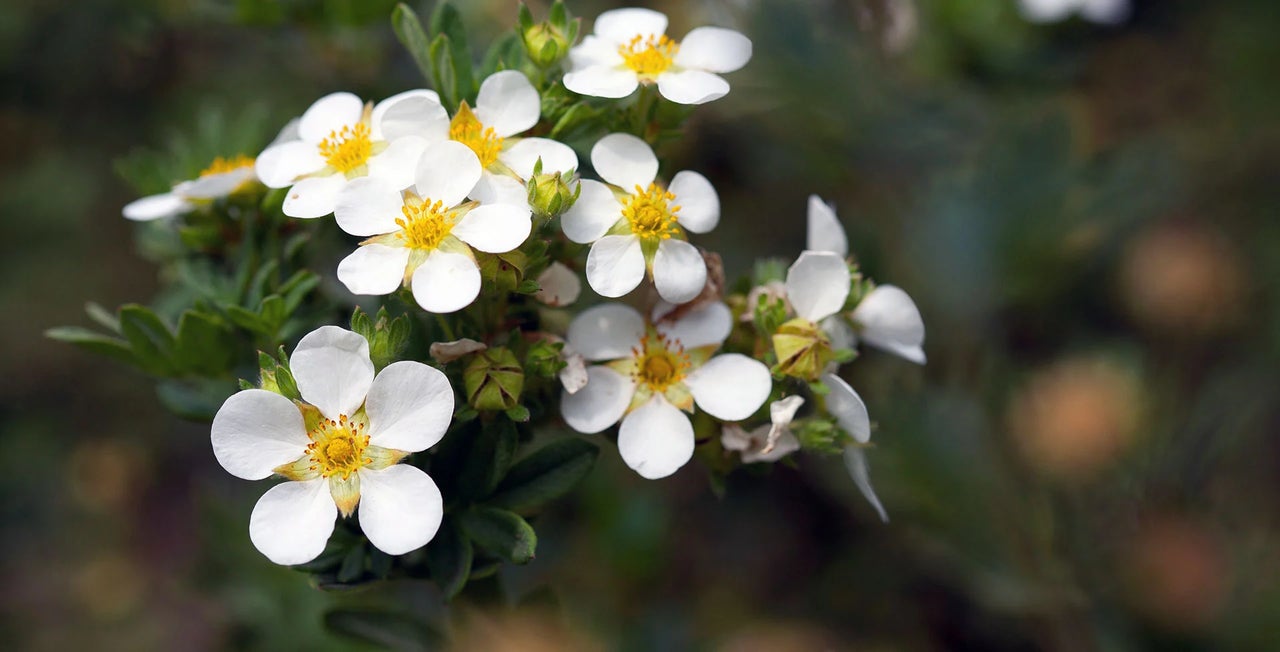
Myrtle forms a dense, bushy shrub with small, glossy, deep green leaves that release a pleasant fragrance when crushed. In mid- to late summer, it produces frothy white flowers with a huge number of stamens, followed by bluish-black or white berries.
Preferences
Thriving in fertile, well-drained soil, both green and variegated varieties revel in full sun. They also benefit from a sheltered spot, such as against a wall, especially in cooler regions.
Dislikes
Myrtle dislikes prolonged cold or exposure to harsh, winter winds. Poor drainage and heavy frosts can damage or kill the plants, so protection or container growing may be needed in colder climates.
Did you know?
Common myrtle has been associated since ancient times with many positive virtues including love, beauty, purity and loyalty. A sprig is often included in wedding bouquets.
RHS Growing Guide
FREE
Read our comprehensive free RHS Growing Guide:
How to grow shrubs

Introducing Myrtle
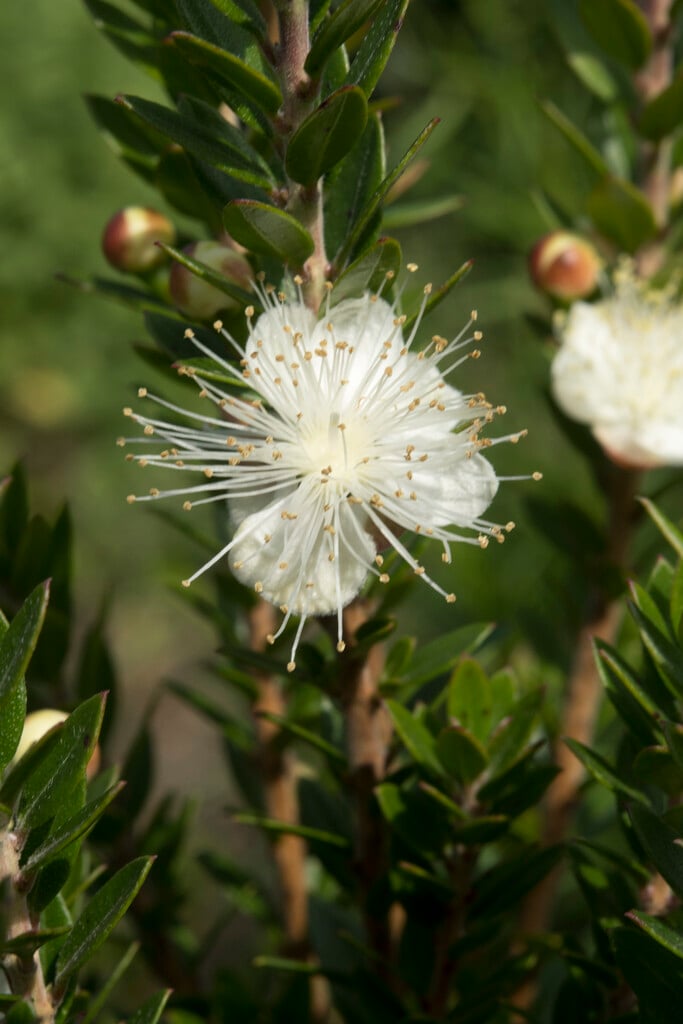
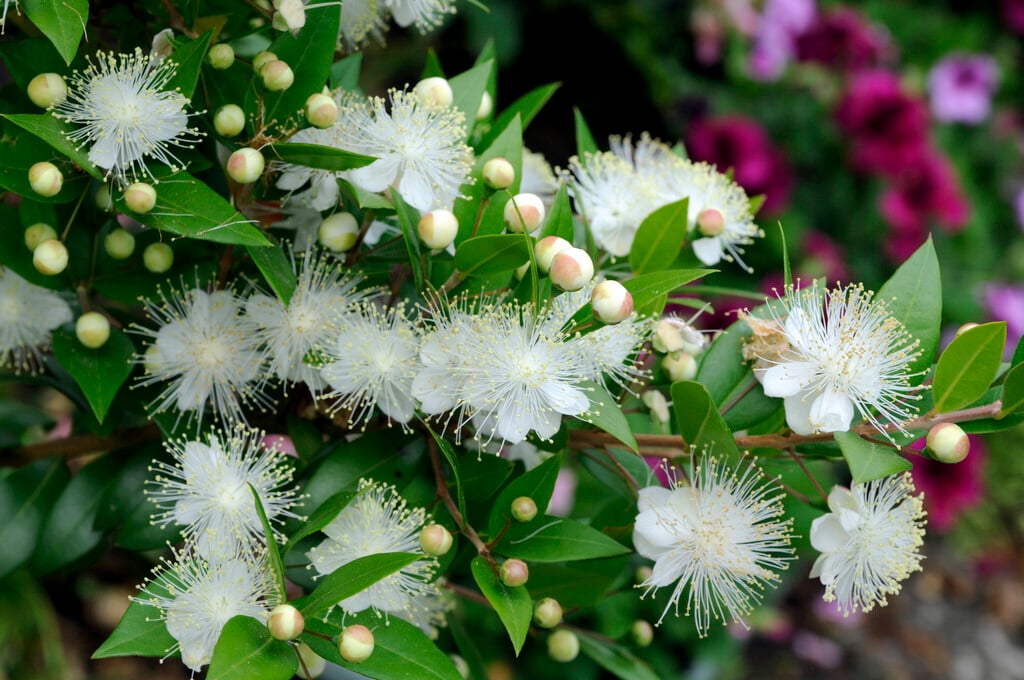
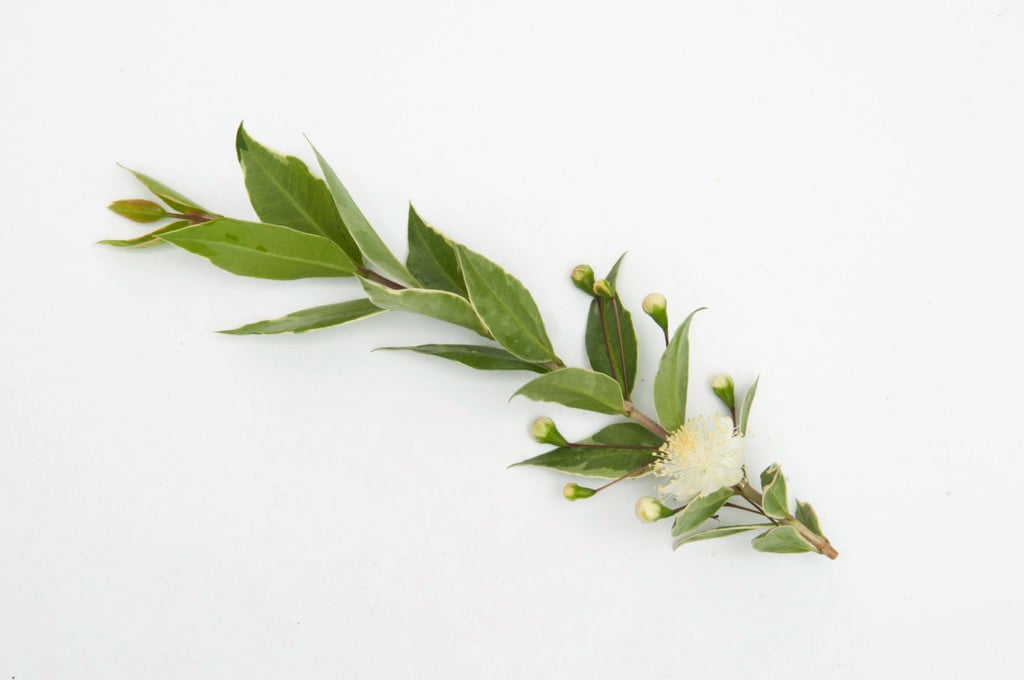
Myrtus communis subsp. tarentina 'Compacta'
Tarentum myrtle 'Compacta'
- Height
- 0.5–1 metres
- Width
- 0.5–1 metres
x of x
Showing
x to x
of x