Quick Facts
Easy to grow
1
Flowers in May and June
2
Hardy
3
Happy in dry soils once they are established
4
Divide every three to four years for prolific flowering
5
Wide range of flower colours to choose from
6
Plant any time from March to mid-November
7


Before you get started
Choosing an iris
Border irises need a sunny position, but apart from this, the choice is wide in terms of colour and height. There are two main types of border iris:
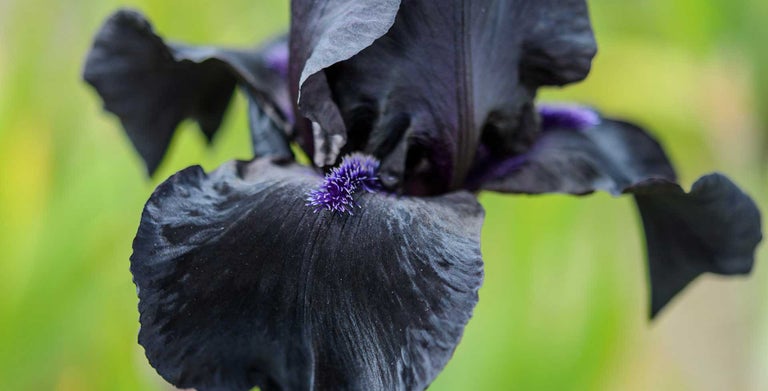
- The most well-known border iris is Iris germanica, sometimes known as bearded iris, whose flowers come in all colours and often have elaborate ruffles. The leaves are sturdy fans of green-blue foliage
- Iris sibirica (Siberian irises) have flowers in a range of blues and creams and long, bright green grassy leaves
Height
Border irises vary in size from less than 30cm (1ft) to more than 1m (3¼ft) in height when in flower.
How to buy Border Irises
Irises are sold in two forms:
- As (swollen root-like structures that are actually adapted stems)
- In full growth in containers
Iris sibirica does not have rhizomes and is sold in containers only.
Planting
When to plant irises
- Plant new iris from July to October
- Plant potted irises between March and mid-November
Where to plant irises
Border and Siberian irises love a sunny spot, although Siberian irises cultivars will tolerate some dappled shade.
Both types of iris thrive in any well-drained soil, but Siberian irises tolerate a damp soil as well.
How to plant irises
- Plant potted irises as you would other perennials
- For border irises bought as rhizomes, dig a hole, large enough for the rhizome and roots. If you mound the soil slightly in the centre of the hole, it can make placing the rhizomes easier. Work the soil back between the roots so they are covered
- Plant them with the top part of the rhizomes partially exposed so they get baked in summer sun; this encourages good flowering
- Plant in groups, with 30cm (1ft) between larger plants and 15cm (6in) between dwarf plants
Ongoing Care
Watering
Water newly planted well in the year of planting. After this, you shouldn’t need to water routinely, unless there are periods of severe drought. If you pot iris, these will need the to be just kept moist.
Feeding
Border irises are not hungry plants – just apply a layer of well-rotted garden compost around the irises, not over the crowns or rhizomes in early spring.
Pruning and Training
Pruning
No specific pruning is required, but as the season progresses, you may wish to remove occasional yellowing or damaged foliage from bearded irises.
Siberian irises generally look good all summer and into autumn.
Once the flowers have faded, you can remove the flower stems, cutting down to where the stem meets the foliage.
Propagating
Dividing iris
The easiest way to share irises with your friends is by division in summer after flowering.
Iris germanica (bearded iris)
- Lift irises with and shake off the soil
- Use a clean knife to cut healthy young rhizomes into short sections of about 10-15cm (4-6in)
- Try to make sure that the section have roots attached and one ‘fan’ of leaves attached
- Throw away any pieces of rhizome with rotten holes in them, or those with no roots or foliage
- Trim the roots by up to one third and trim the leaves down to 15cm (6in)
- This keeps moisture-loss to a minimum and reduces wind rock
- Plant the rhizomes 3-5cm (1¼-2in) deep so that the top surfaces are exposed to the sun
- Water well for the rest of the (i.e. until October)
Iris sibirica (Siberian iris)
It’s easy to divide Siberian irises; it’s just as you would do for any other herbaceous .
Seed
For a more challenging project, you could try growing irises from seed:
- Collect the seed pods as soon as they are ripe in autumn
- When ripe, the pods will change colour to brown and start to split open
- Soak the seed for 48 hours. Fill a seed pot with peat-free John Innes mixed with 25% extra grit by volume. Scatter the seeds thinly on the surface and cover until with a layer of grit until they disappear from sight
- Place the in a or at the base of a wall for shelter from heavy rain
- The seed should germinate in spring, but the seeds may not come up all at once. Don’t give up –more seed may germinate in the second year
- from cultivars do not ‘come true’ and will produce a range of flower colours, which means every one is something completely new if not always as wonderful as the parent!
- It takes about three years for plants reach flowering size; sooner for bearded irises
Problems
Problems
Although iris are usually trouble-free, slugs and snails sometimes favour bearded irises as does the fungal disease iris leaf spot.
On a poorly-drained soil, iris rhizome rot can affect bearded irises.