Quick Facts
Undemanding shrub for partial to deeper shade
1
Grows in a sunnier spot on moister soils
2
Not too fussy about the soil type as long as not too wet or dry
3
Suitable for containers
4
Spring flowers are usually scented
5
Female forms develop berries
6
Not palatable to deer and rabbits
7


Before you get started
Choosing skimmias
Skimmias are one of the best low-maintenance, slow-growing, hardy evergreen shrubs for shadier borders. They are also a good choice for container planting in north-facing situations. Smaller plants are useful for window boxes or hanging baskets in winter. There are female forms with berries and male forms with flowers to choose from.
Flowers and berries
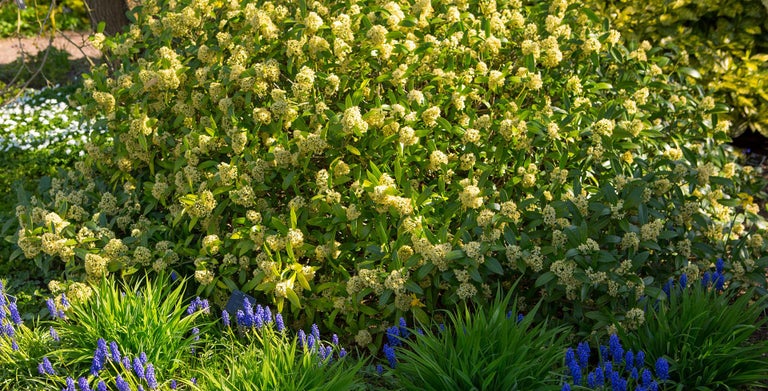
- Skimmias brighten up shady borders in spring with their often-fragrant, small, creamy white or greenish flowers
- Some male cultivars are particularly noted for their fragrance, such as Skimmia japonica 'Fragrans' and Skimmia × confusa 'Kew Green'
- Female plants carry red, sometimes black or white, berries that are particularly popular for autumn and winter displays
- Female plants need a male plant growing nearby to set berries. However, Skimmia japonica subsp. reeversiana will produce berries on its own as it's a hermaphrodite
- One male plant can pollinate several female plants
- The plant label should indicate if you are buying male or female plant or if the plant will set berries on its own (hermaphrodite)
Top tip
Remember to get berries a male form has to be growing near female plants.
Eventual size and shape
- Skimmias are slow-growing, rounded shrubs usually not exceeding 1.5m (5ft) in height and spread
- More compact cultivars grow 40-70cm (16-28in) in height and spread and are better suited for growing in containers
- Check the eventual height of the skimmias you are buying to make sure it is suitable for the planting spot
Buying skimmias
Did you know
The fruit may cause a mild stomach upset if ingested.
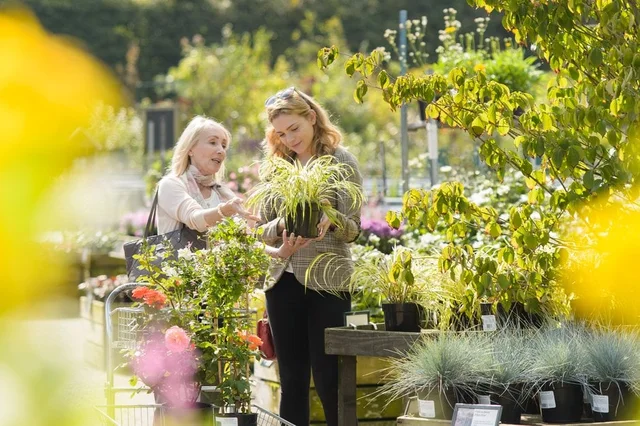
Though skimmias are available for sale as pot grown plants all year round, you will usually get the best choice in the autumn when the berries are produced. Small 'starter' plants in 9-12cm (3½-4in) pots are offered for sale for planting in winter containers and baskets in autumn.
Wakehurst Place in West Sussex holds the National Collection of Skimmia.
Browse the RHS Find a Plant for the nearest stockists
Planting
When to plant
- Container-grown skimmias can be planted at any time of year
- Autumn and spring planting is best for good establishment as the soil is moist
- If you buy a container-grown plant during the summer, plant it as soon as possible and water it regularly
- As long as the soil is not too wet or frozen you can plant in the winter if necessary
Where to plant
- Choose a position in partial to deeper shade
- Plant in a sunnier spot only if the soil is not excessively dry, Skimmia × confusa 'Kew Green' tolerates full sun
- Avoid planting in areas that are prone to staying wet
- Alternatively plant in a container
Top tip
Skimmias do not need to be planted in acidic soils or ericaceous compost. They are not acid loving plants like rhodendrons. Yellowing of the leaves is usually caused by excessive dryness, not by alkalinity induced chlorosis.
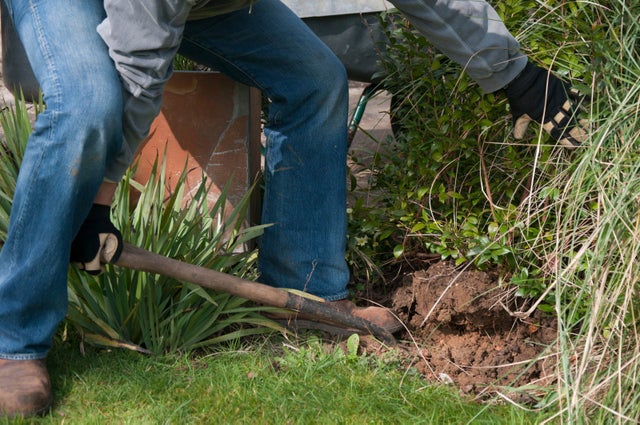
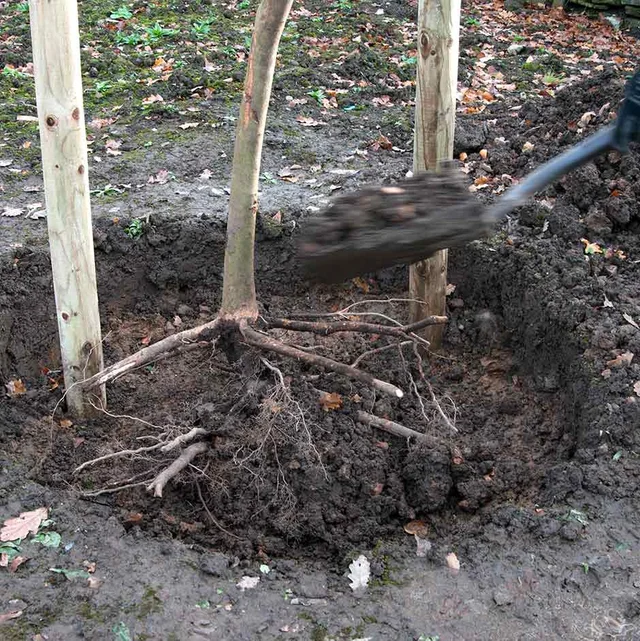
How to plant skimmias
Our guide below takes you step-by-step through planting your skimmias.
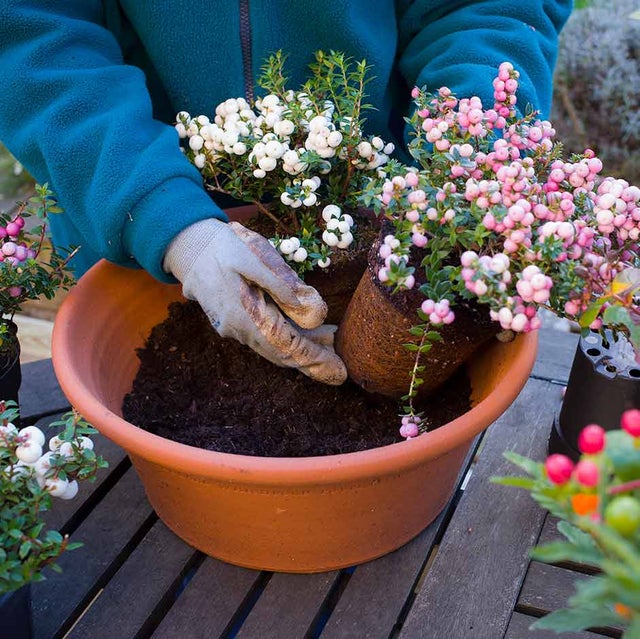
Growing skimmias in containers
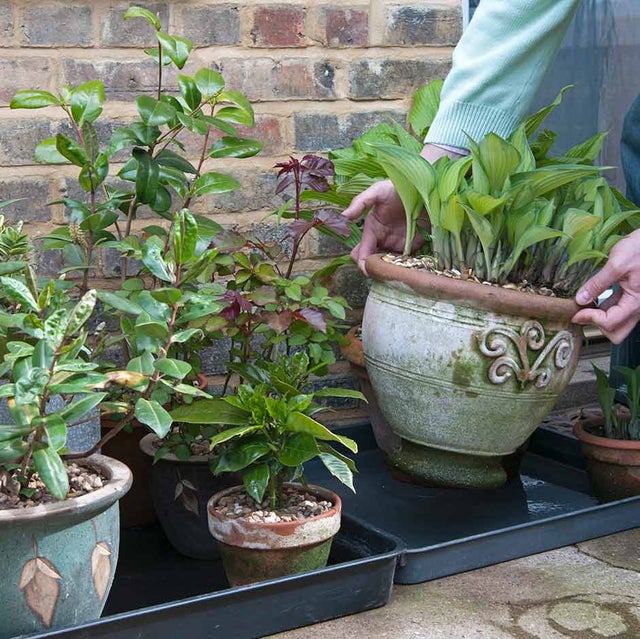
- Plant in a container only 2.5-5cm (1-2in) larger all the way round than its original pot. Use a peat-free multi-purpose with added John Innes or a 50:50 mix of peat-free John Innes No. 3 and peat-free multi-purpose compost
- After two to three years, the roots will fill the container and it will benefit from re-potting in spring
Ongoing Care
Watering
- Water newly-planted skimmias during dry spells in spring and summer, for the first couple of years, until their roots are well-established
- Once established, they are fairly drought tolerant and should’t need regular watering
- However, if very dry soils or planted in too much sun, they may need some additional water to prevent yellowing of the leaves support healthy growth
Feeding and mulching
- Established skimmias planted in borders need little or no regular feeding in most garden soils
- However, if your soil is poor or the shrub is struggling, feed in spring using a general fertiliser such as Vitax Q4, Growmore or fish, blood and bone at according to the manufacturer’s instructions
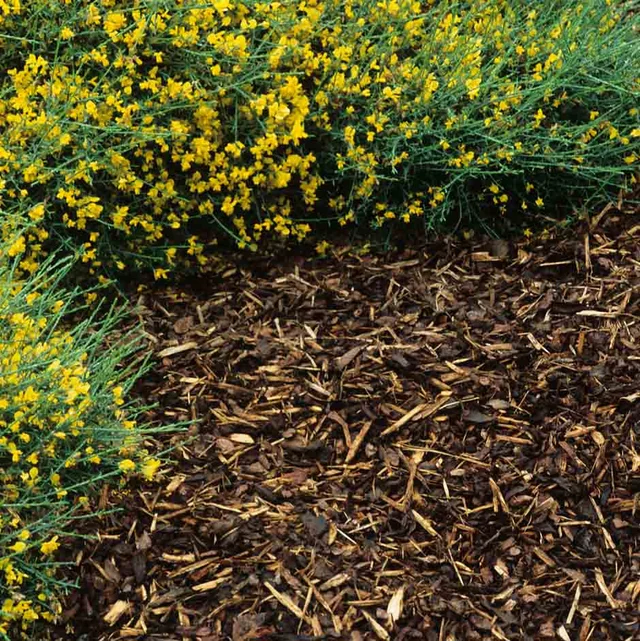
- with a 5cm (2in) layer of bulky organic matter, such as home-made or manure-based soil conditioner, to reduce moisture stress
- Leave a mulch-free circle immediately around the base of the plant to prevent rot
Pruning and Training
- Minimal pruning is needed as skimmias have a a naturally tidy and compact growing habit
- Occasionally vigorous shoots can sometimes spoil the shape and these can be pruned back to within the shrub canopy to hide the pruning cuts in spring
Renovation
- Attempts to renovate older plants are seldom successful and such shrubs are best replaced
- If you would like to attempt renovation, prune hard back in spring, but bear in mind that the response to hard pruning is often poor
- Try to encourage new growth by application of general fertiliser as Vitax Q4, Growmore or fish, blood and bone at according to the manufacturer’s instructions around the shrub base.
Propagating
Propagating from cuttings
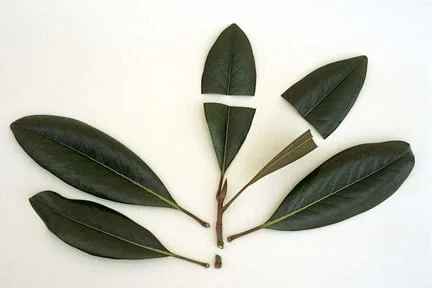
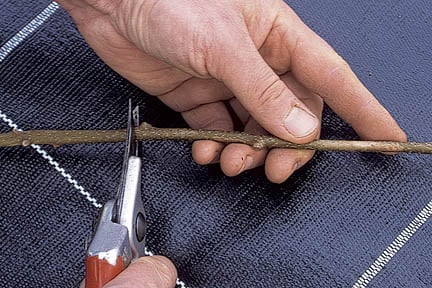
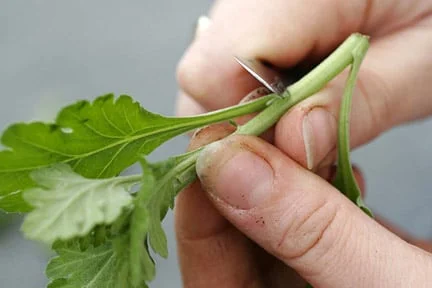
Skimmias can be propagated from softwood or taken from mid summer to autumn. Alternatively try from late autumn to late winter.
Propagating by seed
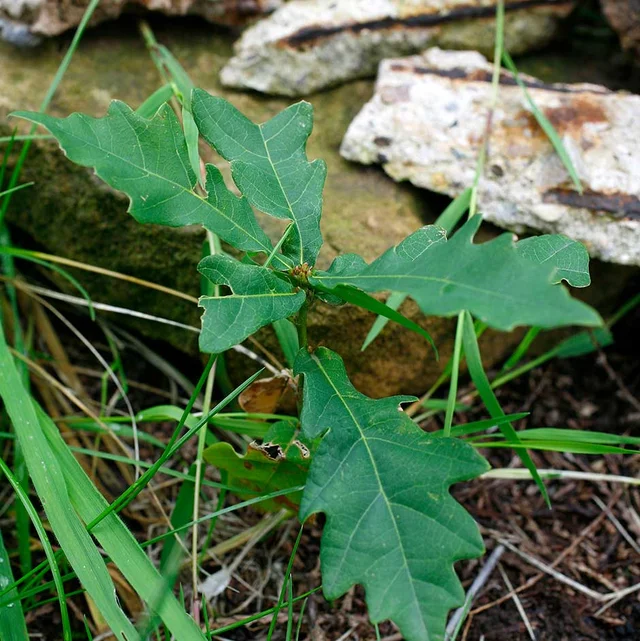
If you would like a bit of a challenge, you can try growing Skimmia from seed.
- Collect the ripe berries in the autumn, extract the seed
- Sow the seeds straight away in pots or trays and keep outdoors in a or similar to expose the seeds to winter chilling that helps to break seed
- If growing a named the seed grown plants will be different from the parent plant
Problems
Skimmias are generally trouble free, but yellowing of the leaves and horse chestnut scale may be a problem.
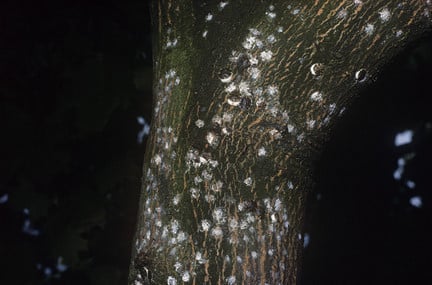
In late-spring or early-summer, you may notice white deposits on the leaves and stems which are the egg masses of horse chestnut scale.
Yellowing of the leaves is usually caused by overexposure to sun or by being grown on very dry, poor and shallow soils. Try feeding with a general granular fertiliser, mulching and watering in dry spells to encourage healthy growth. If planted in too much sun, consider moving the shrub in spring or autumn to a better spot.
This problem is often mistaken for chlorosis, which is due to lack of iron (lime induced chlorosis) and a common problem when acid-loving ( ) plants such as camellias and rhododendrons are planted in limy, alkaline soils. Skimmias are not acid-loving plants and an application of iron treatments, such as Sequestrene, is unlikely to help.