Narcissus (daffodil), Cyclamineus cultivars (division 6) trial 2025–2026
Objectives and purpose of the trial
Colourful bed filling up with clusters of Narcissus in March 2025
Sunny Narcissus ‘Itzim’ with deep reddish-orange centres
Plants and location
What was planted?
Records will be kept of when the first leaves emerge, the flowering dates, and the number of plants that come up blind (with foliage but no flowers). Photographs will be taken of each entry, showing its habit and a close-up of the flower.
Where is it planted?
The daffodil bulbs were planted in the open ground in the Trials Garden at RHS Wisley, ready to bloom into a stunning spring display. Here are some considerations for planting out daffodils:
- Plant in groups for the best impact – most cultivars prefer a sunny position
- Make sure to deadhead the flowers, but don’t be tempted to cut back or tidy the foliage after flowering. This will interfere with the bulb’s ability to store energy for the following years flowers
- Most daffodils are hardy and need no additional winter protection
- Wear gloves as daffodils can be a skin irritant
Judges and criteria
Judges of the trial
The 2025 Narcissus (daffodil), Cyclamineus cultivars (division 6) trial judges are: Camilla Bassett-Smith (Chair, television presenter, writer and RHS Bulb Expert Group), John Amand (Director, Jacques Amand International and RHS Bulb Expert Group), Ray Drew (Alpine Garden Society and RHS Alpine and Rock Garden Expert Group), Adele Dyer (Researcher at Which, Which Trials), John Gibson (Bulb expert), Alex Hankey (Garden Manager, RHS Wisley) , Jim McGregor (Alpine Garden Society and RHS Alpine and Rock Garden Expert Group), Kit Strange (Bulb specialist, RHS Alpine and Rock Garden Expert Group), Caroline Walter (Garden designer) and Richard Wilford (Royal Botanic Gardens, Kew and RHS Bulb Expert Group).
Judging criteria
The following factors are all taken into consideration as part of the judging of the trial:
- Impact, balance of flower to foliage
- Leaf quality
- Flowering performance
- Health and vigour
A vibrant cluster of daffodils stands tall in the trial bed
View of blooming Cyclamineus daffodils in the trial at RHS Wisley
Cultivation
Planting process
Each entry was planted in groups of 25 bulbs, arranged in a neat five-by-five grid. Bulbs were set at a depth of 10–15cm and spaced 10cm apart, with smaller varieties placed a little closer together. The trial beds featured two staggered rows per entry, with 50cm left between different varieties for clear distinction.
To keep maintenance low, a layer of mulch was added to help suppress weeds and keep the beds tidy throughout the trial.
How we’re managing plant health
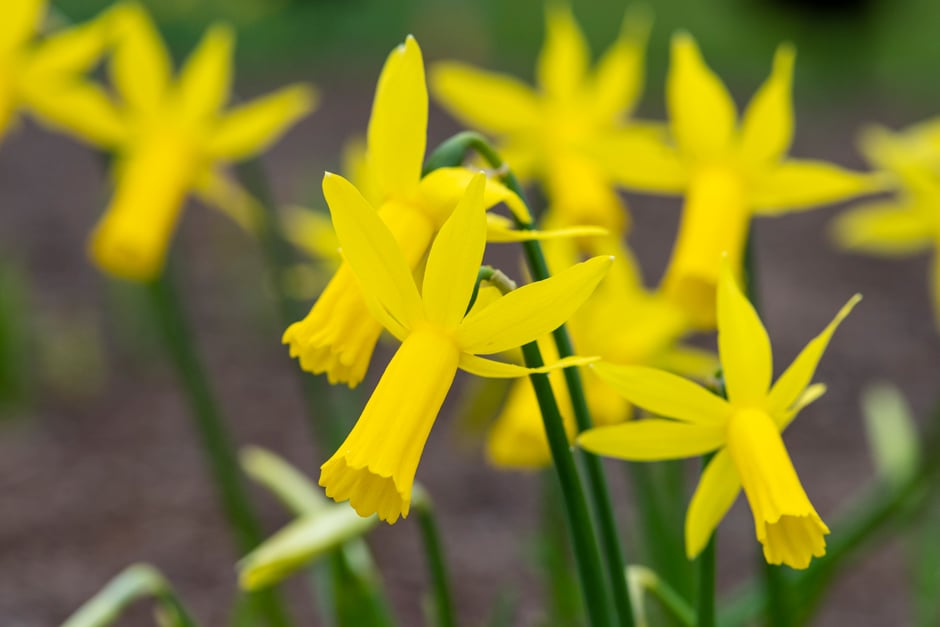
Apart from ‘Jetfire’, Division 6 daffodils could be argued to be relatively unknown by many gardeners, yet with their backwards swept petals, they are so aesthetically pleasing.

How to grow daffodils
Explore all the information you need to know to grow and care for daffodils in your garden
Discoveries
Potential frost damage | January 2026
As the Narcissus started to emerge, some browning was noticed on the very tips of the foliage, which could be due to the spell of very cold, frosty weather at the beginning of January. A few cultivars showed pale yellow, stretched-looking foliage, which could be due to a lack of light. The RHS Trials team will continue to monitor these for further changes.
Suppliers to the trial
- Pottertons Nursery
- Scamp’s
- Squires Garden Centres
- Thompson & Morgan
- Other plants sent by individuals – c/o the Trials Office
List of plants in the trial

Handy tools and information
- Full article - Filter RHS Recommended: AGM plants by colour, height and season
Find a plant online
Filter RHS Recommended: AGM plants by colour, height and season - Full article - Explore advice and helpful tips from our resident experts
Gardening advice
Explore advice and helpful tips from our resident experts - Full article - Check how hardy plants are using the RHS hardiness ratings system
Hardiness ratings
Check how hardy plants are using the RHS hardiness ratings system - Full article - A trusted gardening app packed with expert know‑how
RHS Grow app
A trusted gardening app packed with expert know‑how
Get in touch
For more information on our RHS Plant Trials or to access older trial reports, please get in touch with our team via email at [email protected].
Get involved
The RHS is the UK’s gardening charity, helping people and plants to grow - nurturing a healthier, happier world, one person and one plant at a time.