Lettuce, butterhead and leafy trial results 2025
Objectives and purpose of the trial
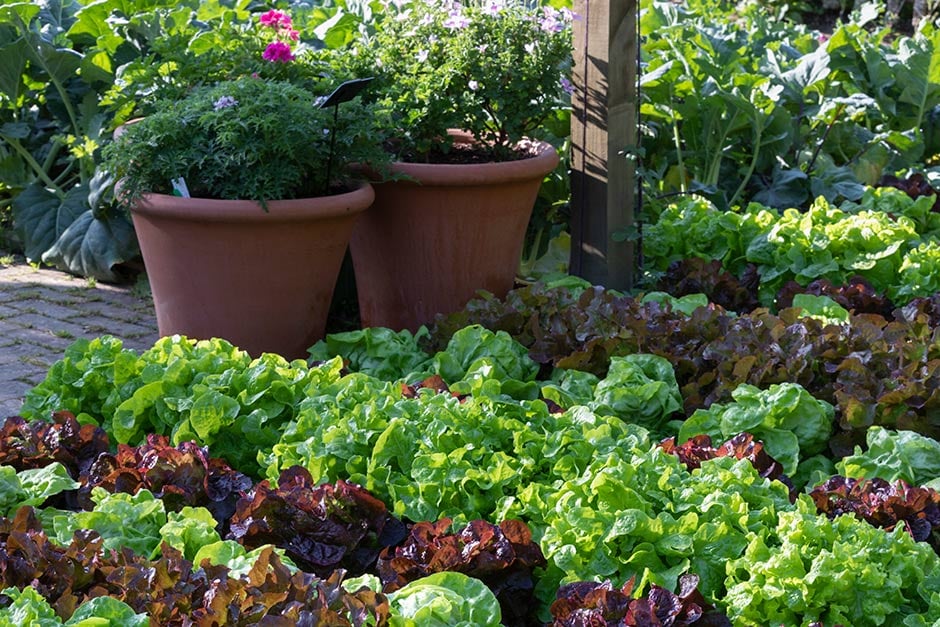
Trial beds at RHS Rosemoor showing strong lettuce growth
‘New Red Fire’ lettuce showing strong colour and leaf texture
What is an RHS Recommended: Award of Garden Merit?
The RHS Recommended: Award of Garden Merit is intended to help gardeners choose reliable plants and is only awarded to plants that are:
- Healthy, with good overall growth and appearance
- Excellent performers, resilient in the right conditions
- Available to buy in garden centres or online
- Reasonably resistant to common pests and diseases
- True to type, keeping a consistent colour and form
Judging criteria
- Taste
- Disease resistance
- Yield, including time to maturity, holding ability in the field, shape, density (e.g of heart) for butterhead and loose leaf
Butterhead and leafy lettuce – RHS Recommended: AGM winners
Lactuca sativa 'Feska'
lettuce 'Feska'
- 0.1–0.5 metres
- 0.1–0.5 metres
Lactuca sativa 'Grenadine'PBR
lettuce 'Grenadine'
Lactuca sativa 'Feska'
lettuce 'Feska'
- 0.1–0.5 metres
- 0.1–0.5 metres
Lactuca sativa 'Grenadine'PBR
lettuce 'Grenadine'
This well-grown lettuce trial provided worthy award winners and once again, it was interesting to hear the different perspectives from the forum members on this easy-to-grow crop.

Why the RHS Recommended: AGM was awarded
‘Salad Bowl’ lettuce with vibrant colour and full leaf formation
Rows of lettuce showing impressive uniformity of colour and form
RHS Recommended: AGMs rescinded
Plants and location
What was planted?
Lettuces are quick and straightforward to grow. Butterhead lettuces form a loose, rounded head with soft, tender leaves and a mild, sweet flavour. Leafy lettuces do not form a tight head and are well-suited to cut-and-come-again harvesting. These types are available in green or red forms, often with ruffled or oak-leaf shaped foliage.
During the trial, every entry was photographed to record overall plant habit and detailed head and leaf characteristics. The RHS Trials team closely monitored each stage of growth, from the emergence of seedlings through to harvest, to gain a clear understanding of how each cultivar performed.
What was planted?
Young lettuce plants were planted into beds in the new Edible Trial Garden at RHS Wisley and in selected beds at RHS Rosemoor, showcasing the variety of forms, colours and flavours found within butterhead and leafy lettuces. Here are some considerations for planting out butterhead and leafy lettuces:
- Sow lettuce seeds indoors or outdoors, in containers or in the ground, from spring through to autumn
- Water young lettuces regularly, especially in warm weather
- Leafy lettuces are quicker to grow than hearting types
- Harvesting can begin four to six weeks after sowing
Cultivation
Planting process
Before planting out, soil samples from the trial areas at both sites were sent for testing. Results showed that nutrient levels were sufficient, so no additional fertiliser was applied during the growing season. This ensured that plant performance reflected cultivar characteristics rather than differences in feeding.
At RHS Wisley, a single bed was prepared in the Edible Trials Garden using traditional methods, including treading and hand raking to create a fine, even surface. A fruit cage covered with butterfly netting was installed to protect plants from grazing wildlife. The young lettuces were planted out into open ground on 11 June 2025, arranged in a grid of 12 plants with 30 cm spacing to allow good air circulation and leaf development.
At RHS Rosemoor, young plants were planted out into the trial beds in three rows, each measuring 3.6m in length. No netting was used at this site, allowing plants to grow under open conditions.
During periods of hot weather, plants at both sites were watered daily using drip irrigation. This method delivered water directly to the soil, helping maintain consistent moisture levels and encouraging healthy growth throughout the trial.
How plant health was managed
Challenges
Lettuce can be vulnerable to a range of pests and diseases, including aphids such as lettuce root aphid and currant‑lettuce aphid, caterpillars including the Silver Y moth and turnip moth, and the disease downy mildew. However, no significant pest or disease issues were observed at either trial site during the trial, allowing plant performance to be assessed without intervention.
Weather
At RHS Wisley, the highest daily maximum temperature recorded at the RHS Hilltop weather station during the trial period was 29.6°C. The average daily temperature for May 2025 was 1.4°C above the 30‑year average for the period 1990 to 2019. Rainfall was noticeably lower, reaching only 55% of the long‑term average for the same period.
Weather conditions at RHS Rosemoor during the trial period included mild to warm temperatures and relatively low rainfall. These conditions created good growing conditions for the establishment and assessment of the lettuce entries.
Crop performance and problems
Bolting, where plants produce a flowering stem and leaves become bitter, occurred at both trial sites from late June through July 2025, despite regular irrigation. This affected a range of cultivars including Lactuca sativa ‘Ashbrook’, Lactuca sativa ‘Buttercrunch’, Lactuca sativa ‘May King’ and Lactuca sativa ‘Red Salad Bowl’. The trial also included some winter lettuce cultivars, such as ‘Arctic King’, which are not well suited to summer growing conditions and were more likely to bolt.
How to grow lettuce
Explore all the information you need to know to grow and care for lettuce in your garden
Discoveries
Establishment issues | June 2025
Differences in early establishment were seen between the two trial sites. Two entries, Lactuca sativa ‘Clarion’ and Lactuca sativa ‘Feska’, failed to germinate on two occasions at RHS Wisley, while seed from the same suppliers germinated successfully at RHS Rosemoor. This suggests that localised soil or environmental conditions at RHS Wisley influenced growing rather than seed quality, highlighting the value of multi‑site trials.
Who was involved?
Judges of the trial
The lettuce judges included: Barry Newman (RHS Wisley Forum Chair and RHS FV&H Expert Group member), Terry Porter (RHS Rosemoor Forum Chair), Jim Arbury (RHS FV&H Expert Group member), Rob Smith (RHS FV&H Expert Group member), Richard White (RHS FV&H Expert Group member and former Trial Garden Manager, Tozer Seeds), Sarah Wain (formerly West Dean Garden), Pete Adams (RHS FV&H Expert Group member), Neil Coldrick (Head Gardener, Clovelly Court Gardens) and Miriam Petry (Horticulturist Edibles, RHS Rosemoor).
Suppliers to the trial
List of plants in the trial

Handy tools and information
- Full article - Filter RHS Recommended: AGM plants by colour, height and season
Find a plant online
Filter RHS Recommended: AGM plants by colour, height and season - Full article - Explore advice and helpful tips from our resident experts
Gardening advice
Explore advice and helpful tips from our resident experts - Full article - Check how hardy plants are using the RHS hardiness ratings system
Hardiness ratings
Check how hardy plants are using the RHS hardiness ratings system - Full article - A trusted gardening app packed with expert know-how
RHS Grow app
A trusted gardening app packed with expert know-how
Get in touch
For more information on our RHS Plant Trials or to access older trial reports, please get in touch with our team via email at [email protected].
Get involved
The RHS is the UK’s gardening charity, helping people and plants to grow - nurturing a healthier, happier world, one person and one plant at a time.