Raghavendra-Prasad-1088x512.jpg?width=1184)
Are you overfeeding your peat-free plants?
New results from RHS trials in commercial settings reveal that more feeding isn’t always better in peat-free, with new recommendations for growers
Plant nutrition is a primary concern for growers transitioning to peat-free, with our 2023 RHS Industry Survey revealing this to be the industry’s third most cited peat-free challenge, alongside irrigation and cost.
Now, RHS trials of peat-free growing media across multiple nurseries, plant groups and growing seasons has shown that adding large amounts of fertiliser can actually inhibit plant growth and development.
This is contrary to popular beliefs around peat-free nutrition, which is that any peat-free growing media requires additional feeding and watering.
The results highlight how important it is for growers to carry out trials, to find the nutritional ‘sweet spot’ and avoid unnecessary expense and resources on adding surplus fertiliser that the plants don’t need.
They also underline how important it is for growers to communicate with their growing media manufacturer, to understand the initial
Addressing these concerns, through developing new growing media technologies and optimising nutrition management, has been a key focus for RHS and industry collaborative research.
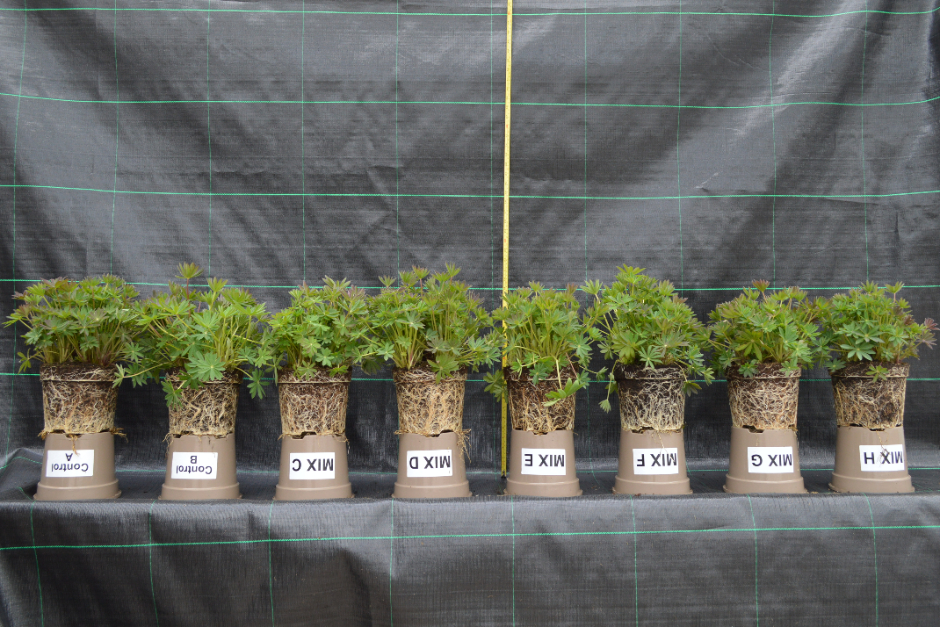
Carried out on herbaceous perennials, shrubs and trees, three years of commercial trials using peat-free products from five manufacturers alongside peat-reduced controls, and carried out under standard production conditions at two leading UK nurseries, have brought news on the nutritional properties of peat-free mixes.
Results from these initial trials, led by RHS Transition to Peat-Free research fellow Dr Raghavendra Prasad, offer new insights for growers on optimising how they manage nutrition in peat-free. This follows new insights into irrigation in 2024.
What do growers need to know?
1. Nutrition in peat-free requires a different approach to peat
Peat-free substrates have different biological, physical and chemical properties to peat. Peat is stable and contains little nutrition of its own. Meanwhile, the raw materials in peat-free mixes are biologically active and already contain some nutrients.
“Manufacturers also add certain nutrients to buffer and compensate for any changes in nitrogen that may happen over time,” says Dr Prasad. “This means feeding needs to be approached differently and traditional nutrition regimes that were based on peat systems may need to be modified.”
2. Peat-free may not need as much fertiliser as you’re currently using
“In trials, plant performance didn’t increase in a linear way with increasing volume of fertiliser added,” says Dr Prasad. “In fact, adding excess fertiliser hindered shoot and root establishment. There was an optimum threshold and then adding more beyond that had either no effect or a negative effect.
“After a 14-month trial, peat-free plants showed no nutrient deficiencies, while some of the peat-reduced controls receiving the same amount of fertiliser did show deficiencies.
“Feeding of potted plants is currently based on knowledge, experience and library of information available for peat-based systems,” says Dr Prasad. “Are you still feeding the same amount as you were in peat-based media? Simply continuing the same regime may be wasting resources and money.
“If you’re adding organic fertilisers, consider whether you need to remove some of the base nutritional package or controlled release fertiliser instead, to balance what you’re adding in and avoid overfeeding.”
3. Trials are key to finding the right amount for your mix and your plants
Most UK growers rely on the nutritional package already included in their growing media and don’t routinely add extra fertiliser or liquid feed.
“Carrying out collaborative trials with your growing media manufacturer, comparing the amount of fertiliser you currently add with the results you get from adding slightly less and slightly more, will help to identify how much your plants actually need,” says Dr Prasad. “For example, if you’re currently adding 4kg of fertiliser per cubic metre, try adding 3kg and 5kg.
“You can then specify to your growing media manufacturer how much to add in the future and start to build up a knowledge bank for peat-free systems, as well as reducing costs. Even adding 1kg less per cubic metre adds up into a significant saving and reduces leaching into the environment.”
4. Optimising irrigation will help with nutrition management
When plants are overwatered, nutrients are leached (washed out of the growing media) more quickly. Improved irrigation efficiency, and only watering as much as is necessary, can therefore lead to better nutrition management by reducing leaching, according to trials.“Water management and nutrition management are two sides of the same coin,” says Dr Prasad. “By optimising irrigation, you are indirectly addressing nutrition. Keeping nutrients available to plants by reducing leaching improves growth while reducing environmental impact and expense to growers.”
See our irrigation results and advice here.
5. Collaboration is key
“Manufacturers already understand their particular product and the nutrients already included in it, while growers have experience of what happens on the ground at the nursery,” says Dr Prasad. “Combining these will create a better product that works for growers. So strong communication with the manufacturer, and sharing learnings, is key.”
Research background
The RHS Transition to Peat-Free fellowship, working in partnership with eight major UK commercial growers and six growing media manufacturers, aims to provide UK growers with the science-based, nursery-tested information and results needed to navigate differences and assist growers in successfully and sustainably moving away from peat.
These results were shared at the RHS annual Peat-Free Horticulture Conference, which brings together horticultural experts, scientists, industry leaders, and policymakers to share insights, research, and practical solutions for transitioning to peat-free.
Olivia-Drake.jpg?width=940&height=627&ext=.jpg)