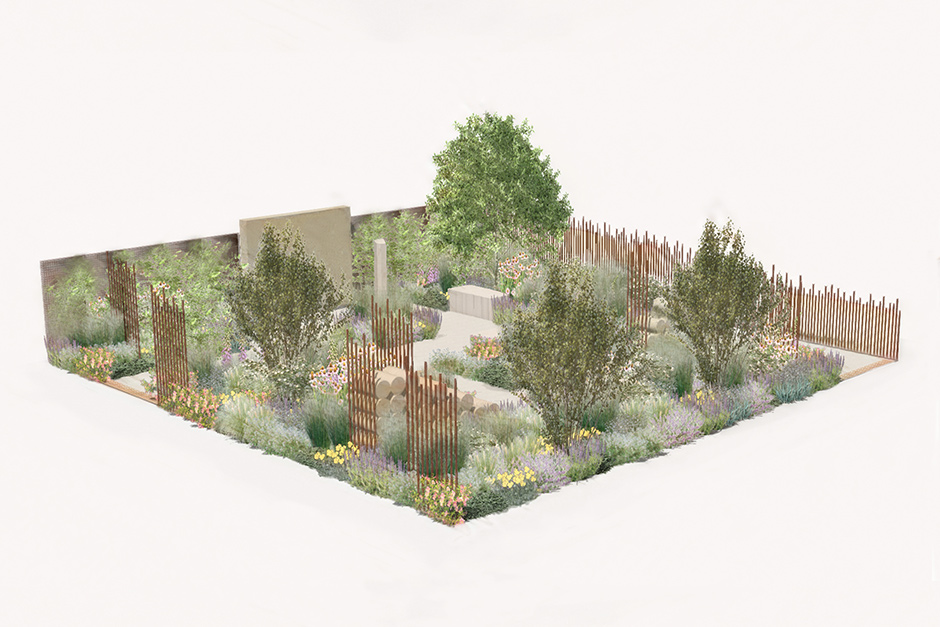
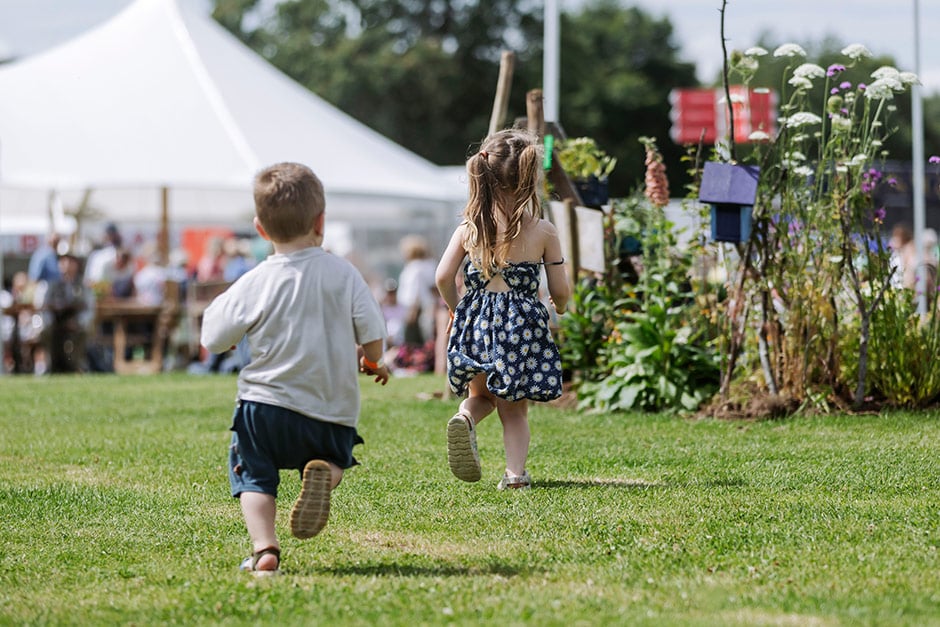
When it comes to making outdoor spaces wildlife-friendly, our first thoughts usually go to birds, bees, butterflies and other pollinating creatures. Don’t forget about the amphibians. Frogs, toads, newts and other little water-loving animals can be very beneficial, as shown in The RHS Pollywiggle Garden.
Pollywiggle’ is an old Norfolk term for tadpole. “There are lots of reasons to encourage frogs in particular,” says Norfolk-based designer Joe Carey, who designed The RHS Pollywiggle Garden for RHS Sandringham, together with his wife, Laura. “They’re excellent predators when it comes to slugs. They really help balance the natural ecosystem of your garden. Introduce a bit of water to your garden and over time you’ll see the presence of what we perceive as ‘pests’ lessens, because you’ve got extra predators eating the things you don’t want eating your plants.” Joe offers a few tips on encouraging amphibians into your outdoor space – and you don’t even need a pond.
Create a watery welcome
It goes without saying that the ideal habitat for a frog is a nice, natural pond, but it’s not essential. “We don’t have a pond in our garden,” says Joe. If you don’t either, look for areas that are naturally wet. “Most people think they don’t have water in their garden, but if you have, say, an outside tap there’s usually a wet area under the tap where you can create a water source. Or a nice steel, shallow water bowl is enough.” If you’re using a bowl, put it out of the sun and place some stones by the inside edge, so small animals can climb out if they fall in.
Plant your pond well
If you are lucky enough to have a pond, be sure to fill it with helpful plants. “Water lilies with broad leaves that sit on the surface are excellent for frogs and other amphibians to lay eggs underneath,” says Joe. “Marginal plants, like marsh marigold or water mint – anything with foliage – planted around the pond edge is usually where frogs hang out during the day, if they’re in the water. They’ll sit right on the edge, under the leaves, to hide themselves from predatory birds or cats.”
Make cosy spots
Frogs only spend part of their life in water. The rest of the time they appreciate a snug place to hide. “Frogs like to be really squeezed in,” says Joe. “Stack materials like roof tiles or bricks to give frogs somewhere to get out of the sun in the daytime. Clay traps moisture but retains a little bit of heat at night. And those gaps are also where slugs like to live, so you’re bringing the slugs to the frogs. We have a pile of engineering bricks – the ones with three holes – in our garden and I can pick one up on any given day and about 20 frogs will fall out of the holes. It’s amazing how little space they need.”
Open little doors
“If you live near any sizeable body of water, your garden is likely to be on the frogs’ route to and from that water source,” he says. So make sure that access is easy for them. “Leave small holes in your fence, low down, so they can go from garden to garden.”
Think big leaves
“In The RHS Pollywiggle Garden, we’ve introduced a lot of broad-leaved plants that are quite low to the ground,” says Joe. “Hostas attract slugs, so that’s really good for frogs. But hostas, ferns, anything with a big leaf provide shade, moisture and shelter. That’s all frogs really need. A water source and somewhere to hide. It’s as simple as that.”