Araucaria cunninghamii
Moreton Bay pine
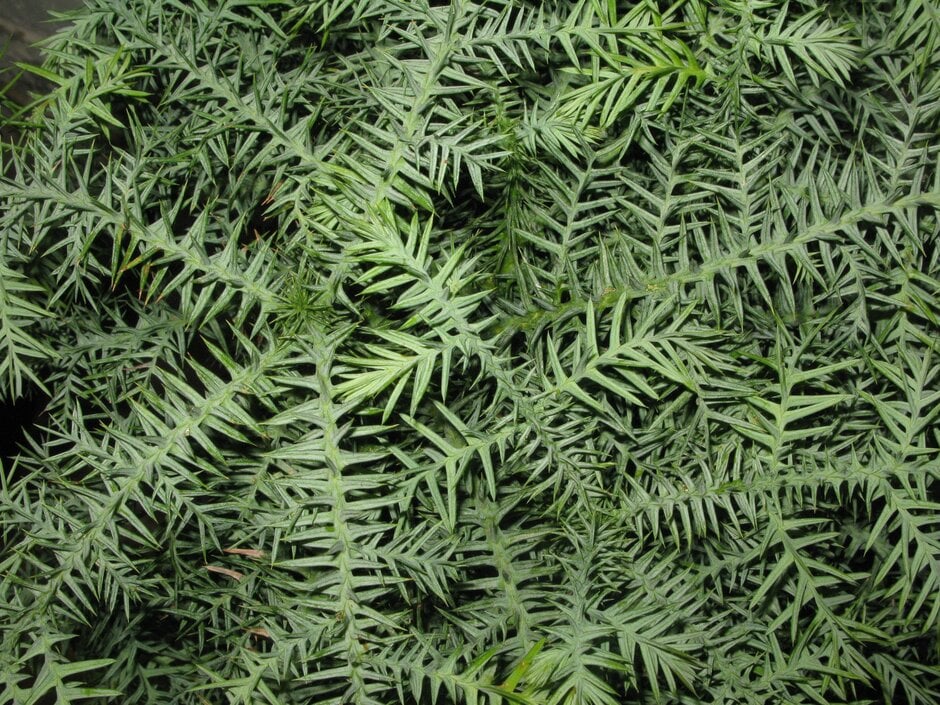
An upright, frost-tender conifer eventually reaching heights in excess of 50m with rough, reddish-brown bark peeling in circular bands. Young leaves are awl-shaped, up to 2cm long and arranged in spirals whilst adult leaves become scale-like and incurved. Male cones are cylindrical and 2-3cm long and ovoid female cones, 8-10cm long, are borne on mature trees and disintegrate when mature to release nut-like seeds

Buy this plant
Size
Ultimate height
Higher than 12 metresTime to ultimate height
more than 50 yearsUltimate spread
4–8 metresGrowing conditions
Moisture
Moist but well–drainedpH
Acid, AlkalineColour & scent
| Stem | Flower | Foliage | Fruit | |
| Spring | Green | |||
|---|---|---|---|---|
| Summer | Green | |||
| Autumn | Green | |||
| Winter | Green |
Position
- Full sun
- Partial shade
Aspect
North–facing or South–facing
Exposure
Sheltered Hardiness
H3Botanical details
- Family
- Araucariaceae
- Native to GB / Ireland
- No
- Foliage
- Evergreen
- Habit
- Columnar upright
- Genus
Araucaria are evergreen trees from the Southern Hemisphere, with whorled branches bearing spirally arranged leaves that may be needle-like, triangular or scale-like, and small male, and large female cones, usually on separate trees
- Name status
Correct
- Plant range
- New Guinea, E Australia
How to grow
Cultivation
Grow outdoors in moderately fertile, well-drained soil in a site sheltered from frost and cold, drying winds
Propagation
Propagate by seed or by semi-ripe cuttings
Suggested planting locations and garden types
- Architectural
- Low Maintenance
Pruning
Pests
Generally pest-free
Diseases
May be susceptible to honey fungus
Get involved
The RHS is the UK’s gardening charity, helping people and plants to grow - nurturing a healthier, happier world, one person and one plant at a time.