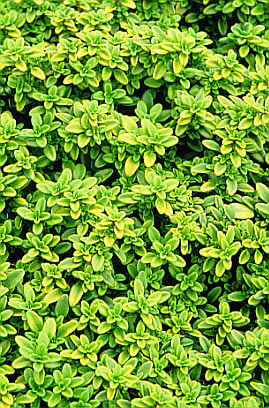
Thymus pulegioides 'Bertram Anderson'

RHS Plant Profile
broad-leaved thyme 'Bertram Anderson'
broad-leaved thyme 'Bertram Anderson' Dorling Kindersley 2003

Synonyms

Thymus 'Anderson's Gold'
Thymus 'E.B. Anderson'
Thymus citriodorus (Pers.) Schreb. 'Bertram Anderson'
Thymus citriodorus 'Andersons Gold'

Award of Garden MeritPlants for pollinators
Alpine Rockery Shrubs Herbs - Culinary

A compact, spreading evergreen shrublet to 10cm in height, with aromatic, bright golden-yellow, ovate leaves and terminal clusters of small, pink to pale mauve flowers appearing from May to July. A good choice for edging or for planting as a fragrant lawn. Although not as strongly scented as some varieties, it can still be used in cooking

Position

Full sun

Soil Types

Chalk, Loam, Sand

Max Height

Up to 10 cm

Max Spread

0.1-0.5 metres

Size

Time to Maturity
5–10 years
Max Spread
0.1-0.5 metres
Max Height
Up to 10 cm

Growing Conditions

Chalk Loam Sand
Moisture
Well–drained
pH
Alkaline or Neutral

Position

Full sun
Aspect
South–facing or East–facing
Exposure
Exposed
Hardiness
H5

Colour & Scent

Fragrance Flower Foliage
Season Stem Flower Foliage Fruit
Spring
Summer
Autumn
Winter

Botanical Details

Family
Lamiaceae
Native to GB/Ireland
No
Foliage
Evergreen
Habit
Matforming
Genus
Thymus are evergreen woody-based perennials, shrub or sub-shrubs with small aromatic leaves and terminal whorls of small, 2-lipped, tubular, purple, pink or white flowers in late spring or summer
Name Status
Accepted

How to Grow

Cultivation

Grow in well-drained, neutral to alkaline soil in full sun. Can be grown in a pot in an alpine house; use a mix of equal parts loam, leaf mould and grit. See Thyme cultivation for further advice

Propagation

Propagate by taking semi-hardwood cuttings in mid to late summer

Suggested planting locations and garden types

  • Gravel garden
  • Patio and container plants
  • Rock garden
  • City and courtyard gardens
  • Coastal
  • Cottage and informal garden
  • Wildlife gardens
  • Low Maintenance
  • Flower borders and beds

Pruning

No pruning required

Pests

Generally pest-free

Diseases

Generally disease-free