Getting Started
Sun-loving thyme is attractive, compact and easy to grow. This popular culinary herb brings rich Mediterranean flavours to soups, sauces and many other dishes.
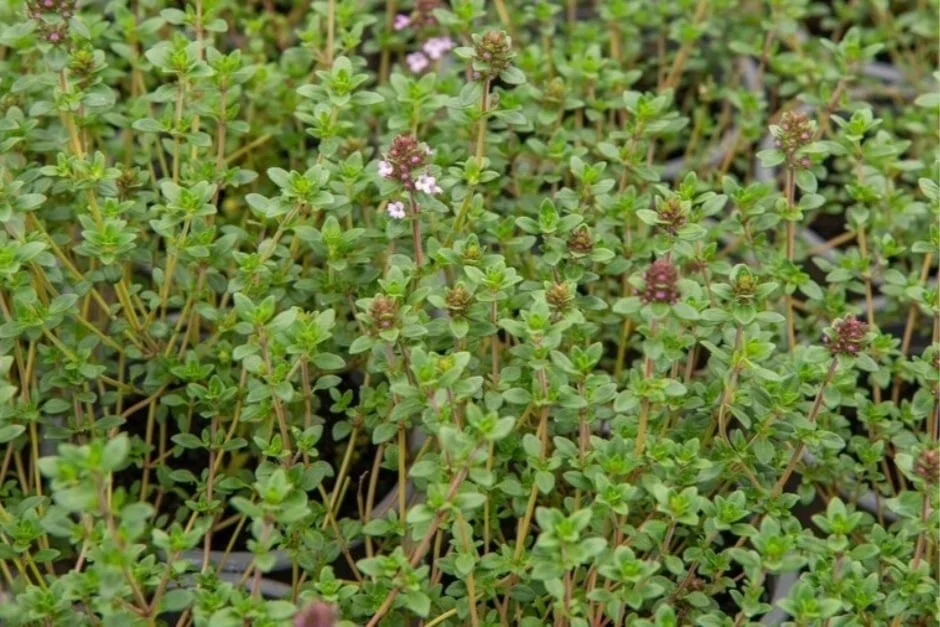
There are many different types of thyme, in a range of flavours, colours, and growth habits. In summer they produce clusters of tiny pink, mauve or white flowers that are rich in , providing a feast for bees and other pollinating insects. Thyme thrives in full sun and free-draining conditions, in the ground or in containers.
As thyme is evergreen, you can pick sprigs all year round, although the new growth in spring and summer has the best flavour. Common thyme (Thymus vulgaris) has a sweet, earthy, peppery taste that adds depth to many dishes, and is a key ingredient in traditional bouquet garni and herbes de Provence.
Jobs to do now
Harvest
Trim after flowering
Month by Month
Sow
Plant
Harvest


Choosing What To Grow
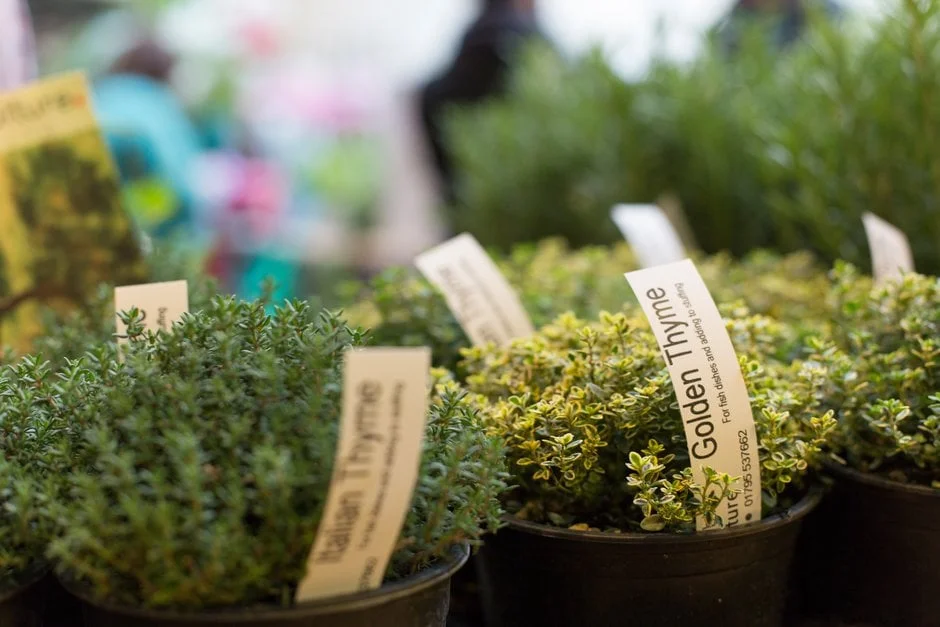
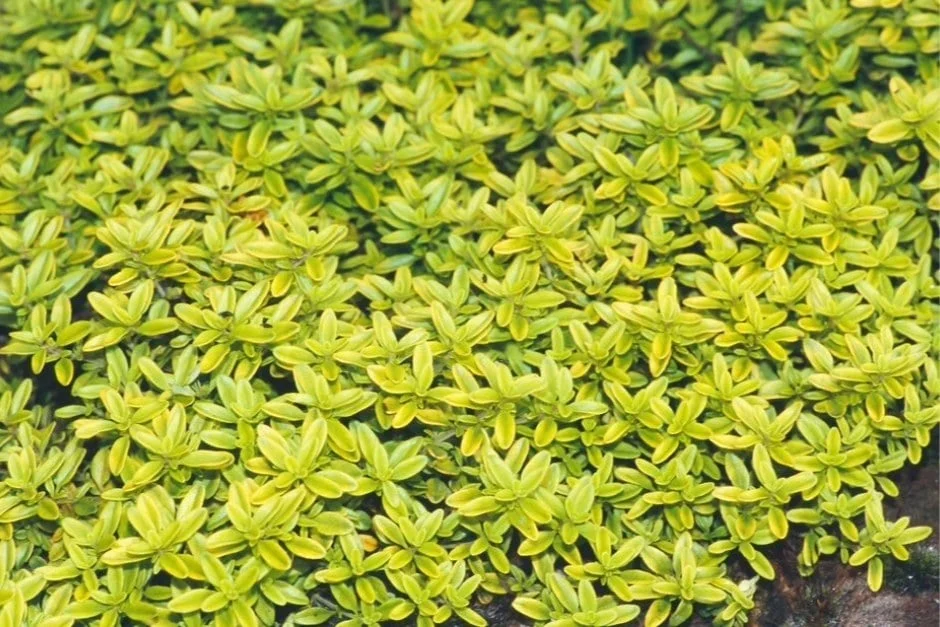
There is a wide choice of thyme species and varieties, with delicious scents and flavours, often with hints of lemon or orange. Some form small mounded shrubs up to 30cm (1ft) tall, such as T. vulgaris, others have a low-growing, creeping habit, such as T. serpyllum. The former are easier to harvest, so are generally more practical for culinary use. The small leaves can be green, yellow or . Popular variegated varieties include ‘Silver Posie’ and ‘Doone Valley’.
When choosing, look for varieties with an RHS Recommended: Award of Garden Merit (AGM), which shows they performed well in our trials – see our Recommended Varieties below. You can also see many culinary herbs, including thyme, growing in the herb collections in the RHS gardens, so do visit to compare the varieties and scents.
What and where to buy
Several popular culinary species of thyme are widely available as seed. However, most varieties are only available as plants – you’ll find a good selection in many garden centres and from online suppliers, although specialist herb nurseries offer the widest choice.
Recommended Varieties


Sowing
Several species of thyme are available as seeds. Thyme grown from seed may take about a year to get established enough for you to start harvesting the leaves. However, seeds are a cheaper option, especially if you want a lot of plants, for example as an edging plant for beds or as aromatic, bee-friendly ground cover.
Sow seeds indoors in spring into small pots or modular trays filled with moist peat-free . Scatter the seeds thinly on the surface, there is no need to cover the tiny seeds with . Seeds germinate well at 15–20°C (59–68°F). Place them somewhere warm and bright, and they should germinate within a couple of weeks.
Water regularly but avoid overwatering, as are prone to fungal diseases such as damping off. When the seedlings have several leaves, move each one into an individual pot about 7.5cm (3in) in size. Use a such as peat-free John Innes No 2. They can be planted outside once they’re well rooted and growing strongly (see Planting below).
Planting
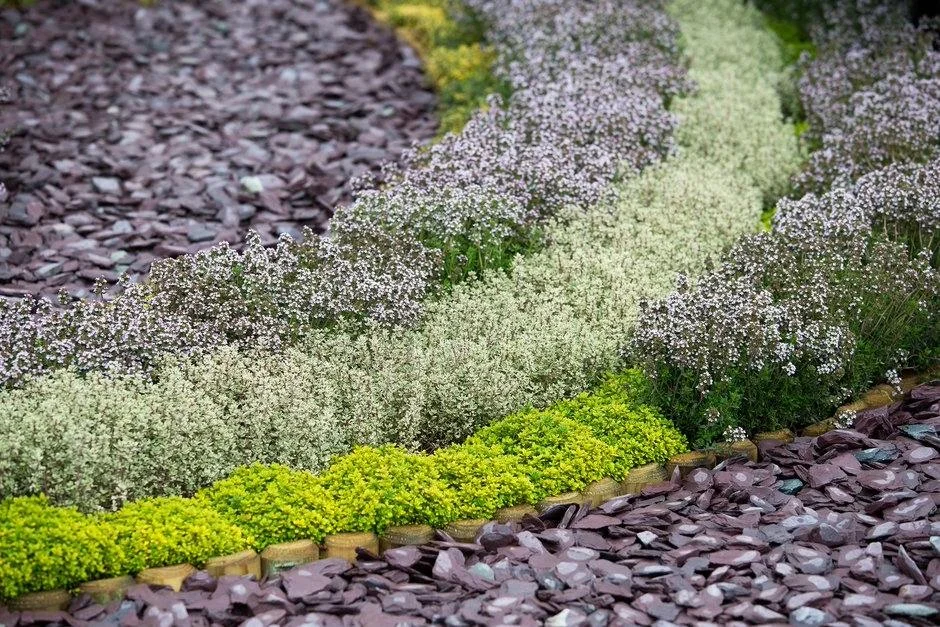
Thymes are attractive useful plants, ideal for herb gardens, dry gardens, and as low ground cover in the form of a thyme lawn. They also grow well in containers. Home-grown and bought thyme plants settle in best when planted out from mid-spring to early summer. Take care to harden off indoor-raised plants first, to acclimatise them to outdoor conditions.
Planting in the ground – choose a warm, sunny planting location in light, well-drained soil. If your soil is heavy or stays quite damp, especially in winter, then plant thyme in a container or raised bed instead, where drainage will be better. Space plants 20–30cm (8–12in) apart, depending on the variety, and position them at the same depth they were previously growing.
Planting in a container – choose a pot at least 15cm (6in) wide and 10cm (4in) deep for one thyme plant. Make sure there are plenty of drainage holes in the base. Fill the pot with peat-free and mix in some horticultural grit (up to 25 per cent by volume) to improve drainage.
Plant Care
Once settled in, thyme needs little maintenance – just trim it lightly after flowering to keep it compact. After several years, shrubby thymes can become straggly, so take or layer them to grow replacement plants for free. Make sure your thyme plants don’t get smothered by vigorous neighbouring plants, or get covered by fallen leaves.
Watering
Thyme is drought tolerant and rarely needs watering, except when newly planted or when growing in containers in hot, dry weather. Too much water is more likely to be a problem – the roots will rot in damp conditions, especially in winter, so be sure to choose a planting spot with free-draining soil.
Mulching
You could add a layer of grit or gravel around thyme plants in beds, borders or pots, especially creeping types. This not only looks attractive, but also suppresses weeds and lifts low branches and foliage off damp soil, which could otherwise cause rotting.
Winter protection
Thyme thrives in warmth and sunshine. Most of the widely sold varieties can withstand frost and UK winters, but do check before buying. Less reliably hardy types, such as T. cilicicus, should be grown in containers and moved into a greenhouse or porch over winter.
Thyme dislikes damp conditions, especially in winter, which can cause the roots to rot. In high-rainfall areas or during particularly wet winters, protect plants in the ground with cloches. Move containers to a more sheltered spot over winter, such as near a building in a rain shadow.
Propagating
Thyme can be grown from bought or collected seeds (see Sowing above). You may find that some plants readily self-seed. Seeds collected or self-sown from a named variety are unlikely to produce offsprings the same as the parent plant.
If you already have a thyme, there are a few ways to propagate it. The methods below are forms of vegetative propagation, meaning the new plants will be the same as the parent plant.
- – take softwood cuttings from new growth in spring or early summer, and semi-ripe cuttings in summer
- Layering – layer plants in spring or autumn by pegging low stems into the soil to root. This often happens naturally, so check for rooted stems around the edge of your plant and pot them up
- Division – divide in spring or autumn. This is a good method for propagating creeping, mat-forming thymes
Pruning And Training
Lightly trim shrubby thymes in mid- to late-spring and/or soon after flowering to keep them compact and bushy. If left unpruned, older plants can become straggly. Pruning back hard into old wood is risky, as stems may not reshoot, but if you're prepared to take a risk, prune in mid- to late-spring. It's usually best to replace old plants – fortunately, it’s easy to produce new plants (see Propagating above).
Low-growing, creeping thymes generally just need a very light trim after flowering to remove spent flowers.
Harvesting
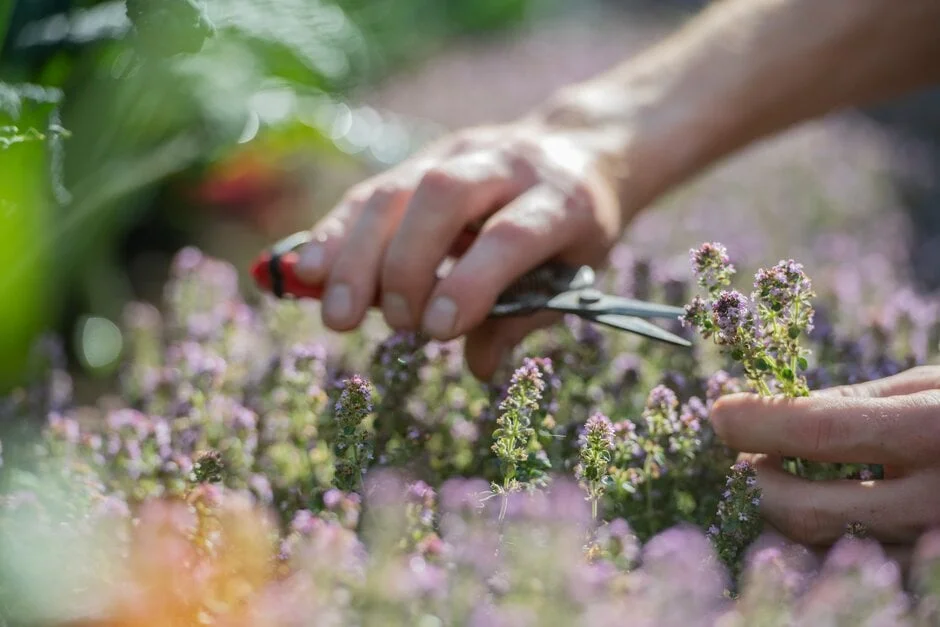
As thyme is evergreen, the aromatic leaves can be harvested all year round, but the soft new growth in late spring and summer has the best flavour. Snip off young shoots whenever needed. Regular harvesting helps to keep thyme compact and bushy, and encourages lots of new growth.
Thyme leaves infuse a delicious Mediterranean flavour into many dishes, including sauces, stews, vegetables, salads and bread. They can also be dried for later use and retain a strong flavour – hang up sprigs in a warm, dark, well-ventilated place for a few weeks, then once fully dry, store the leaves in an air-tight jar. The tiny flowers have a similar flavour to the leaves and can add colour scattered over salads.
Problem Solving
Once established, thyme is usually trouble-free if grown in a suitably warm, sunny location with free-draining soil or . Thyme’s aromatic foliage is unpalatable to most wildlife, although young shoots can be eaten by slugs and snails, and leaves can be damaged by rosemary beetles and sage leafhoppers (see Common problems below). These don’t generally cause severe damage.
Common Problems

Rosemary beetle
The rosemary beetle (Chrysolina americana) originates from southern Europe, and has become widespread in Britain since the mid-1990s. The larvae and a...

Sage and Ligurian leafhoppers
Sage and Ligurian leafhoppers can cause a coarse pale mottling on sage, rosemary, lavender and related plants in the spring and summer.

Slugs and snails
Slugs and snails are common garden animals, and they are well suited to the damp, mild climate of the UK. A few species feed on garden plants, but mos...
