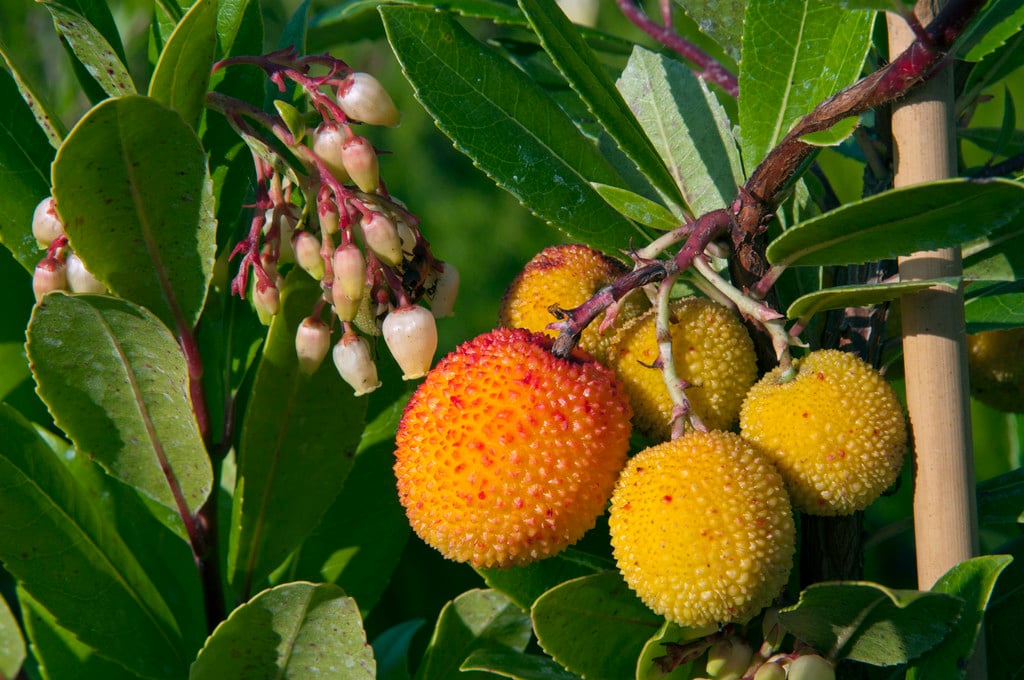
Arbutus unedo 'Atlantic'

RHS Plant Profile
strawberry tree 'Atlantic'
strawberry tree 'Atlantic' RHS
Award of Garden MeritPlants for pollinators
Shrubs Trees

A spreading evergreen shrub or small tree about 8m tall, with rough, red-brown bark. Free-flowering and fruiting from a young age, the drooping sprays of white, urn-shaped flowers, sometimes pink-tinged, appear in autumn at the same time as the previous year's fruit ripens to red. Whilst the fruits are edible and used to make jams and liqueurs in some countries, they are generally grown for ornamental purposes only in the UK

Position

Full sun

Soil Types

Loam, Sand, Chalk

Max Height

4-8 metres

Max Spread

4-8 metres

Size

Time to Maturity
10–20 years
Max Spread
4-8 metres
Max Height
4-8 metres

Growing Conditions

Loam Sand Chalk
Moisture
Well–drained
pH
Acid or Neutral or Alkaline

Position

Full sun
Aspect
South–facing or West–facing
Exposure
Sheltered
Hardiness
H5

Colour & Scent

Season Stem Flower Foliage Fruit
Spring
Summer
Autumn
Winter

Botanical Details

Family
Ericaceae
Native to GB/Ireland
No
Foliage
Evergreen
Habit
Bushy, Spreading branched
Potentially harmful
Fruit are ornamental - not to be eaten. Wear gloves and other protective equipment when handling Pets: Fruit are ornamental - not to be eaten - see the HTA guide to potentially harmful plants for further information and useful contact numbers
Genus
Arbutus are evergreen trees and shrubs with small, bell-shaped creamy-white or pink flowers, and red, strawberry-like fruits in autumn
Name Status
Accepted

How to Grow

Cultivation

Grow in fertile, humus-rich, well drained soil in full sun with shelter from cold drying winds. Young plants may need winter frost protection

Propagation

Propagate by semi-ripe cuttings in summer

Suggested planting locations and garden types

  • City and courtyard gardens
  • Coastal
  • Mediterranean climate plants
  • Cottage and informal garden
  • Wildlife gardens
  • Gravel garden
  • Low Maintenance

Pruning

Pruning group 1 but keep pruning to a minimum

Pests

May be susceptible to aphids

Diseases

May be susceptible to arbutus leaf spot and honey fungus