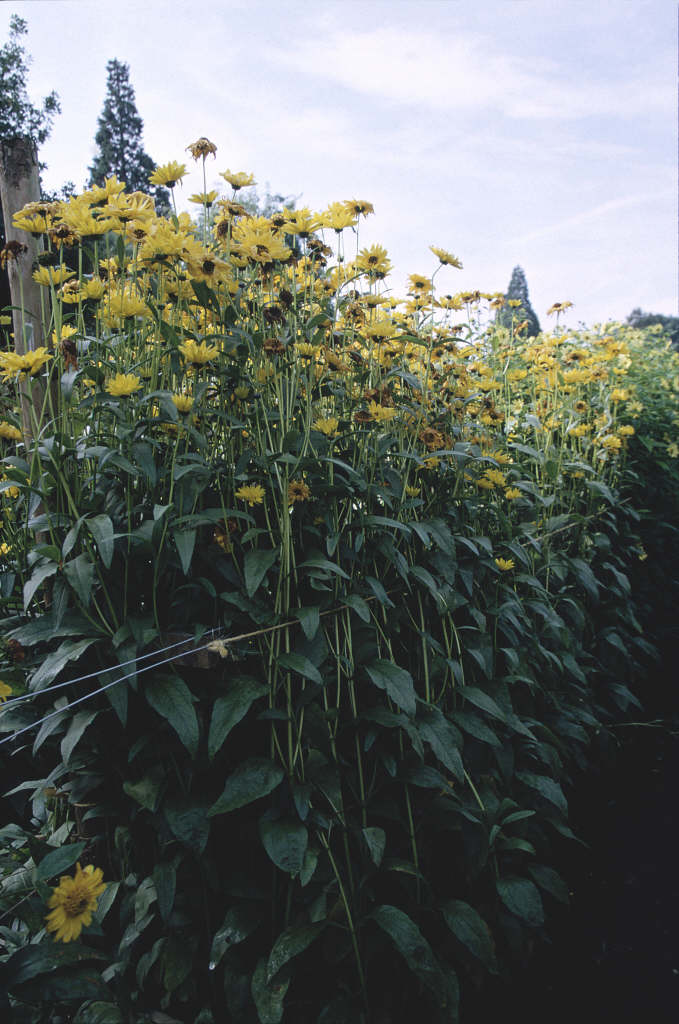
Helianthus 'Gullick's Variety'

RHS Plant Profile
sunflower 'Gullick's Variety'
sunflower 'Gullick's Variety' RHS 1999

Synonyms

Helianthus decapetalus 'Gullick's Variety'

Award of Garden MeritPlants for pollinators
Herbaceous Perennial

A robust upright perennial to 2m, the flower heads to 10cm wide, with bright yellow rays surrounding a dark red centre

Position

Full sun

Soil Types

Chalk, Clay, Loam

Max Height

1.5-2.5 metres

Max Spread

0.5-1 metres

Size

Time to Maturity
2–5 years
Max Spread
0.5-1 metres
Max Height
1.5-2.5 metres

Growing Conditions

Chalk Clay Loam
Moisture
Moist but well–drained
pH
Alkaline or Neutral

Position

Full sun
Aspect
West–facing or South–facing or East–facing
Exposure
Sheltered
Hardiness
H5

Colour & Scent

Season Stem Flower Foliage Fruit
Spring
Summer
Autumn
Winter

Botanical Details

Family
Asteraceae
Native to GB/Ireland
No
Foliage
Deciduous
Habit
Bushy
Genus
Helianthus can be tall, erect annuals, tuberous or rhizomatous perennials, with coarse simple leaves and large daisy-like flower-heads
Name Status
Accepted

How to Grow

Cultivation

Grow in a moderately fertile, humus-rich, moist but well-drained, neutral to alkaline soil in full sun. Needs a long hot summer to flower well. May need support

Propagation

Propagate by seed or division. Divide established clumps every 2-4 years to both increase plants and retain vigour. See sowing seeds indoors for further advice

Suggested planting locations and garden types

  • City and courtyard gardens
  • Coastal
  • Cottage and informal garden
  • Flower borders and beds

Pruning

Cut back after flowering

Pests

May be susceptible to slugs and snails

Diseases

May be susceptible to powdery mildews and Sclerotinia diseases