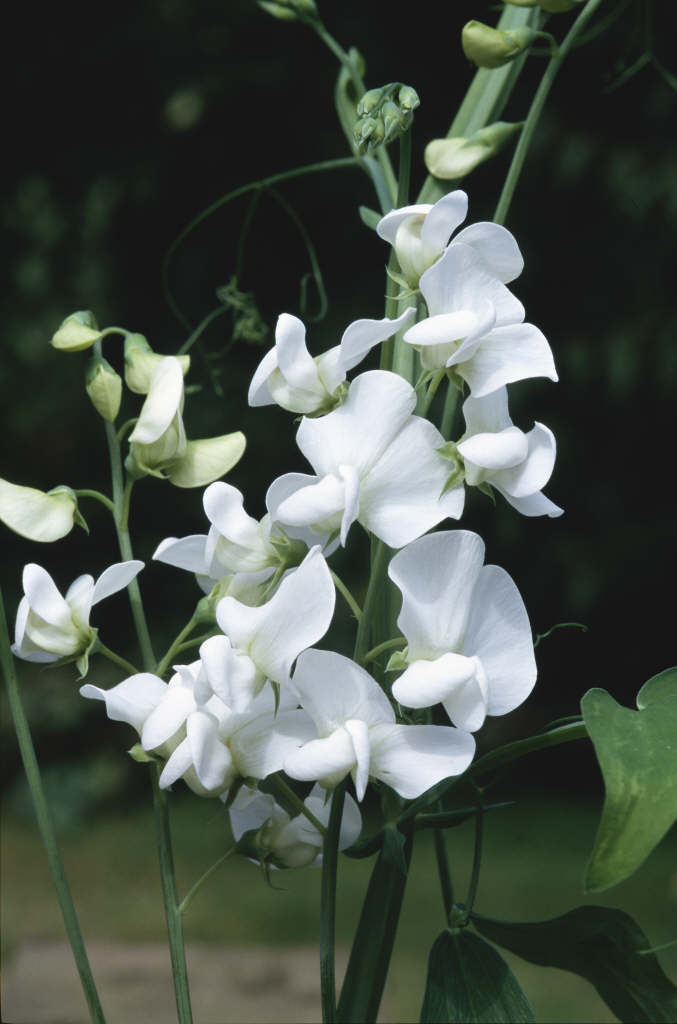
Lathyrus latifolius 'Albus'

RHS Plant Profile
everlasting pea 'Albus'
everlasting pea 'Albus' RHS

Synonyms

Lathyrus latifolius 'White Pearl' misapplied

Award of Garden MeritPlants for pollinators
Climber Wall Shrub

A strong-growing perennial tendril climber with paired oval leaflets and short racemes of white flowers 2-3cm across in summer

Position

Full sun, Partial shade

Soil Types

Chalk, Clay, Loam, Sand

Max Height

1.5-2.5 metres

Max Spread

1-1.5 metres

Size

Time to Maturity
2–5 years
Max Spread
1-1.5 metres
Max Height
1.5-2.5 metres

Growing Conditions

Chalk Clay Loam Sand
Moisture
Moist but well–drained or Well–drained
pH
Acid or Alkaline or Neutral

Position

Full sun Partial shade
Aspect
South–facing or West–facing
Exposure
Exposed or Sheltered
Hardiness
H7

Colour & Scent

Season Stem Flower Foliage Fruit
Spring
Summer
Autumn
Winter

Botanical Details

Family
Fabaceae
Native to GB/Ireland
No
Foliage
Deciduous
Habit
Climbing
Potentially harmful
Pods and seeds are not edible. Wear gloves and other protective equipment when handling. Pets: Pods and seeds are not edible. For further information and contact numbers regarding pets, see the HTA guide to potentially harmful plants
Genus
Lathyrus can be annuals or herbaceous or evergreen perennials, mostly climbing, with pinnate leaves ending in a tendril, and showy pea-like flowers, fragrant in some species
Name Status
Accepted

How to Grow

Cultivation

Can be grown as a climber or allowed to scramble over banks and slopes. It copes with sun or partial shade in fertile well-drained soil. See sweetpea cultivation for further information

Propagation

Propagate by seed

Suggested planting locations and garden types

  • City and courtyard gardens
  • Coastal
  • Cottage and informal garden
  • Wildlife gardens
  • Flower borders and beds
  • Wall side borders
  • Climber and wall shrubs
  • Cut flowers

Pruning

Cut back to ground level in autumn

Pests

May be susceptible to aphids, slugs and snails

Diseases

May be susceptible to powdery mildews, Fusarium wilt and sweet pea viruses