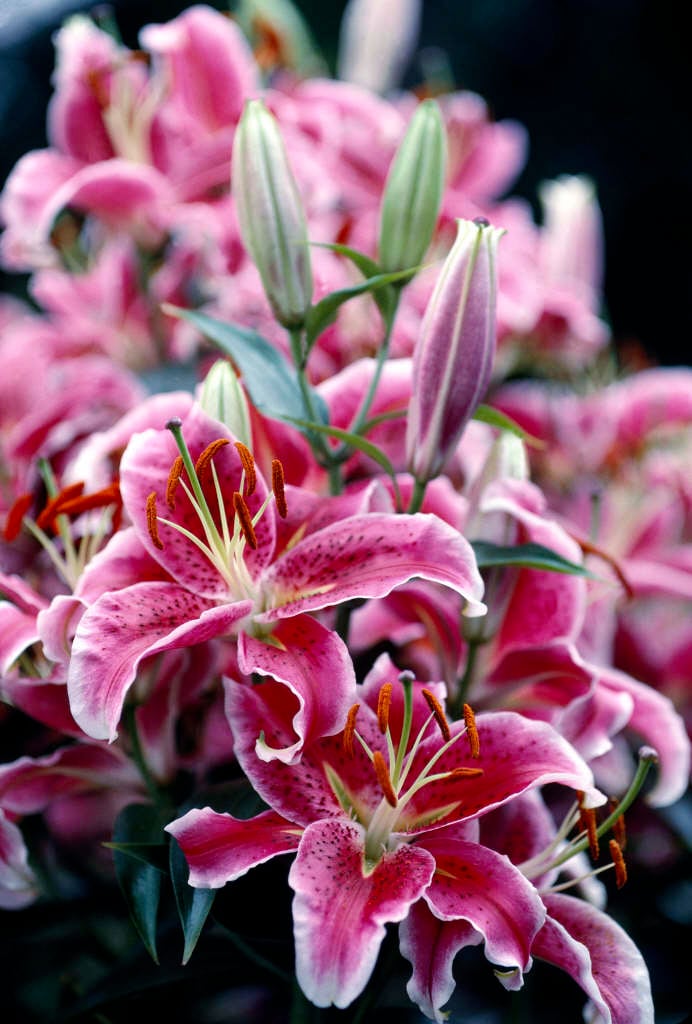
Lilium 'Star Gazer' (VIIa/c)

RHS Plant Profile
lily 'Star Gazer'
lily 'Star Gazer' www.gardenworldimages.com
Bulbs

A robust lily with racemes of upwards-facing deep pink flowers with paler edges and deeper spotting towards the centre

Position

Full sun, Partial shade

Soil Types

Chalk, Clay, Loam, Sand

Max Height

1-1.5 metres

Max Spread

0.1-0.5 metres

Size

Time to Maturity
2–5 years
Max Spread
0.1-0.5 metres
Max Height
1-1.5 metres

Growing Conditions

Chalk Clay Loam Sand
Moisture
Moist but well–drained or Well–drained
pH
Acid or Alkaline or Neutral

Position

Full sun Partial shade
Aspect
South–facing or North–facing or West–facing or East–facing
Exposure
Sheltered
Hardiness
H6

Colour & Scent

Season Stem Flower Foliage Fruit
Spring
Summer
Autumn
Winter

Botanical Details

Family
Liliaceae
Native to GB/Ireland
No
Foliage
Deciduous
Habit
Columnar upright
Potentially harmful
Ornamental bulbs - not to be eaten. Wear gloves and other protective equipment when handling. TOXIC to pets if eaten (cats) - see the HTA guide to potentially harmful plants for further information and useful contact numbers
Genus
Lilium are bulbous perennials with erect stems bearing whorled or spirally arranged leaves and terminal racemes or umbels of bowl-shaped, trumpet-shaped, funnel-shaped or turks cap shaped flowers, often fragrant, and white, yellow, orange or red
Name Status
Accepted
Horticultural Group
Division VIIa lilies have large, strongly fragranced trumpet-shaped flowers in bright colours

How to Grow

Cultivation

Grow in moist but well-drained soil enriched with leaf mould or well-rotted organic matter

Propagation

Propagate by offsets after the foliage dies down

Suggested planting locations and garden types

  • Patio and container plants
  • Cottage and informal garden
  • Cut flowers
  • Flower borders and beds

Pruning

No pruning required

Pests

May be susceptible to lily beetle, aphids, slugs, snails, Thrips, leatherjackets, and wireworms, and to damage by rabbits and voles; plants in containers may be susceptible to vine weevil

Diseases

May be susceptible to grey moulds and a virus; see lily diseases
