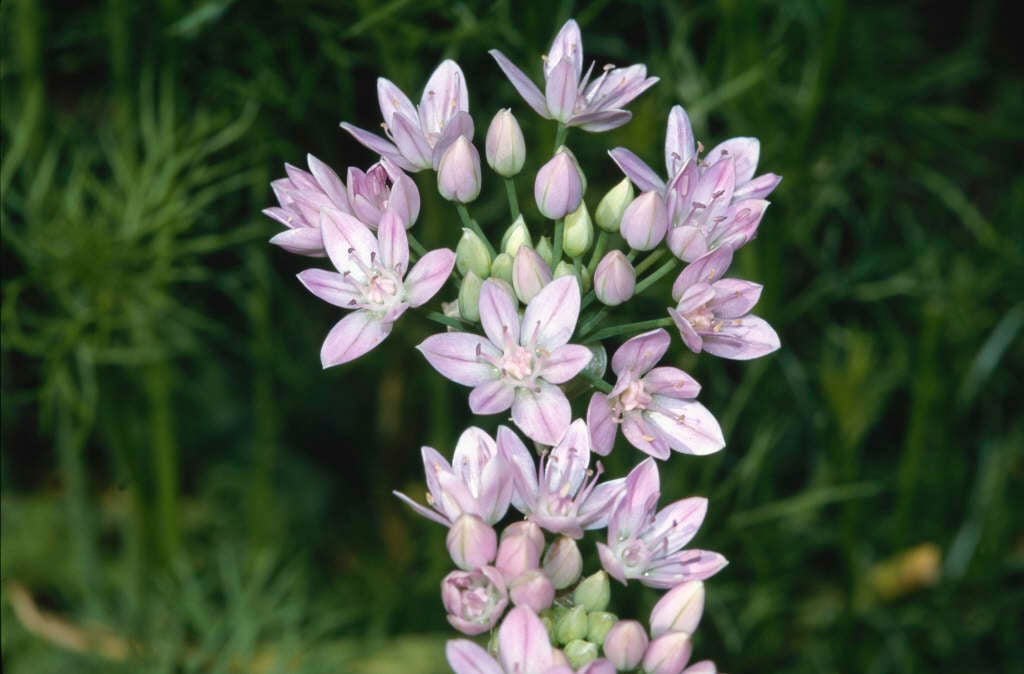
Allium unifolium

RHS Plant Profile
American onion
American onion RHS 2003

Synonyms

Allium grandisceptrum
Allium murrayanum misapplied

Award of Garden MeritPlants for pollinators
Bulbs

Compact bulbous perennial to 30cm in height, with short grey-green basal leaves, and umbels of up to 20 relatively large, open star-shaped purple-pink flowers in late spring

Position

Full sun

Soil Types

Chalk, Loam, Sand

Max Height

0.1-0.5 metres

Max Spread

0-0.1 metre

Size

Time to Maturity
2–5 years
Max Spread
0-0.1 metre
Max Height
0.1-0.5 metres

Growing Conditions

Chalk Loam Sand
Moisture
Moist but well–drained or Well–drained
pH
Alkaline or Neutral

Position

Full sun
Aspect
South–facing or West–facing
Exposure
Sheltered
Hardiness
H5

Colour & Scent

Fragrance Foliage
Season Stem Flower Foliage Fruit
Spring
Summer
Autumn
Winter

Botanical Details

Family
Amaryllidaceae
Native to GB/Ireland
No
Foliage
Deciduous
Habit
Clump forming
Genus
Allium are bulbous herbaceous perennials with a strong onion or garlic scent, linear, strap-shaped or cylindrical basal leaves and star-shaped or bell-shaped flowers in an umbel on a leafless stem
Name Status
Correct
Plant Range
USA Oregon to W California

How to Grow

Cultivation

Grow in full sun and fertile well-drained soil. It is best to grow in containers where garden soil is heavy clay and prone to saturation over winter. See allium cultivation

Propagation

Propagate by seed when just ripe or in spring; or propagate by offsets which can be carefully detached by lifting the bulb after flowering has finished. See bulb propagation

Suggested planting locations and garden types

  • Cottage and informal garden
  • Gravel garden
  • Patio and container plants
  • Rock garden
  • Wildlife gardens
  • Flower borders and beds

Pruning

No pruning required, other than to remove old flowered stems and foliage

Pests

May be susceptible to allium leaf miner and onion fly

Diseases

May be susceptible to onion white rot and onion downy mildew