
Liz’s Allotment Life: Taking stock after time away
RHS Wisley Edibles Horticulturalist Liz Mooney shares what she’s sowing, growing and harvesting right now

RHS Wisley Edibles Horticulturalist Liz Mooney shares what she’s sowing, growing and harvesting right now
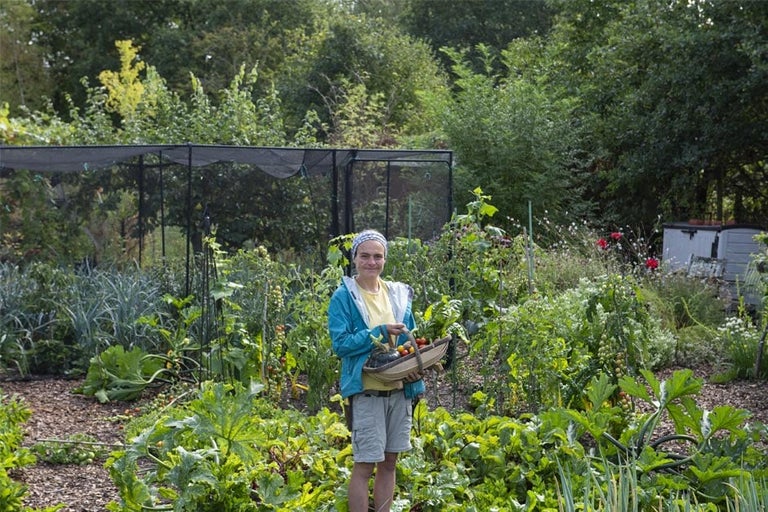
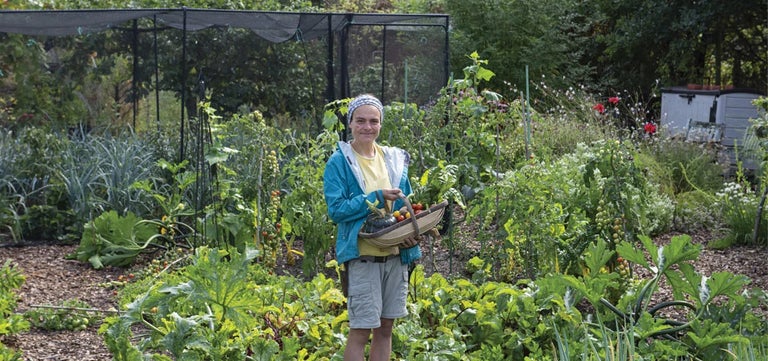
This week, like many in the current heatwave, my allotment time has been dominated by watering. A few harvests have made it home too – lettuce, lovage, spinach, chard, wild rocket, garlic chives and mint. With little else to report from the plot, it seemed like the perfect moment to reflect on why I love allotments so much – and why I think everyone should try growing something.
You certainly do not need to be self-sufficient to experience the benefits of growing your own food. Whether it’s a tomato plant on a windowsill, herbs in pots, or a full allotment plot, every little thing you grow can bring rewards.
Fresh, healthy, and nutritious food from the allotment has to be the first advantage to mention. I adore being able to pick produce and be eating it that evening for my dinner. This food is so much fresher than supermarket options, and growing it myself means I know exactly how it has been cultivated. With a few exceptions, the nutritional content of produce declines from the moment it is harvested, and therefore growing your own helps to ensure that you can eat it at its nutritional peak. Home grown really does taste better!

The sustainability side of growing your own food is really important to me, and when you grow your own you can make choices that align with your values. Whether that is through reducing synthetic inputs, providing wildlife habitats, or adopting a no-dig approach to the soil, every little thing that you do can make a difference. The food miles related to an allotment are tiny, and the produce does not have to be wrapped in plastic and transported around the world to reach your plate.

The variety of food from the allotment is also a wonderful benefit. Not all tomatoes are round and red, and not all sweetcorn is yellow and packed in a tin. Growing your own allows you to experience this diversity for yourself. Whether it is ‘Crystal Lemon’ cucumbers or Swiss chard, an allotment allows you to expand your diet. Instead of simply eating your greens, you can eat the rainbow and enjoy a whole range of flavours and colours on your plate.

An allotment community is a great thing to be part of. Even if I don’t have a long conversation, it is rare that a trip to the allotment passes without me waving hello to somebody.
The health benefits of an allotment are both physical and mental. Physically, the work involved in growing your own food gets you outside and active without necessarily feeling like exercise. Mentally, gardening has been shown to have positive effects on wellbeing and can offer valuable time to slow down and switch off.
Seasonality is a crucial part of my allotment life. At this time of year, I’m eating plenty of lettuce but by August the tomatoes will have made an appearance, and by December winter squash will be a favourite. I find this hugely satisfying, and the asparagus and strawberries are all the sweeter for being fleeting.

With living costs continuing to rise, the produce from my allotment is a welcome addition to my diet. Of course, growing your own is not entirely free, but a packet of seeds, some and my time feel like worthwhile investments when I enjoy the activity itself so much.

As I am self-sufficient in fruit and vegetables, it means that I rarely get to enjoy crops such as pineapples or bananas, but that is something I am personally happy to miss in order to maximise the benefits above. It is a personal choice – many people will find self-sufficiency impractical or undesirable, which is completely fine.
My only wish is that everyone gets to experience the joy of eating something they have grown themselves, because it is something I love so much.
I grow three types of mint on my allotment, but my favourite is straightforward Swiss mint. I am picking it several times a week at the moment to make fresh mint tea at home. It also freezes well into ice cubes for use in drinks throughout the summer.
I grow mine in plastic pots sunk into the ground in an attempt to stop the roots spreading too far. They will probably escape eventually, but this helps to keep them under control. It is also a good idea to stop the roots of different mints intermingling, as this can dilute their distinctive flavours.
Besides Swiss mint, why not try chocolate, blackcurrant or pineapple mint?

Planting out all my tender crops and doing a bit of direct seed sowing – it’s going to be a busy one on the allotment next weekend.