Liz’s Allotment Life: Sowing the season’s tender crops
RHS Wisley Edibles Horticulturalist Liz Mooney shares what she’s sowing, growing and harvesting right now

RHS Wisley Edibles Horticulturalist Liz Mooney shares what she’s sowing, growing and harvesting right now
It’s my hope that no one reading this blog comes away thinking everything on the allotment always goes perfectly. With a slightly quieter week on the plot, I thought I’d share a few mishaps and explain how I deal with them in an organic, wildlife-friendly way.
A problem. I’m fortunate not to have a major problem, and I try to see them as part of the ecosystem of the allotment. That said, they’ve been nibbling the emerging shoots of my American groundnut (Apios americana). I don't use barriers and pellets as they’re either ineffective or harmful to wildlife. Instead, I sow susceptible plants generously and hope that some survive and focus on growing plants slugs are less attracted too. I also encourage natural predators of slugs by having long grass, dead wood at the back of the plot and a flower area. That said, last year, I abandoned cabbages entirely as the slugs kept eating them. I don't mind too much as something else always works and fills the gap. It's a case of picking your battles.

Responsible for the notched, damaged edges on my broad bean leaves. I tend to leave this one alone as the damage is cosmetic and the plants seem to grow through it just fine. Not everything needs a solution; sometimes things can just be left, and they will be totally fine.

My potatoes were caught by a cold snap and blackened slightly. If they’d been further along, I might have covered them with horticultural fleece (I don’t earth-up my potatoes as I like to minimise soil disturbance), but only a few had emerged, so I decided to risk it and left them. Fortunately, they’re already recovering, showing healthy green underneath, and they should be fine.

I love my autumn raspberries and they give me an excellent harvest, but they do like to try and take over the plot. Without barriers, they spread everywhere, so I dig them out where needed. I follow no-dig principles on my allotment, but this is one of those moments where a little soil disturbance is unavoidable.

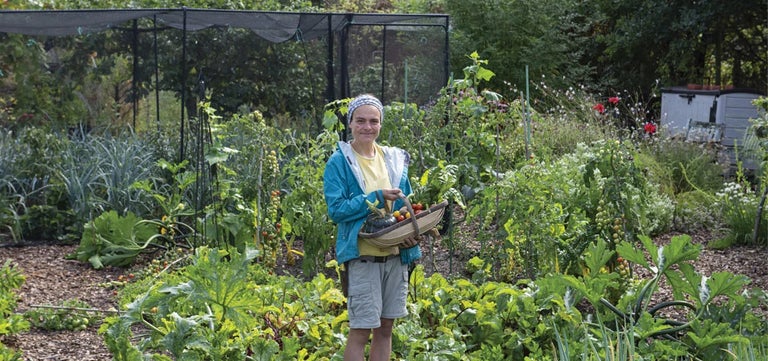
A pre-emptive move this week as we all know birds love fruit. I have a fruit bed on my allotment that I only started building up 18 months ago. The strawberries, blackberries and dwarf fruit trees are looking great, and therefore, this weekend I decided to get my bird netting properly in place. The first baby strawberries are starting to develop, and I don’t want to risk losing them. I’m lucky to have a walk-in fruit cage, but any netting system will do.

These hungry allotment residents wiped out an early sowing of broad beans in my grow hut. Now everything is wrapped in for protection. It does mean more frequent watering checks, but so far, no further mouse damage has happened.

A persistent visitor to carrots. I grow resistant varieties like ‘Flyaway’ or cover carrots with fleece from sowing to harvest to deal with them.

I am still hoping for rain. In the meantime, I’ve been down three times this week to water. I'm not sure how much hope I have for the parsnips – they're tricky to germinate even with rain.
A few are appearing now. I’m relaxed about them appearing in empty beds, but I weed by hand carefully between crops.
Last week’s sowings are starting to germinate, including cabbage.

I am still relying on vegetables at the moment, with harvests of asparagus, lovage, salad burnet, chives and garlic chives. My first lettuce is nearly ready, so I look forward to that.
I love this crop and feel it should be more widely grown. I direct sowed it in early October, watered once and left it. No winter protection needed. I’ve been harvesting since late February, with this likely the final week. It’s a cut-and-come-again annual with succulent leaves that are great in salads or stir-fries (especially with soy sauce). As it flowers, stems elongate and leaf production slows, so it’s nearly time to clear it for a spring crop. The stems and flowers are still tasty and edible, but there are not many more leaves, so it is time to replace them with a new spring crop.

I'm heading off on holiday soon, so this week will be about getting the plot ready to fend for itself with my absence.